Understanding sequencing Math Worksheets for Ages 5-8
11 filtered results
-
From - To
Discover the engaging world of sequencing with our "Understanding Sequencing" math worksheets designed specifically for children ages 5-8. These worksheets provide a fun and interactive way to teach young learners essential sequencing skills, helping them recognize patterns, order events, and enhance their overall problem-solving abilities. Our carefully crafted activities encourage critical thinking and allow children to practice sequencing through colorful illustrations, various exercises, and real-world examples. Ideal for both home and classroom use, these worksheets make learning enjoyable while building a strong foundation in math literacy. Explore our resource and watch your child develop confidence in their sequencing skills today!
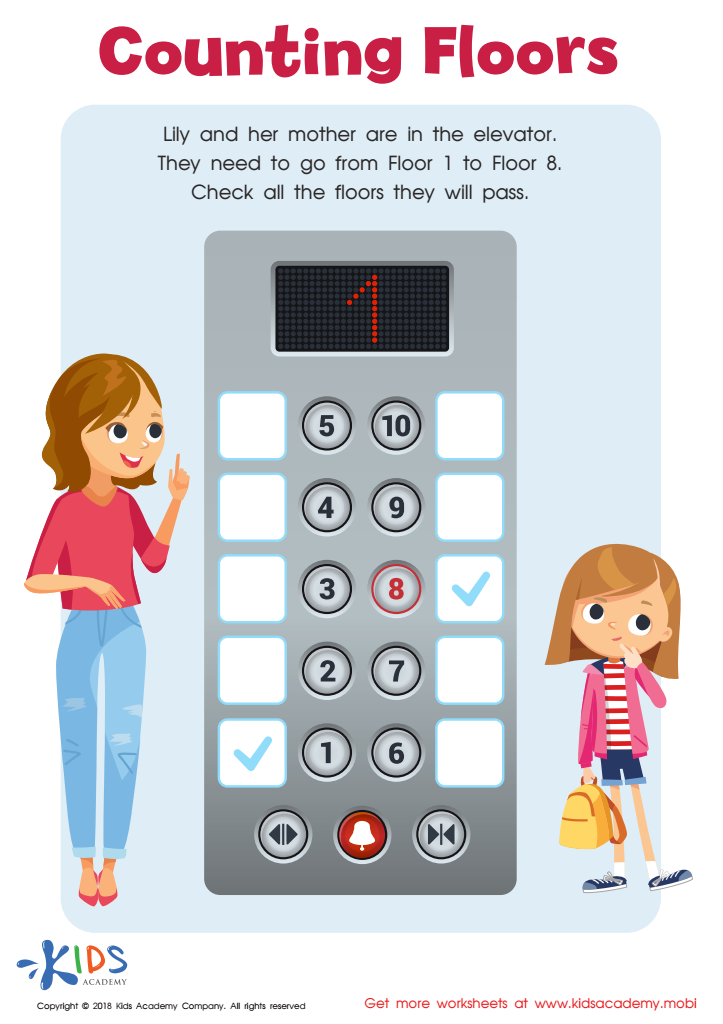
Counting Floors Worksheet
 Assign to My Students
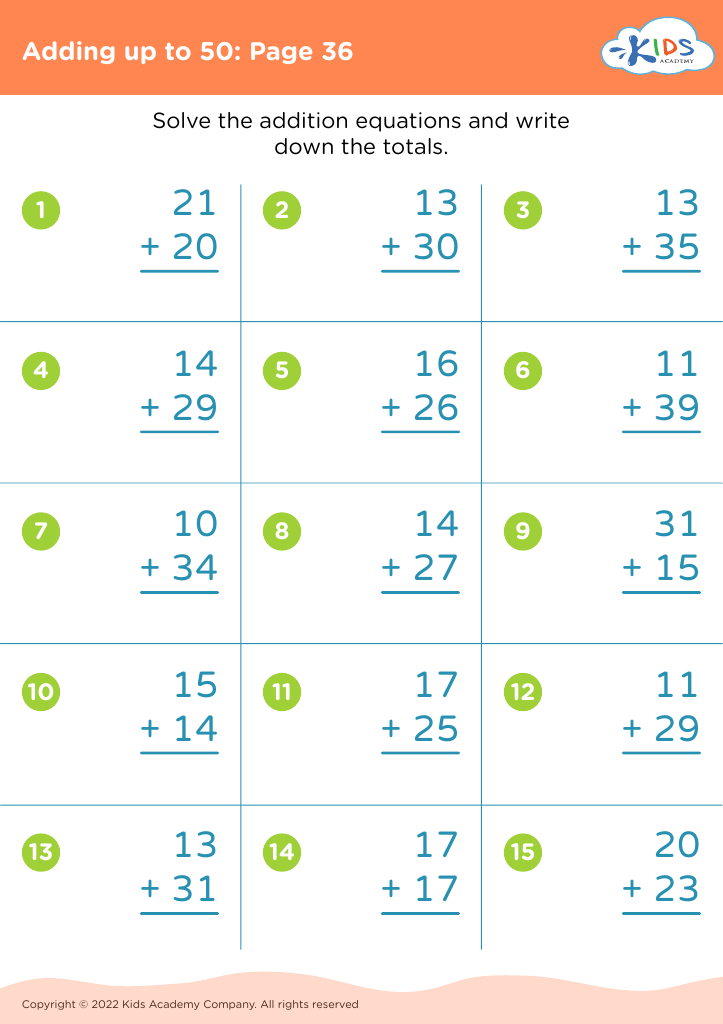
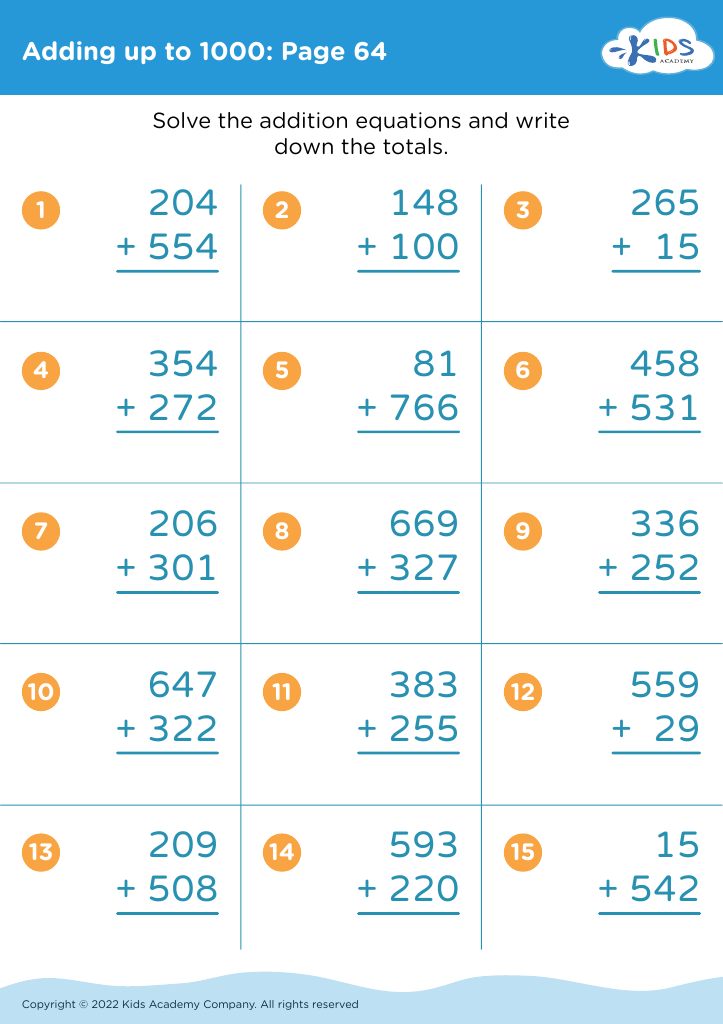
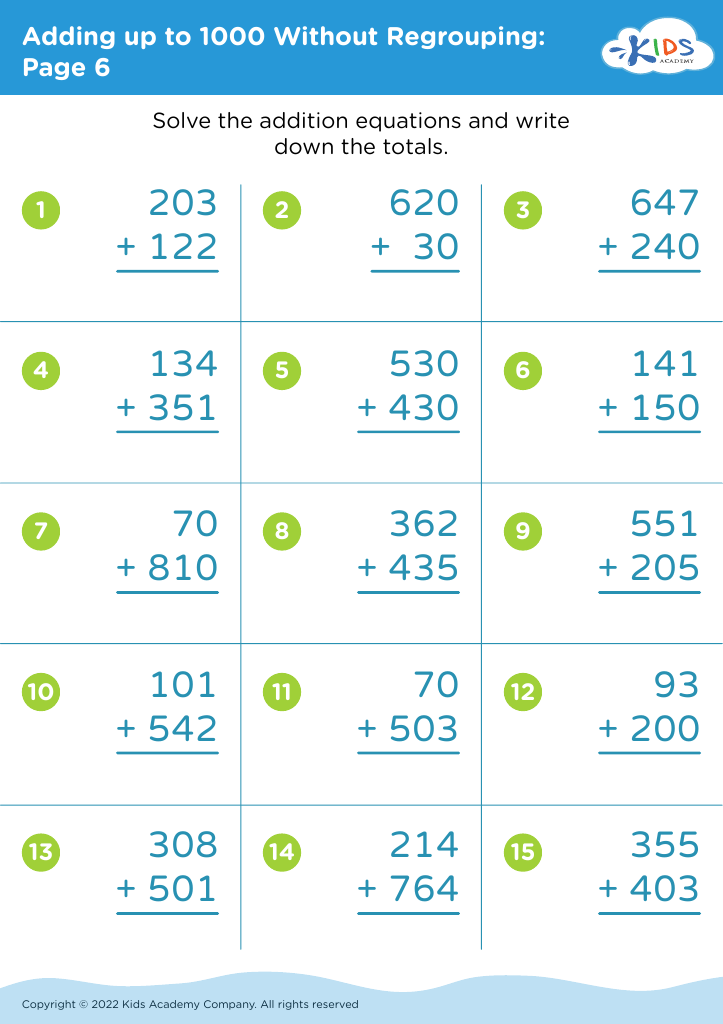
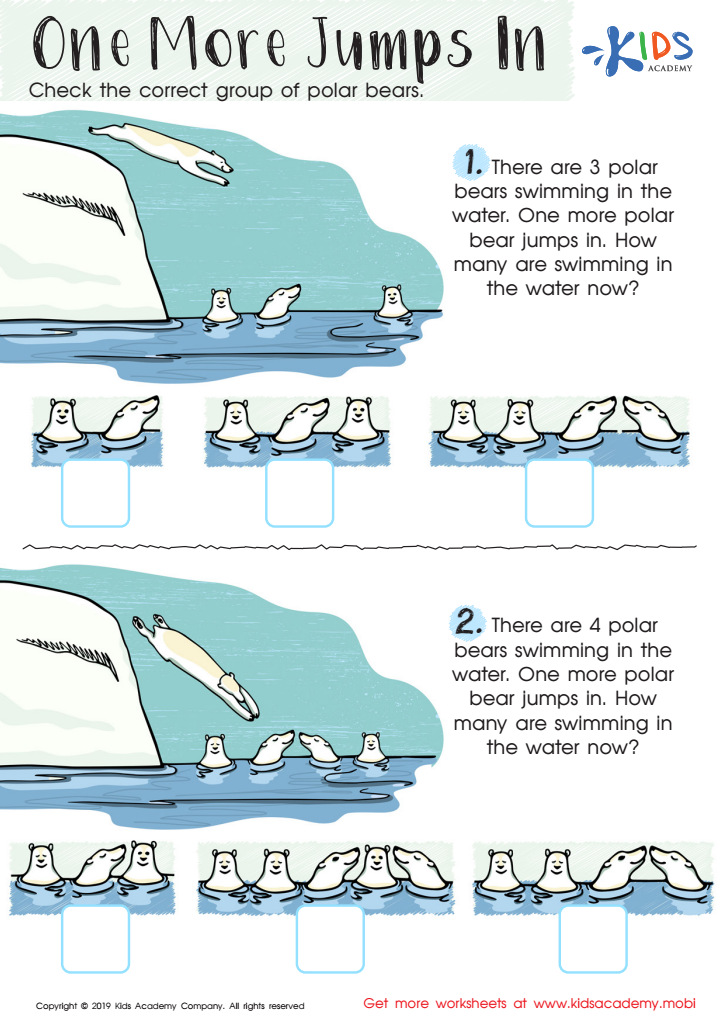
One More Jumps In Worksheet
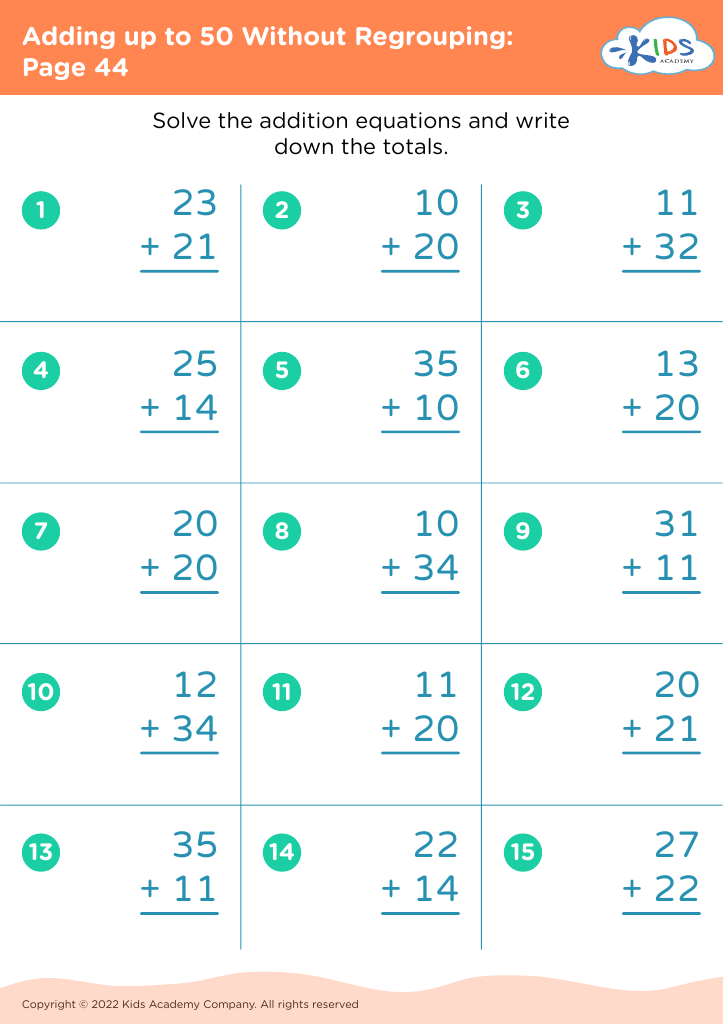
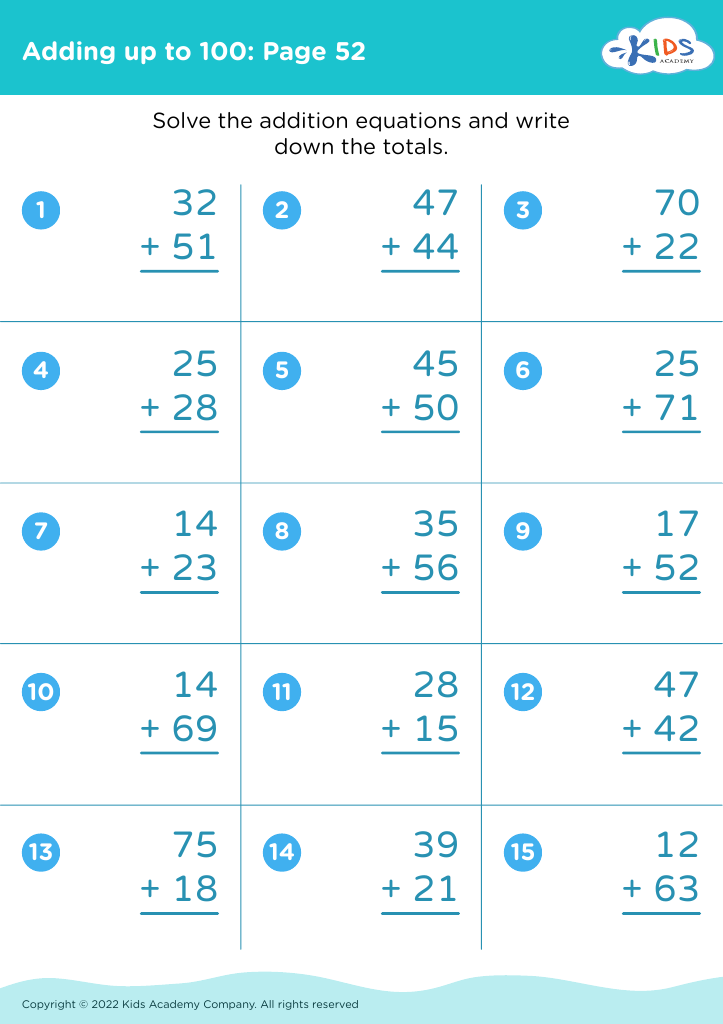
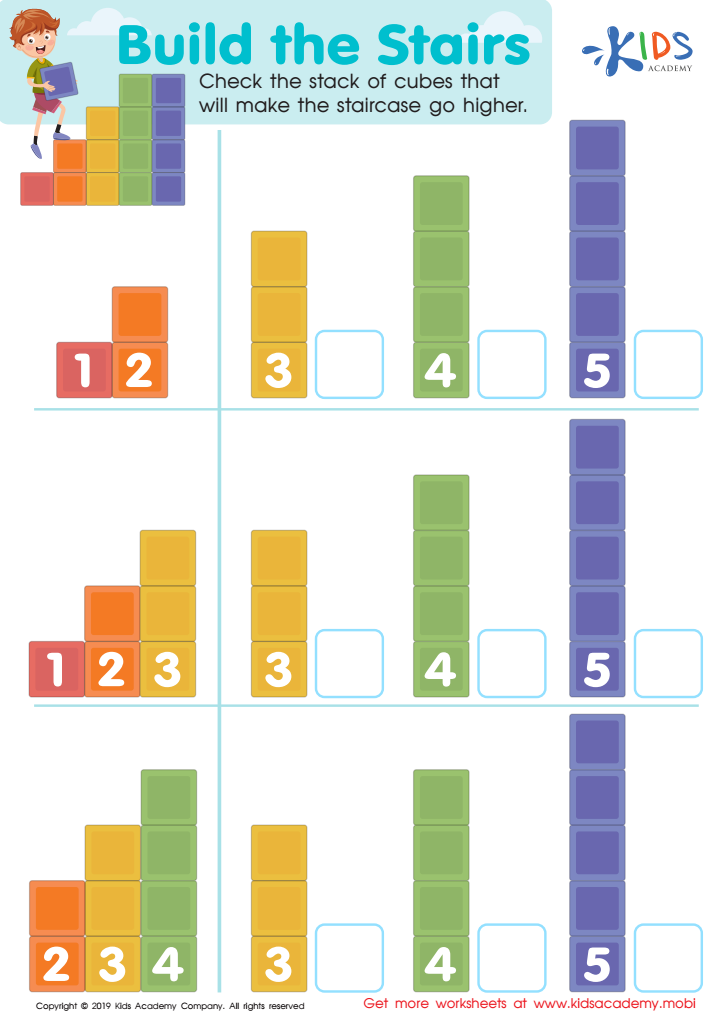
Build the Stairs Worksheet
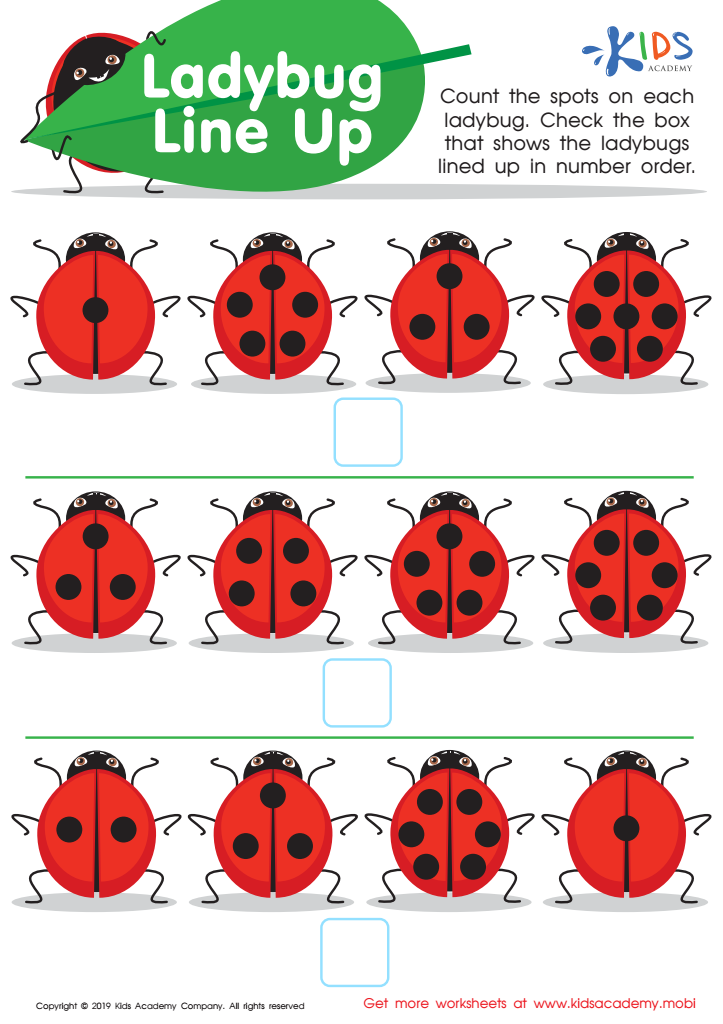
Ladybug Line Up Worksheet







Understanding sequencing in math is crucial for children aged 5-8 as it lays the foundation for their future mathematical skills. For parents and teachers, having a firm grasp of sequencing helps support children as they learn to recognize patterns, order numbers, and solve problems, which are all essential concepts in mathematics.
At this age, children are beginning to experience math beyond basic counting, moving into operations like addition, subtraction, and more complex problem-solving. Sequencing aids in developing logical thinking and enhancing memory skills, allowing students to connect ideas and concepts more readily. For example, recognizing the sequence of numbers helps with understanding counting both forwards and backwards, which directly influences their ability to grasp new math concepts.
By caring about and prioritizing this aspect of math, parents and teachers can facilitate a more engaging and effective learning environment. They can use hands-on activities, visual aids, and games to reinforce sequencing, making math enjoyable. Additionally, when children understand sequencing, they will navigate more complex mathematical tasks with confidence, empowering them to become lifelong learners who view math positively. In essence, mastering sequencing promotes a strong mathematical foundation that will benefit students well into their academic journey.








