Visual fraction representation Math Worksheets for Ages 5-8
3 filtered results
-
From - To
Discover our engaging Visual Fraction Representation Math Worksheets tailored for children ages 5-8! These thoughtfully designed resources help young learners grasp the concept of fractions through vibrant visuals and interactive exercises. By using real-life examples and fun illustrations, kids can easily connect with abstract mathematical ideas, making learning both enjoyable and effective. Our worksheets accommodate various skill levels, ensuring every child can progress at their own pace. Whether in the classroom or at home, these printable worksheets promote hands-on learning, provide essential practice, and foster a deeper understanding of fractions. Empower your child's mathematical journey today with our FREE resources!
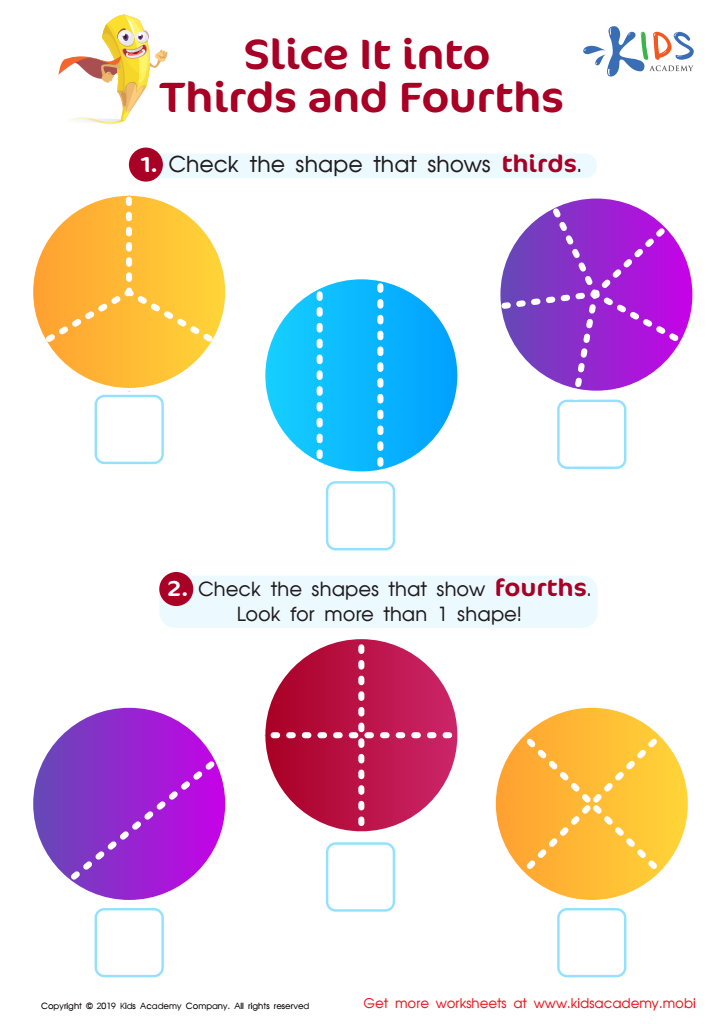
Slice in Thirds Fourths Worksheet
 Assign to My Students
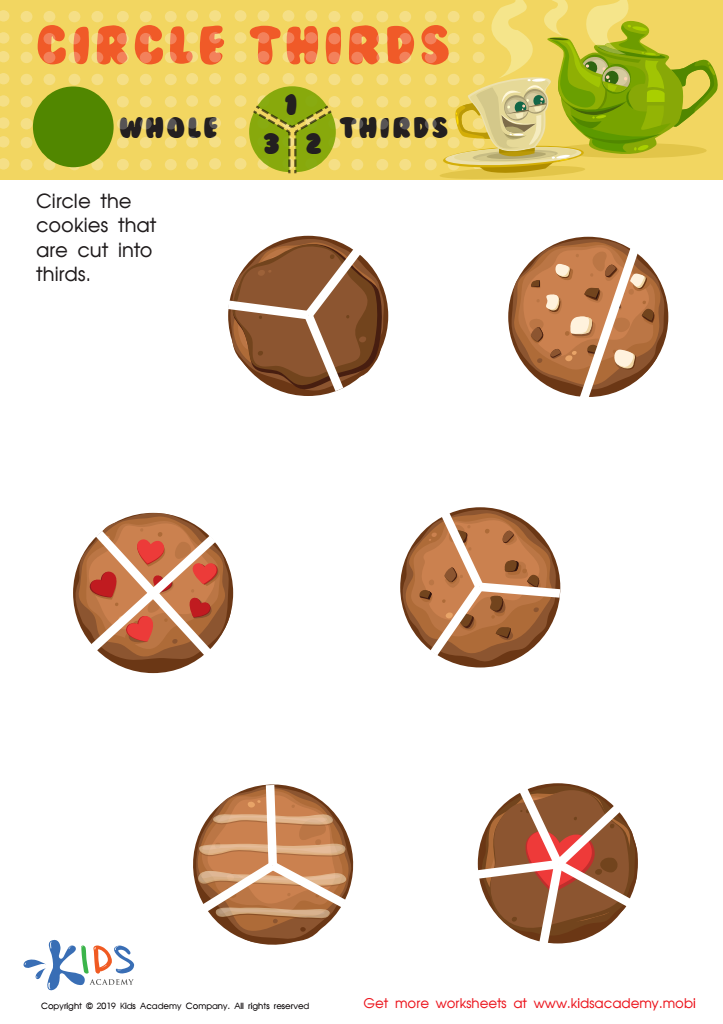
Circle Thirds Worksheet






Understanding visual fraction representation is crucial for children aged 5-8 as it lays a strong foundation for their mathematical understanding. At this developmental stage, children are primarily visual learners; engaging them in visual fraction concepts helps bridge the gap between concrete and abstract thinking. Using graphics, like pie charts or fraction bars, allows children to grasp the ideas of parts and wholes more intuitively.
Additionally, visual representations foster critical thinking and problem-solving skills. When parents or teachers guide children in recognizing fractions through visual aids, they promote deeper understanding rather than rote memorization. This is vital for their future math courses, where complex concepts and operations build upon the foundational knowledge of fractions.
Moreover, grasping fractions visually enhances communication skills. Children can articulate their understanding more effectively when they can point to an image to explain their reasoning. Encouraging this kind of learning supports collaboration and peer interaction, ensuring that students feel more confident in math.
Ultimately, incorporating visual fraction representation into learning not only benefits immediate comprehension but also instills a positive attitude towards mathematics, fostering engagement and curiosity that can last a lifetime. Parents and teachers play a vital role in nurturing these essential skills.








