Weather identification Math Worksheets for Ages 5-8
4 filtered results
-
From - To
Introduce your young learners to the exciting world of math and meteorology with our Weather Identification Math Worksheets for Ages 5-8! These engaging printables combine fundamental math skills with weather concepts to create a fun, educational experience. Children will enjoy activities that teach counting, pattern recognition, and basic arithmetic while identifying sunny, rainy, cloudy, and snowy weather conditions. Perfect for classroom use or at-home learning, these worksheets make math practice enjoyable and relevant. Watch your students marvel as they learn to connect numbers and equations to the weather they see every day! Build math confidence through weather-themed fun!
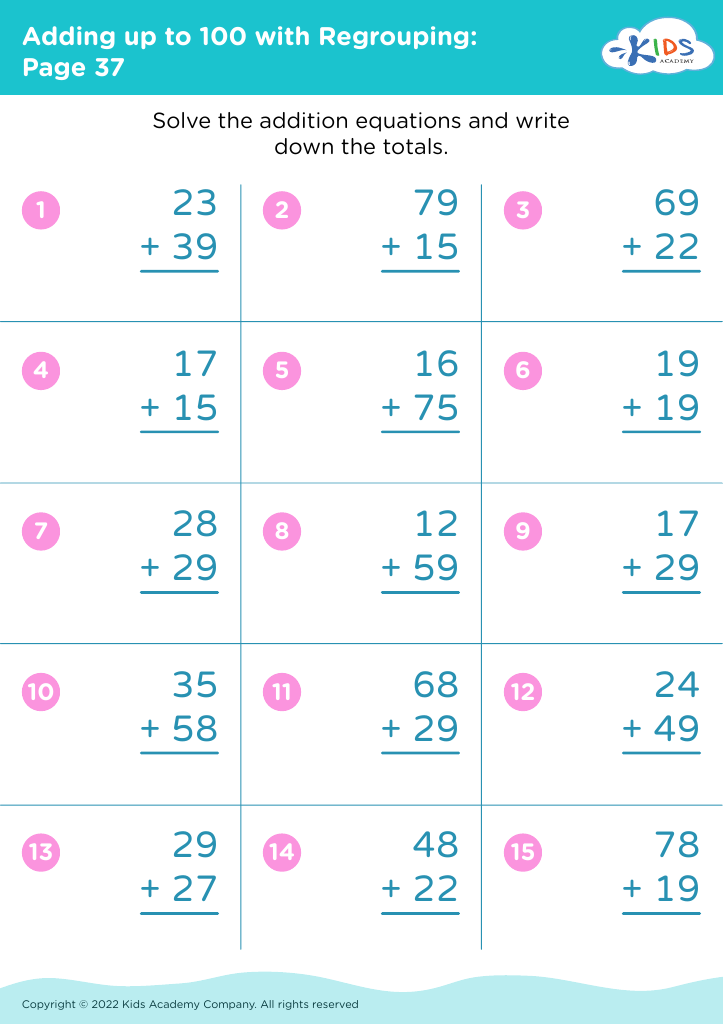
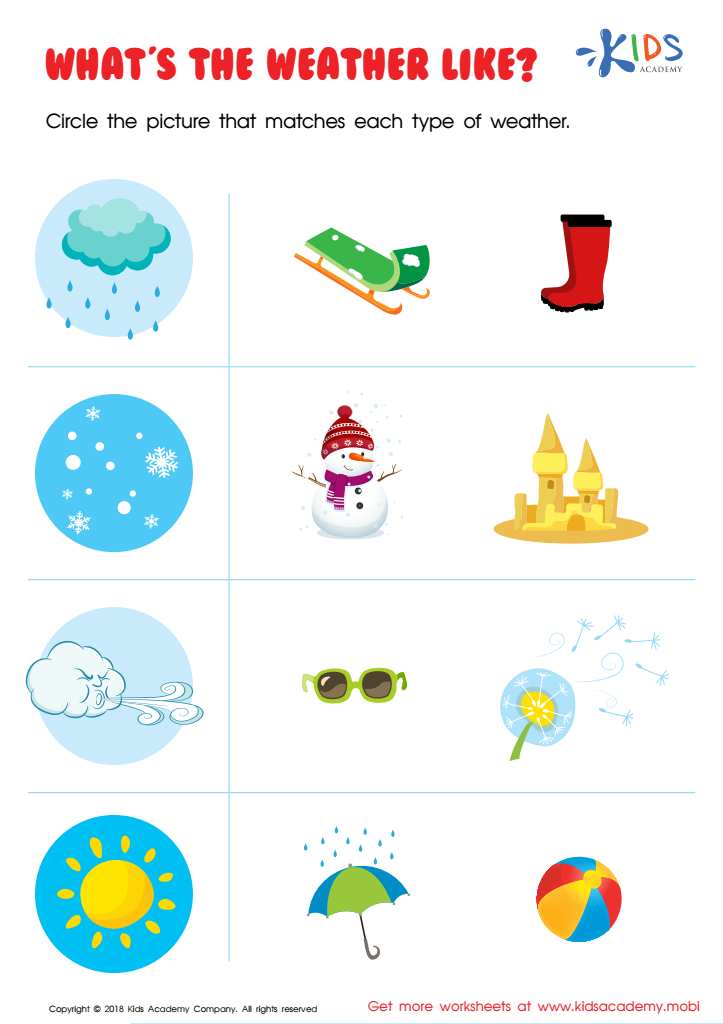
What's the Weather Like? Worksheet
 Assign to My Students
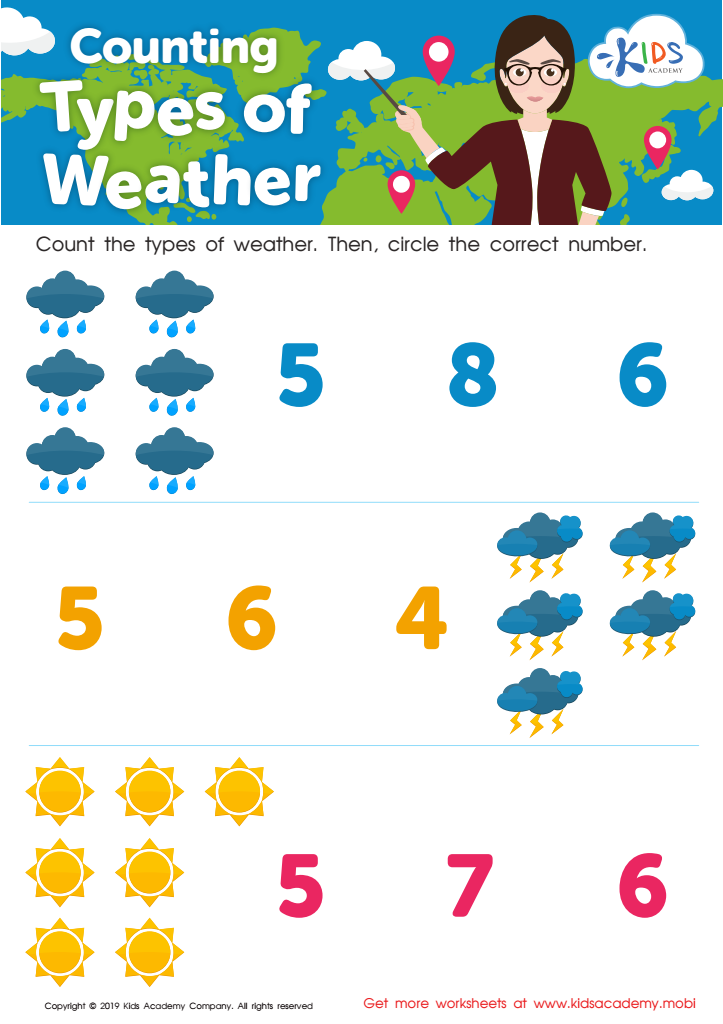
Counting Types of Weather Worksheet
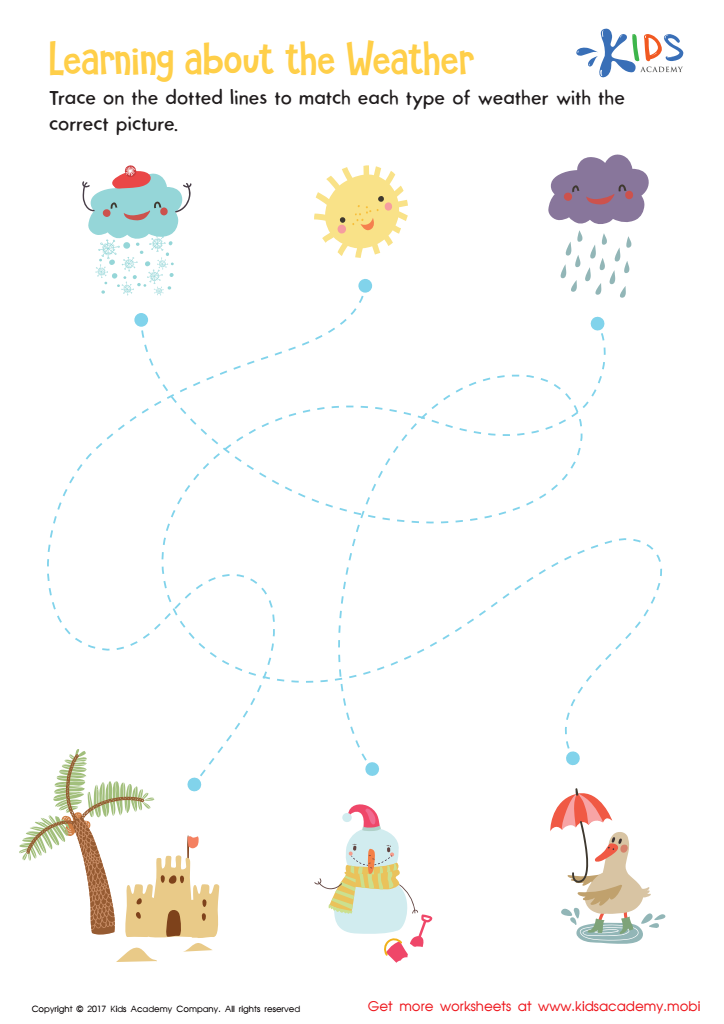








Parents and teachers should care about weather identification math for children aged 5-8 because it fosters early numeracy and critical thinking skills in a meaningful context. At this developmental stage, kids are naturally curious and responsive to their immediate environment, and weather provides a constantly changing, observable phenomenon that can make learning both relevant and engaging.
Integrating weather themes into math lessons offers numerous opportunities for children to practice key skills like counting, measuring, and categorizing. For instance, tracking daily temperatures, measuring rainfall, and recording sunny versus rainy days helps them understand numbers and simple data recording. These activities also introduce basic concepts of graphing and pattern recognition, which are fundamental in developing analytical thinking.
Moreover, discussing weather conditions and changes encourages kids to ask questions, make predictions, and test their ideas, all of which are critical aspects of scientific inquiry. This practical application of math in weather monitoring shows them how math is used in real life, thereby increasing their enthusiasm and motivation to learn.
Finally, learning about weather helps children become more aware of their natural surroundings and adopt responsible attitudes towards their environment. By connecting math with weather-related activities, parents and teachers can provide a holistic educational approach that promotes intellectual as well as social-emotional growth.








