Basic measurement concepts Measurement Worksheets for Ages 5-8
7 filtered results
-
From - To
Explore our comprehensive collection of Basic Measurement Worksheets designed for children ages 5 to 8. These engaging worksheets help young learners grasp essential measurement concepts such as length, weight, and capacity through fun activities and visual aids. Kids will enjoy practicing their skills with various exercises, including comparing sizes, using measuring tools, and understanding units of measurement. Our worksheets are suitable for both classroom settings and at-home learning, making it easy to reinforce measurement knowledge while fostering a love for math. Empower your child’s early math skills and encourage hands-on learning with our thoughtfully crafted measurement resources today!
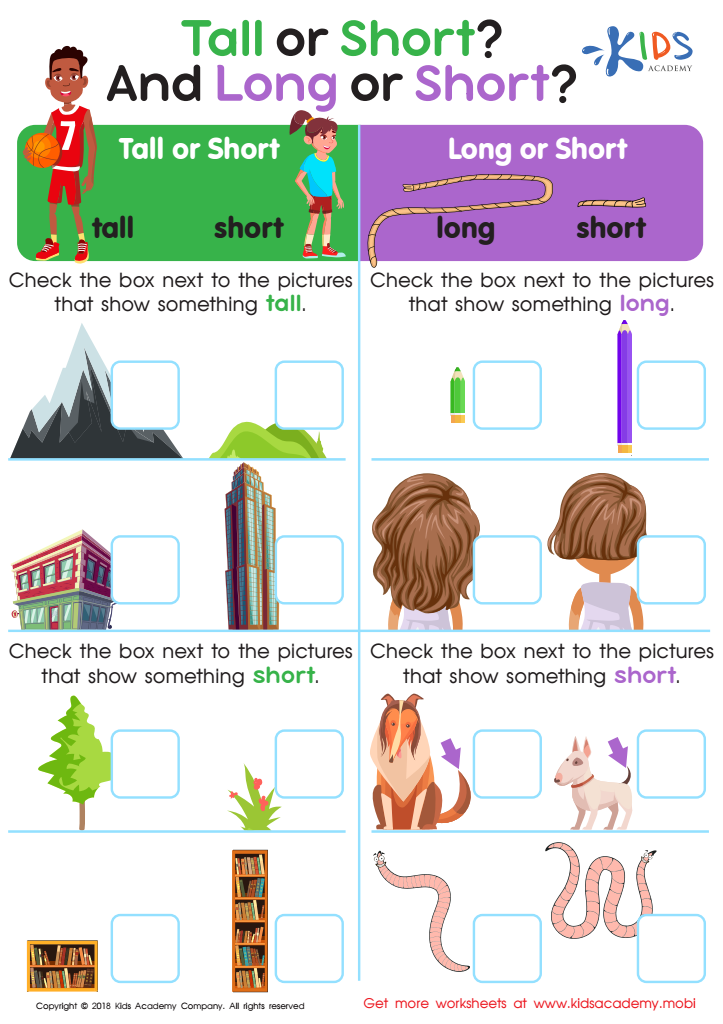
Tall or Short and Long or Short? Worksheet
 Assign to My Students
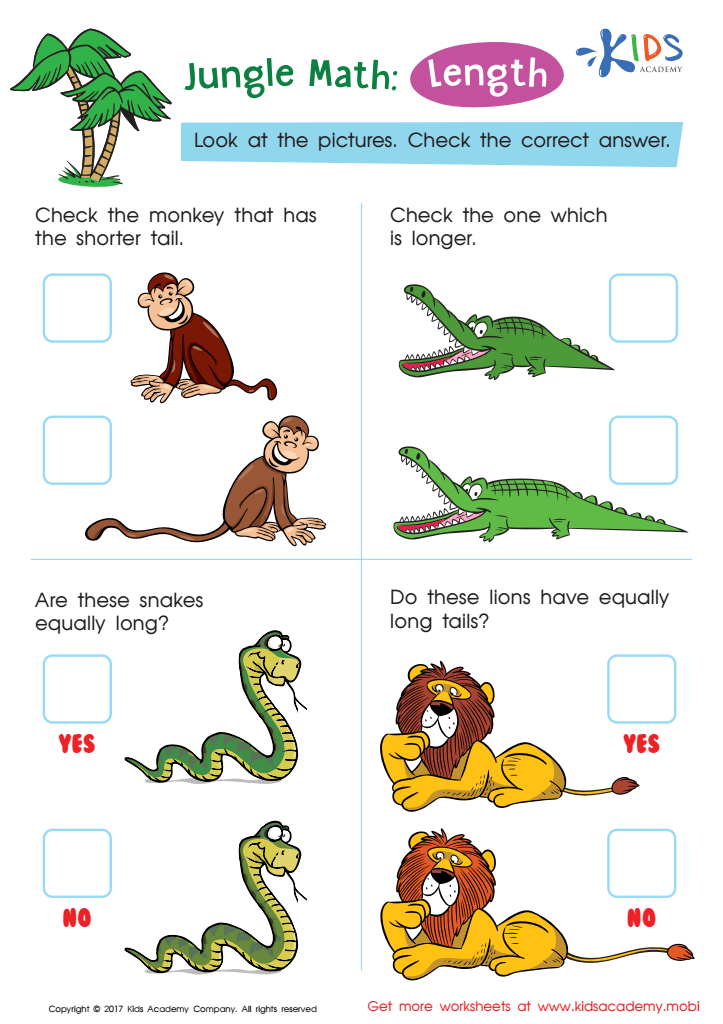
Which One Is Longer - Length Worksheet
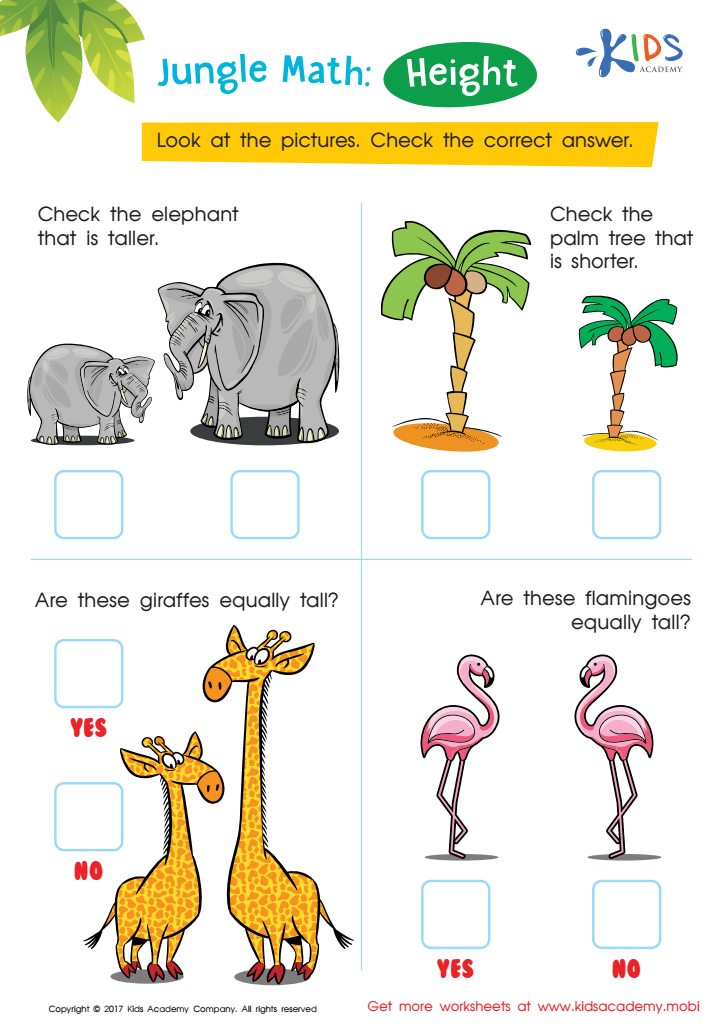
Which Is Taller Worksheet
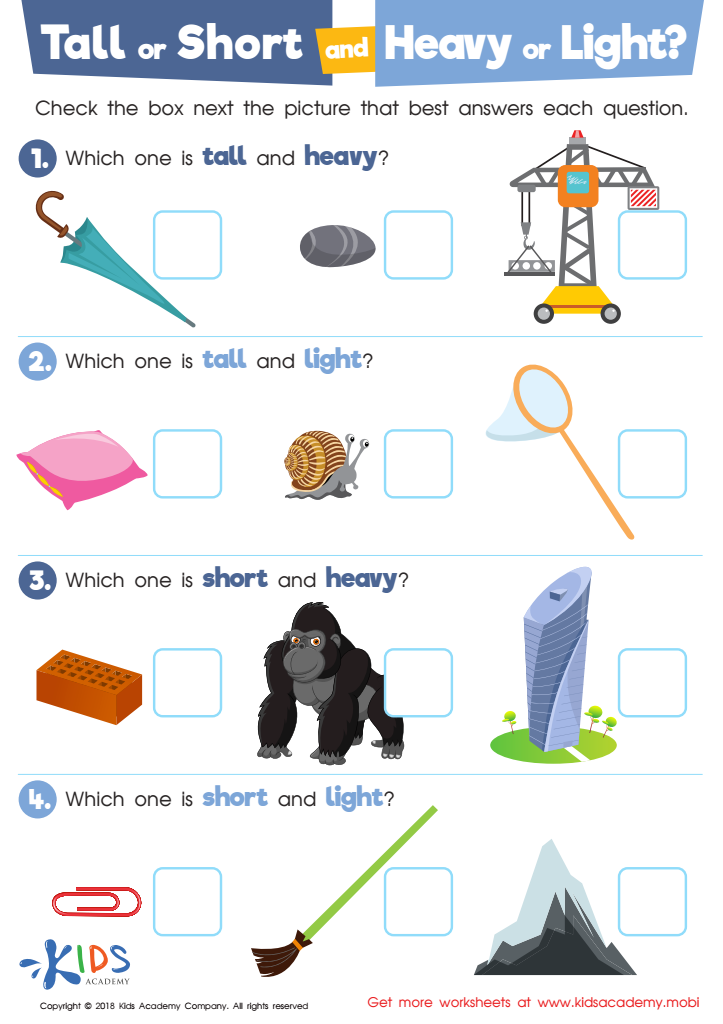
Tall or Short and Heavy or Light? Worksheet
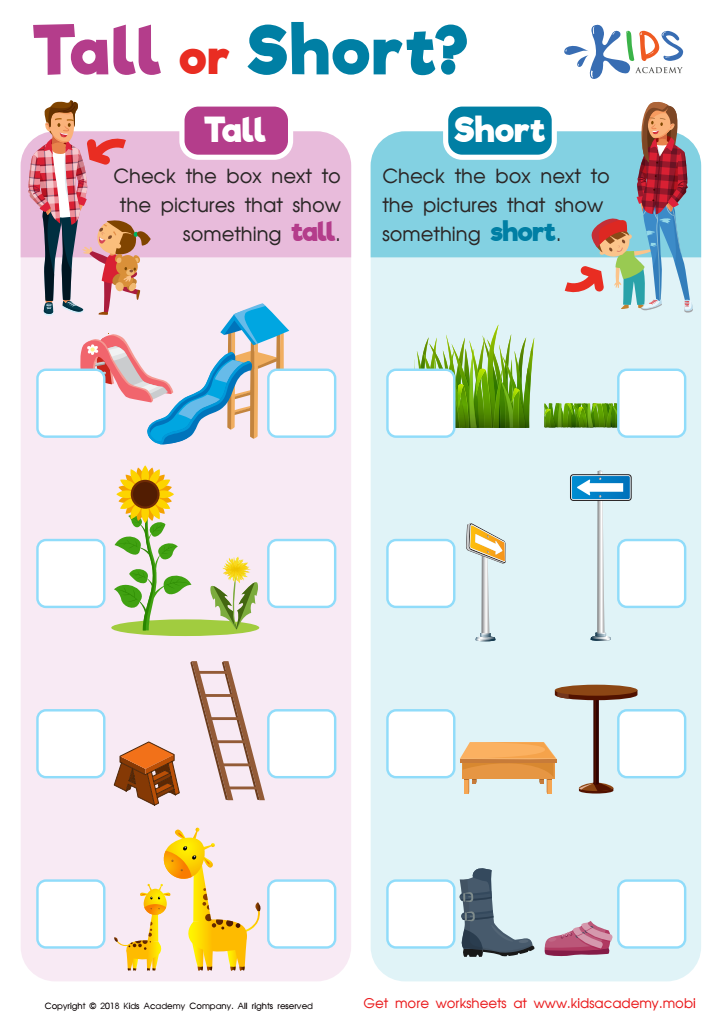
Tall or Short? Worksheet
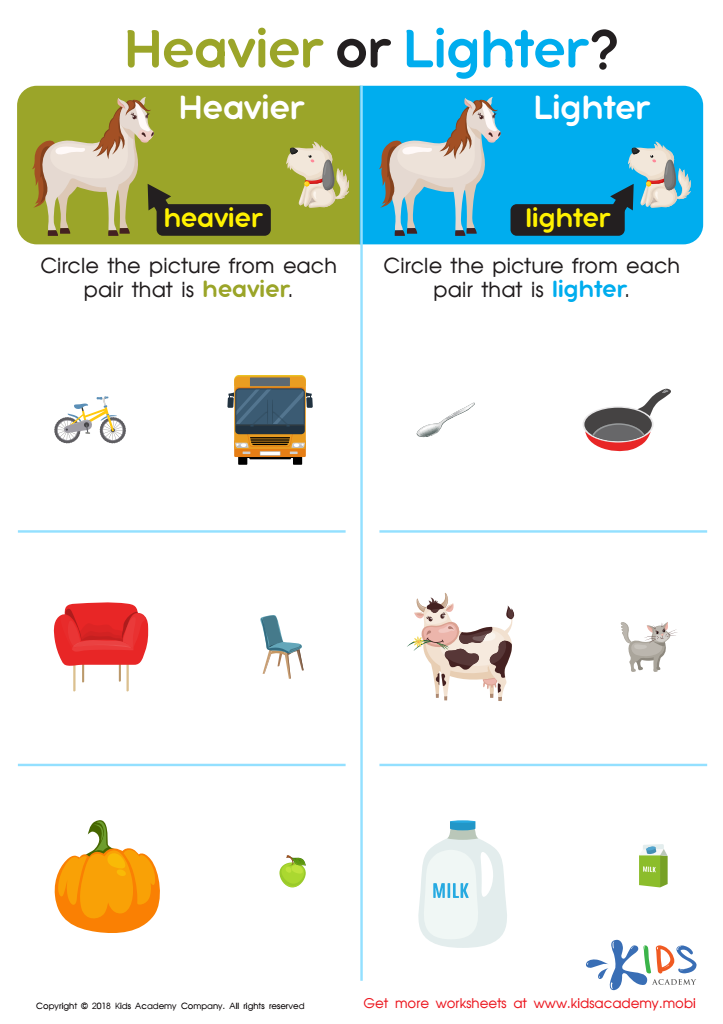
Heavier or Lighter? Worksheet
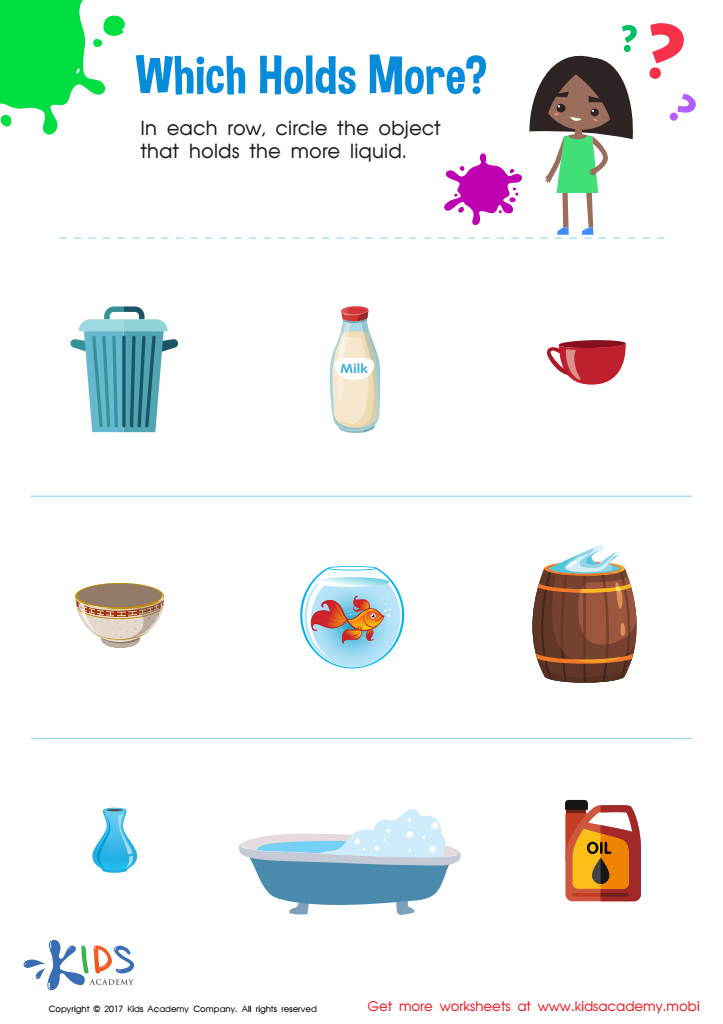
Which Holds More: Capacity Worksheet








Basic measurement concepts are fundamental for children aged 5-8, laying the groundwork for essential skills they will use throughout their lives. Parents and teachers should care about these concepts because they foster critical thinking, problem-solving, and real-world application.
At this age, children begin to understand relationships between objects and their qualities—size, weight, capacity, and time. This foundational knowledge helps them develop spatial awareness and encourages observational skills. For example, learning to measure ingredients in cooking provides a practical way to enhance math understanding and boosts confidence in their ability to tackle tasks.
Moreover, engaging in measurement activities supports cognitive development through play and exploration. This essential skill influences academic pathways in science, technology, engineering, and mathematics (STEM) fields, where precision and analytical skills are crucial.
Additionally, embracing measurement at a young age encourages curiosity and preparedness for more complex concepts as they progress in their education. Regular exposure to measurements can enrich conversations at home and in the classroom, making learning more dynamic and relational.
Ultimately, nurturing proficiency in measurement not only equips young learners with vital skills but also instills a lifelong love for learning and discovery.








