
Understanding times tables Multiplication Worksheets for Ages 5-8
6 filtered results
Difficulty Level
Grade
Age
-
From - To
Subject
Activity
Standards
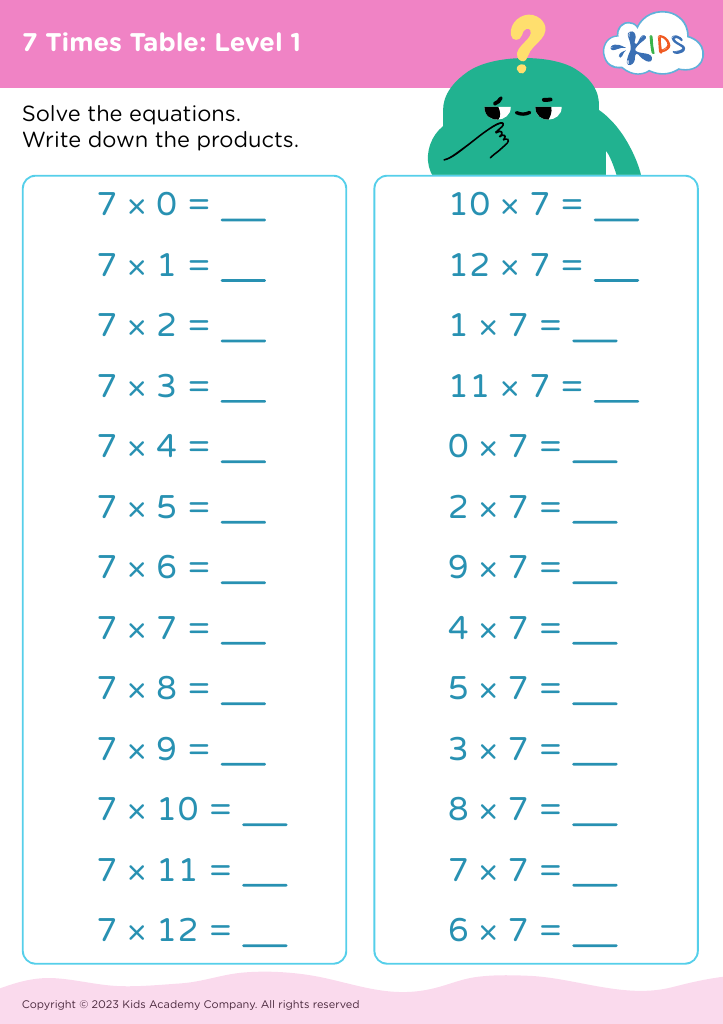
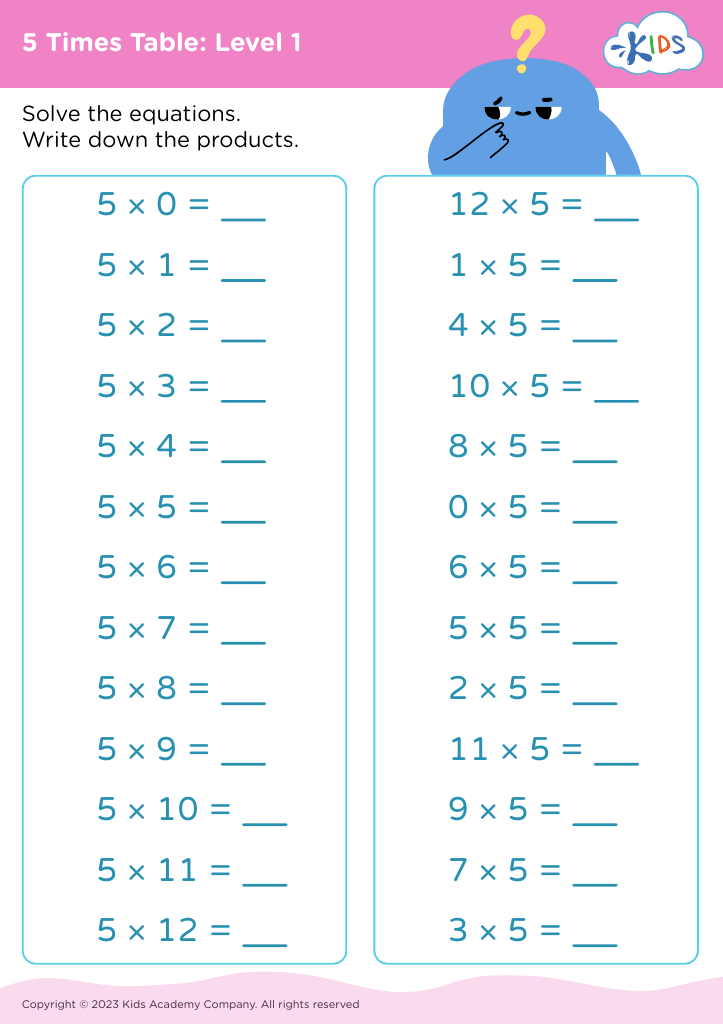
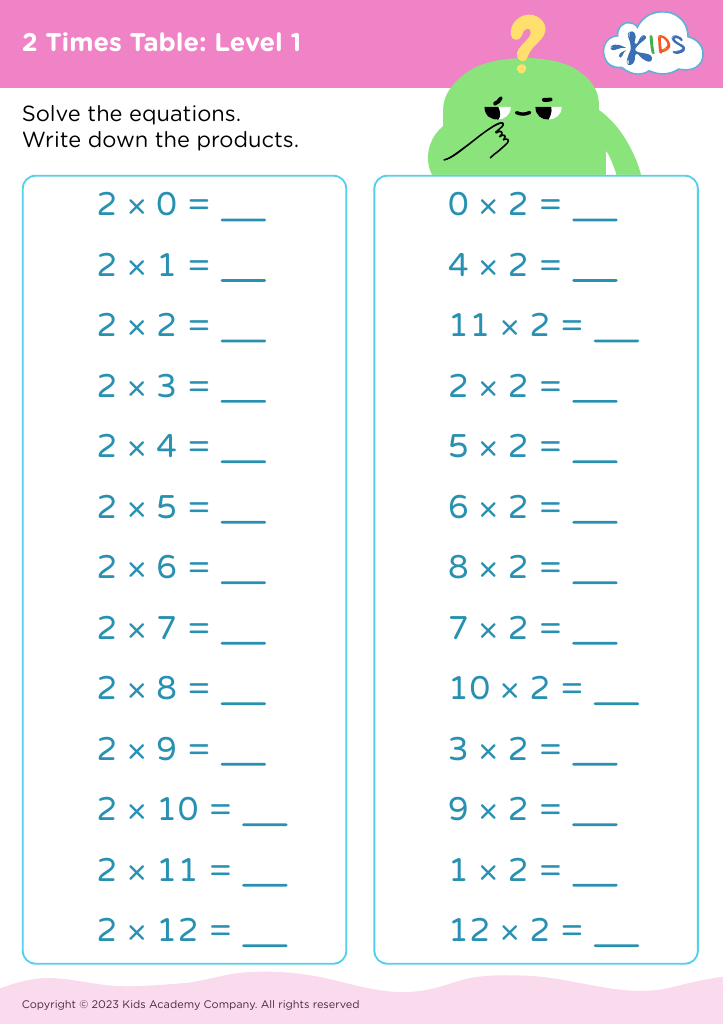
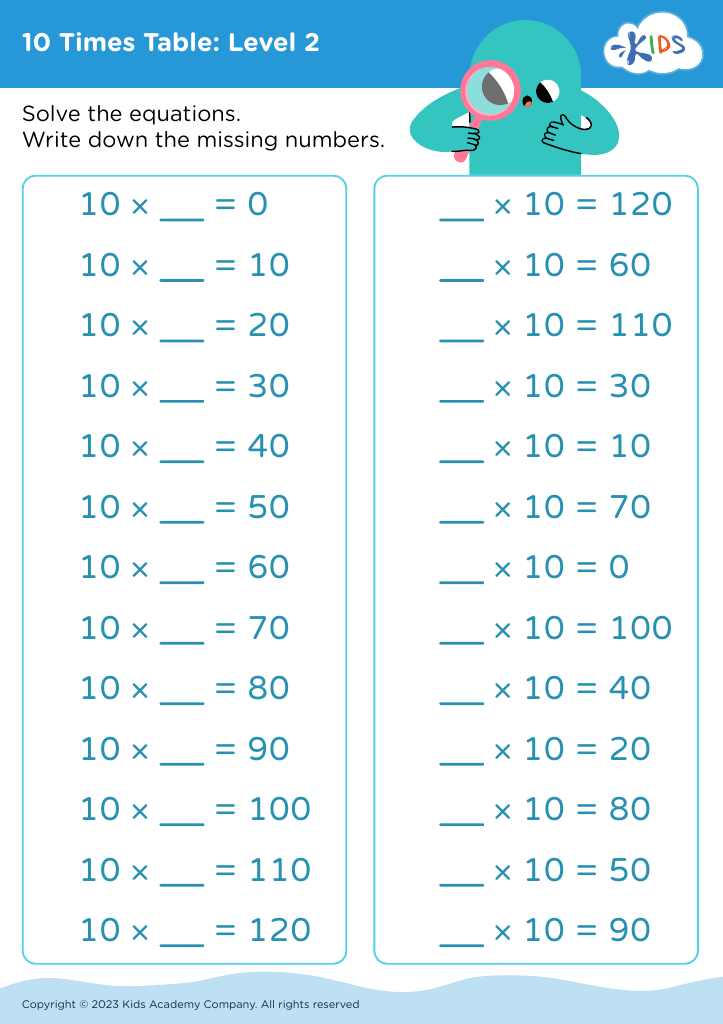
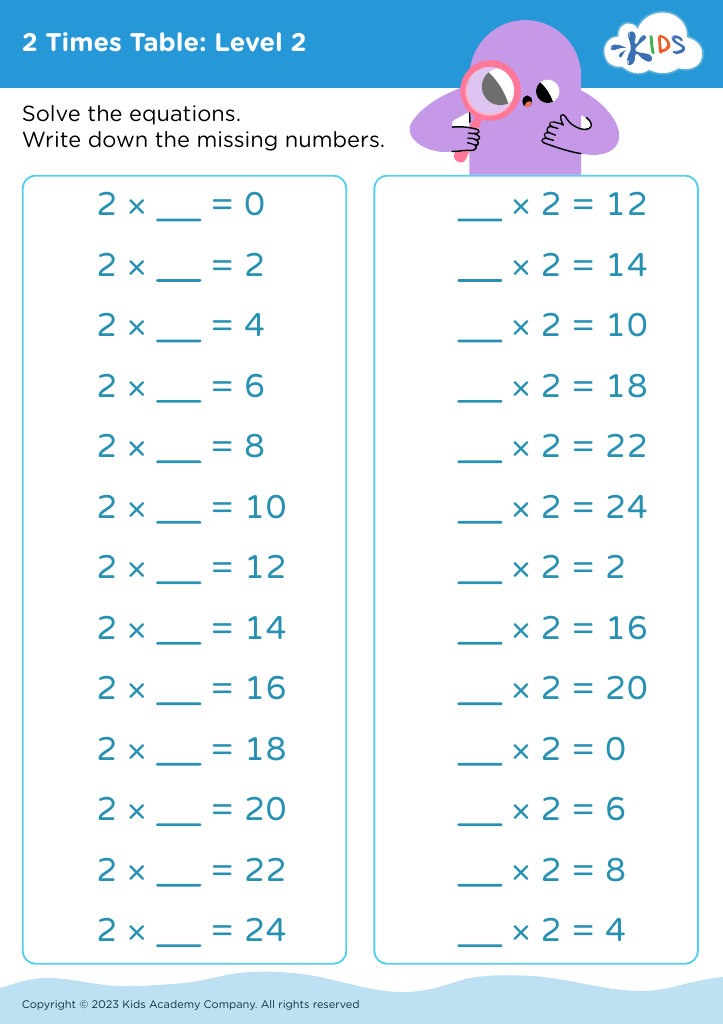
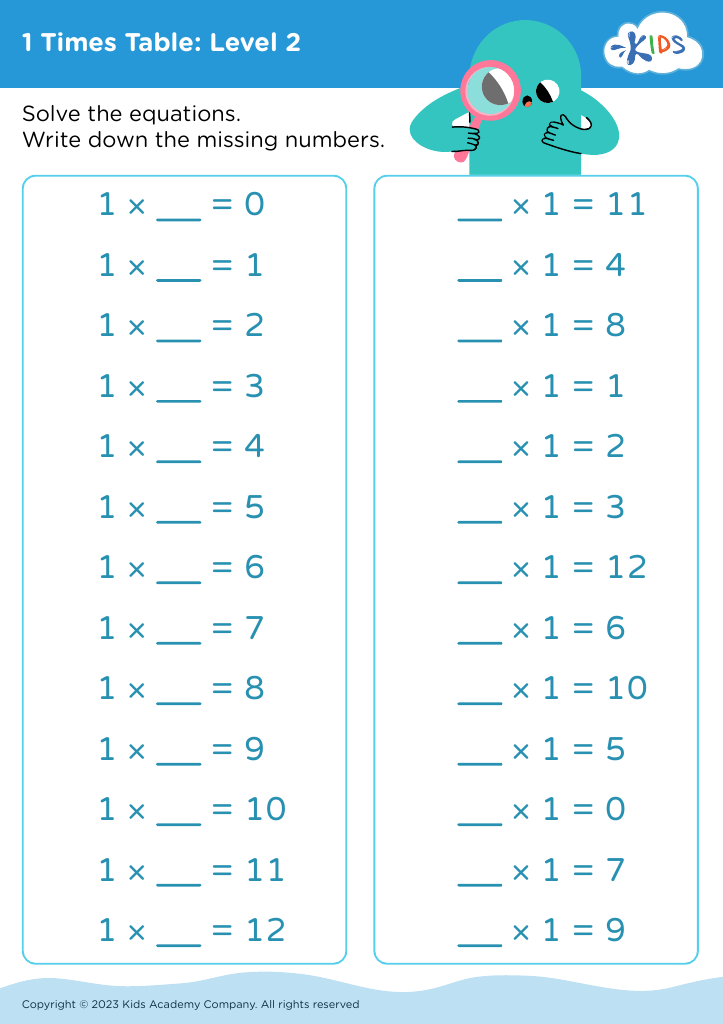
Discover our "Understanding Times Tables Multiplication Worksheets for Ages 5-8." These engaging printable worksheets are designed to help young learners grasp the basics of multiplication. Focusing on times tables, our worksheets make learning fun and effective. They feature colorful visuals and exercises that ease kids into multiplying, enhancing both confidence and skills. Ideal for home or classroom use, these resources cater to early grade levels, allowing children to practice at their own pace. Equip your child with essential multiplication knowledge and build a solid foundation with our specially crafted, educational worksheets. Perfect for ages 5 through 8!
Favorites
With answer key
Interactive
Join Kids Academy for Free
Who is primarily going to use this learning content?







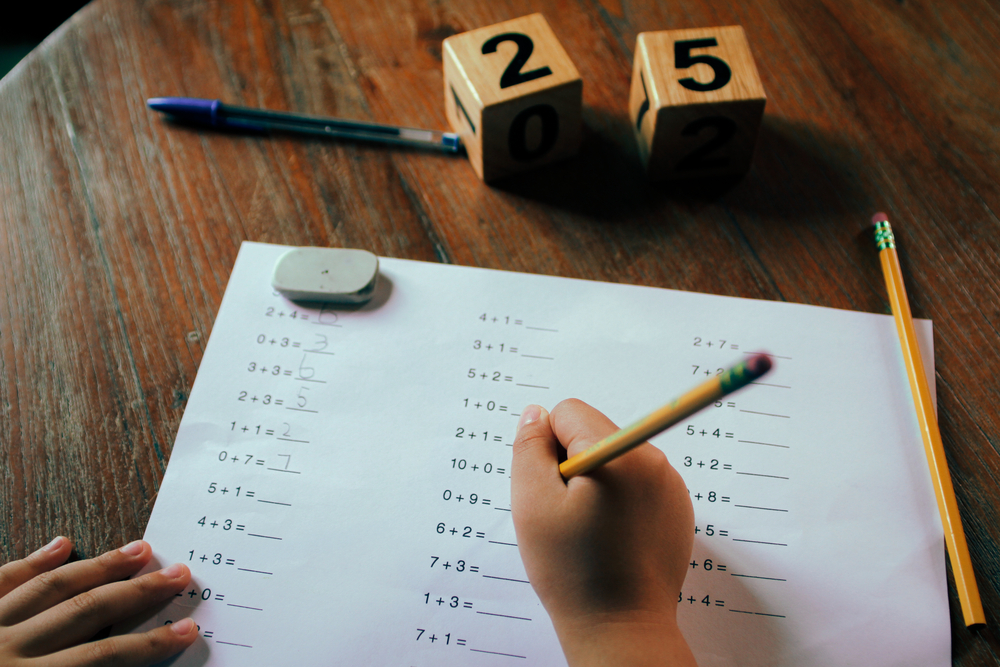
Understanding times tables multiplication at an early age, specifically for children between the ages of 5-8, is crucial for several reasons. Firstly, it lays a strong mathematical foundation. Knowing times tables aids in the easy comprehension of more advanced math concepts, such as division, fractions, and algebra. This proficiency promotes ease in problem-solving and helps children tackle more complex math problems with confidence.
Additionally, early mastery improves cognitive skills. Memorizing and understanding patterns in times tables enhance memory, concentration, and logical thinking abilities. These are critical skills that support learning across subjects, not just in mathematics.
For practical daily life, times table fluency enables children to perform quick mental calculations, which are invaluable in scenarios like shopping, cooking, or playing certain games. It also reduces math anxiety, a common issue among many students. When children feel more confident in their mathematical abilities, their overall attitude towards learning improves.
Lastly, early success in understanding multiplication instills a sense of achievement and positive reinforcement. This experiential joy in learning can foster a lifelong love and curiosity for mathematics and learning in general. Therefore, both parents and teachers should prioritize and actively participate in teaching times tables to children in this crucial developmental stage.








