Sorting skills Numbers 0–10 Worksheets for Ages 5-8
3 filtered results
-
From - To
Discover our engaging "Sorting Skills Numbers 0–10 Worksheets" specifically designed for children aged 5-8! These interactive worksheets help young learners master essential sorting skills while reinforcing their understanding of numbers from 0 to 10. Through fun and educational activities, children will categorize and sort various objects, enhancing their mathematical skills and cognitive development. Each worksheet is crafted to promote critical thinking, hand-eye coordination, and number recognition, making math enjoyable and memorable. Ideal for both parents and educators, our worksheets can be easily integrated into home or classroom learning. Start your child's journey to numeracy and logical reasoning today!
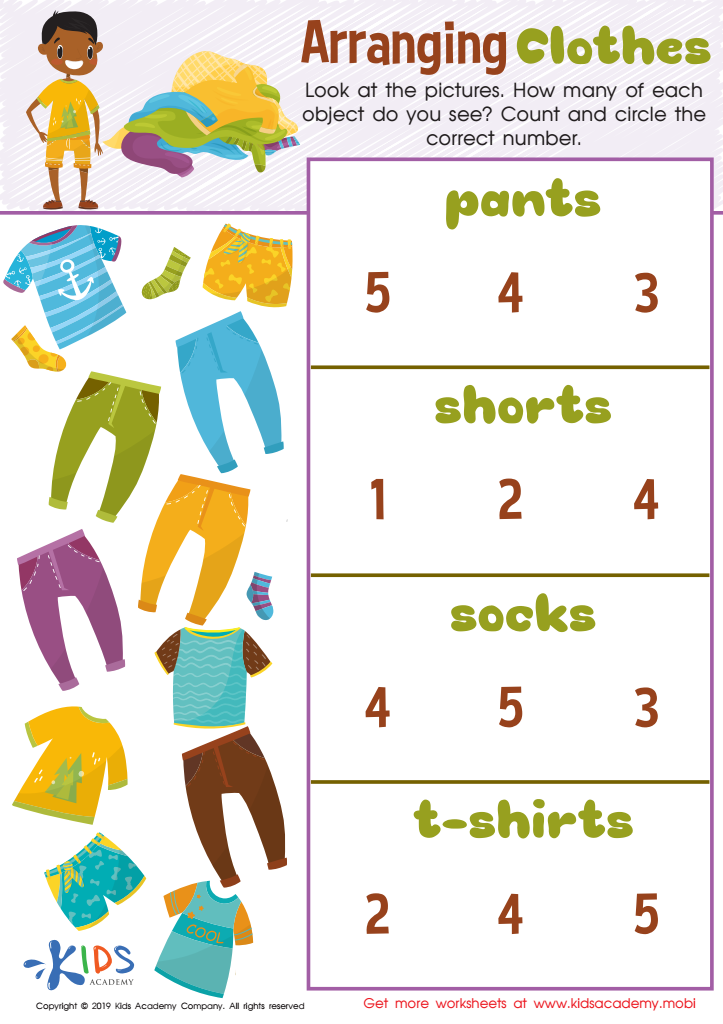
Arranging Clothes Worksheet
 Assign to My Students
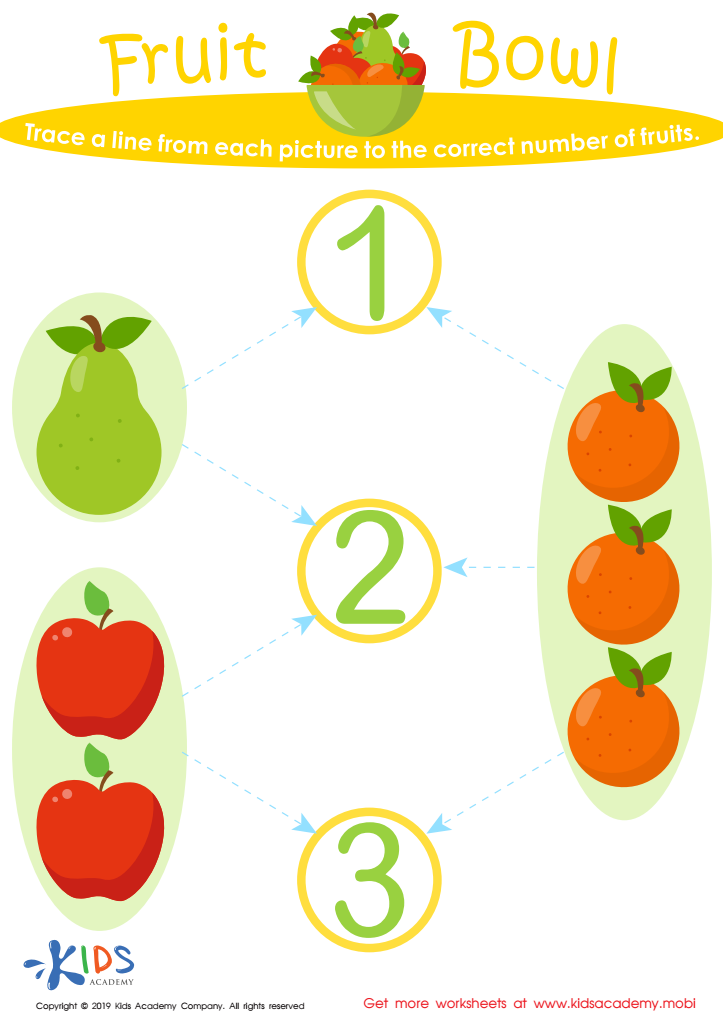
Fruit Bowl Worksheet
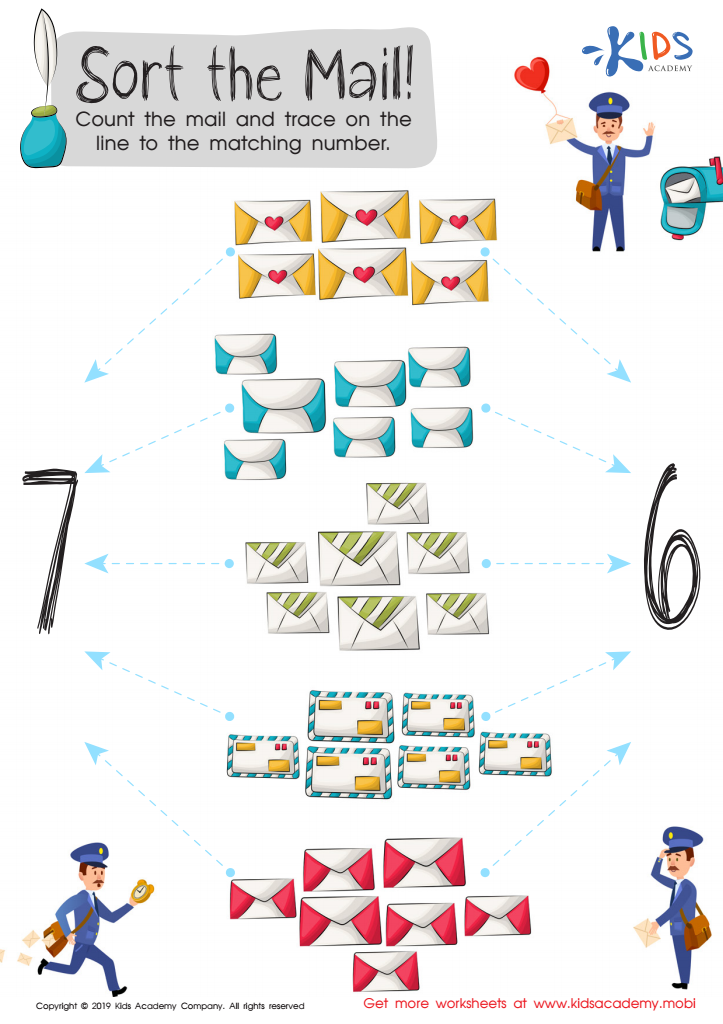
Sort the Mail Worksheet








Sorting skills are foundational for children ages 5-8, particularly when it comes to understanding numbers 0-10. Parents and teachers should care about this crucial skill because sorting helps young learners develop essential cognitive abilities, including critical thinking, problem-solving, and mathematical reasoning.
When children practice sorting numbers, they learn how to categorize, compare, and make decisions based on observable differences, such as size, quantity, or characteristics. This skill enhances their ability to recognize patterns and understand the relationships between numbers, which is vital for arithmetic and future mathematical concepts.
Moreover, sorting aids in their organizational skills. In a classroom setting or at home, children who can sort numbers and objects can manage their materials and time effectively, leading to improved focus and learning outcomes.
Additionally, the process of sorting can be made interactive and enjoyable, turning learning into a game. This engagement boosts motivation and reinforces a positive attitude toward mathematics. Encouraging sorting skills in everyday situations paves the way for developing a strong mathematical foundation, preparing children for more advanced concepts in the future. This makes sorting not just a simple task, but an essential building block for lifelong learning in mathematics and beyond.








