Number Recognition Numbers up to 100 Worksheets for Ages 5-8 - Page 2
27 filtered results
-
From - To
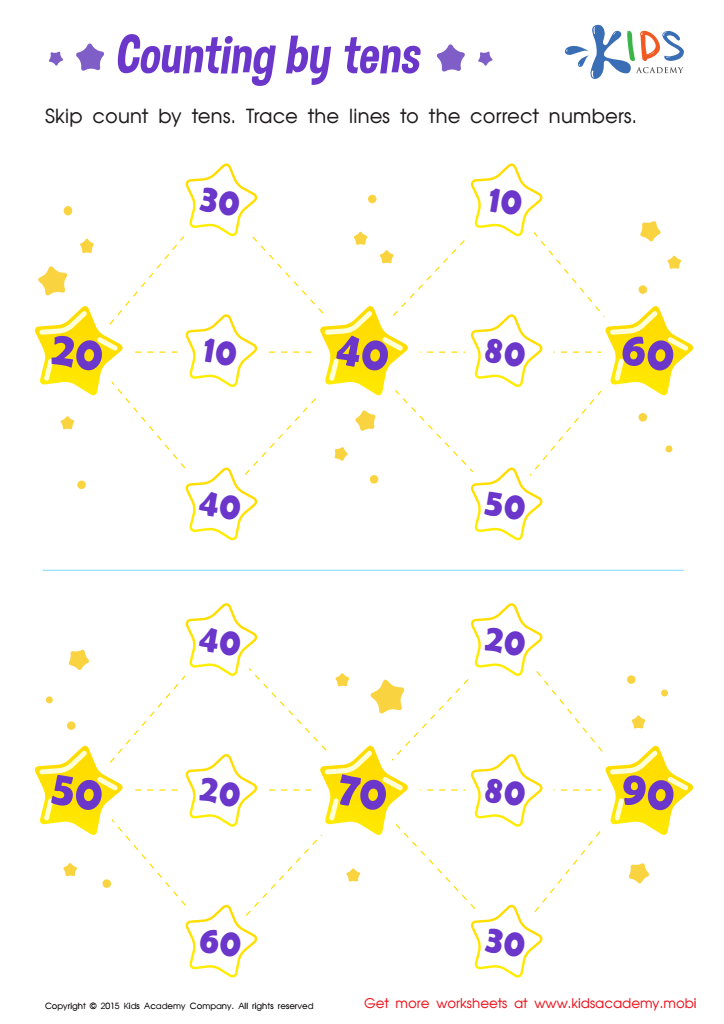
Learn Dozens: Counting by Tens Printable
 Assign to My Students
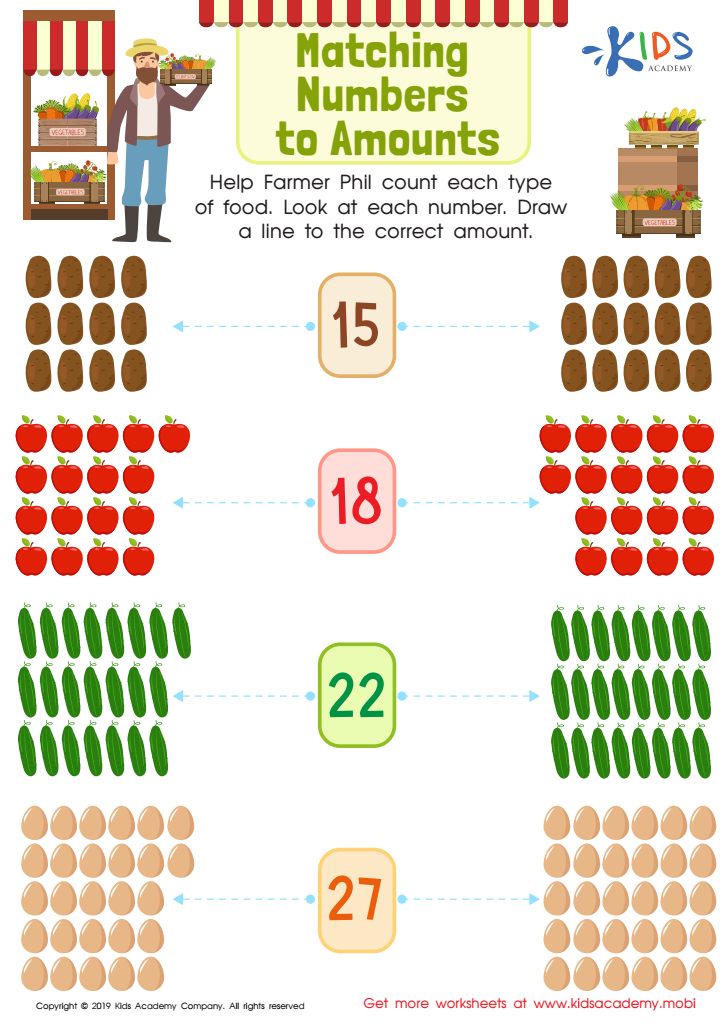
Matching Numbers to Amounts Worksheet

Counting on the City Skyline: Dot-to-Dot Worksheet








Number recognition is a foundational skill vital for young learners aged 5-8, and both parents and teachers play crucial roles in fostering this ability. Mastering number recognition helps children develop early math skills, which are essential for their academic success. By recognizing numbers up to 100, children can engage in basic counting, identify quantities, and understand numerical relationships, laying the groundwork for more complex mathematical concepts in the future, such as addition and subtraction.
Additionally, number recognition enhances cognitive development, boosting critical thinking and problem-solving skills. It provides children with a sense of confidence and autonomy as they navigate their world, from counting objects in their environment to recognizing numbers in everyday life, such as on clocks or in grocery stores.
Parents and teachers can further promote number recognition through engaging activities like games, flashcards, and interactive learning tools. This collaborative approach not only reinforces learning but also deepens the bond between adults and children as they explore the world of numbers together. Ultimately, fostering number recognition in young learners equips them with essential skills that support their overall educational journey and prepares them for future challenges in mathematics and beyond.