
Mathematical reasoning Skip Counting Worksheets for Ages 5-8
3 filtered results
Difficulty Level
Grade
Age
-
From - To
Subject
Activity
Standards
Explore our engaging "Mathematical Reasoning Skip Counting Worksheets" designed for children aged 5-8! These worksheets enhance early math skills through fun activities that make skip counting enjoyable and interactive. Perfect for at-home learning or classroom use, they promote number sense, pattern recognition, and problem-solving abilities. Each worksheet incorporates colorful illustrations and diverse exercises to captivate young learners while reinforcing essential mathematical concepts. Parents and educators will appreciate our easy-to-use resources that support skill development in a dynamic way. Encourage your child's confidence and proficiency in mathematics with our captivating skip counting worksheets today!
Favorites
With answer key
Interactive
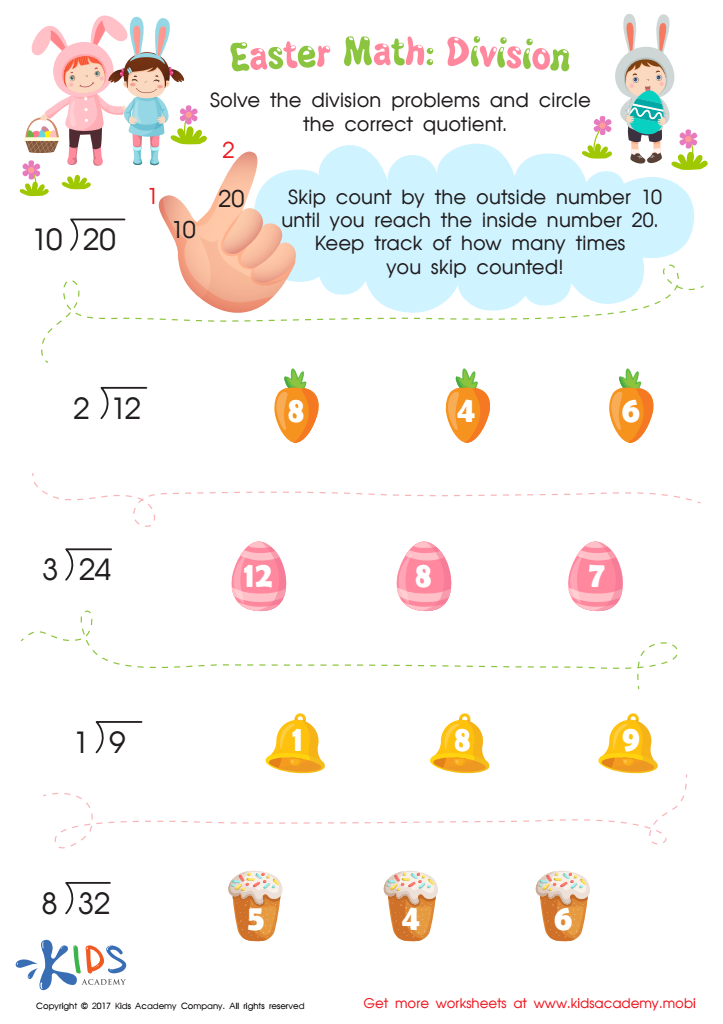
Division Worksheet
Try this Easter-themed PDF worksheet for grade 3: perfect for teaching division with a fun, new trick! It's full of bright, colorful pictures your child will love, and it's as easy as skip counting to solve the problems.
 Assign to My Students
Division Worksheet
Worksheet
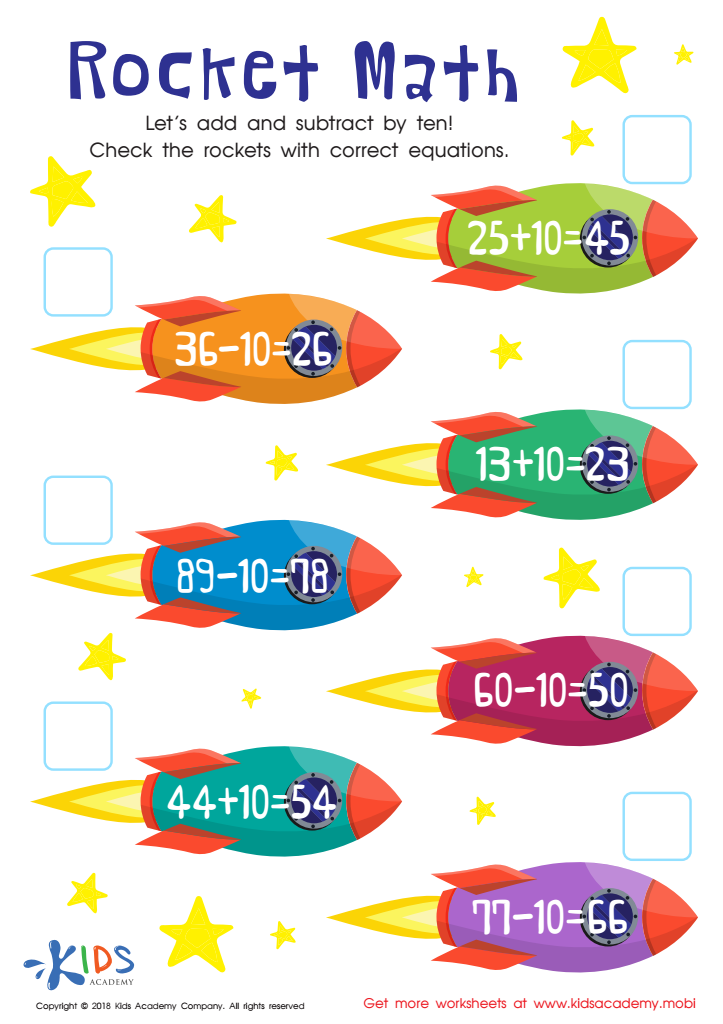
Rocket Math Worksheet
Your students will be math wizards in no time as they blast off on this exciting and colorful PDF worksheet. They'll use the 10s strategy to practice addition and subtraction, and they'll learn to skip count forwards and backwards. Keep them engaged and make learning fun!
Rocket Math Worksheet
Worksheet
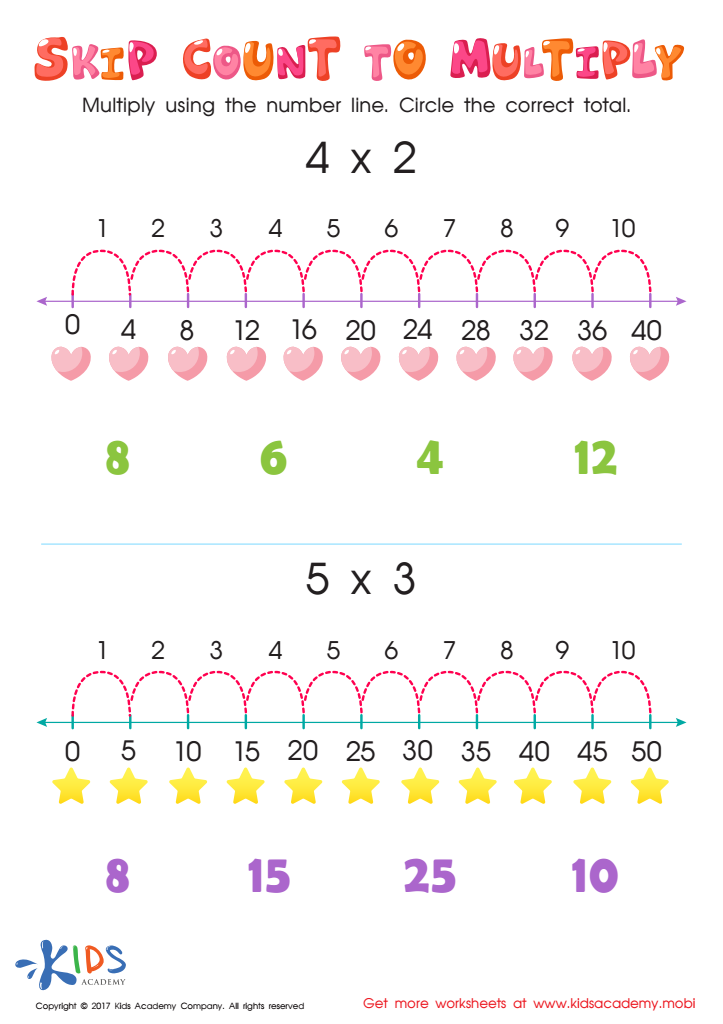
Skip Count Multiplication Worksheet
This colorful worksheet helps kids multiply by skip counting on a number line. Kids gain a better understanding of multiplication by seeing how the answer is calculated.
Skip Count Multiplication Worksheet
Worksheet
Join Kids Academy for Free
Who is primarily going to use this learning content?








Mathematical reasoning, particularly through skip counting, is a critical foundational skill for children aged 5-8 that parents and teachers should prioritize. Skip counting—counting by numbers other than one, such as twos, fives, or tens—supports numerical fluency and enhances children's ability to understand patterns in numbers. This skill is fundamental as it allows young learners to grasp more complex mathematical concepts like addition, subtraction, multiplication, and even division later on.
By emphasizing skip counting, educators and parents help children develop strong problem-solving skills. This comfortable familiarity with numbers increases confidence, making math less daunting. Additionally, it fosters logical thinking as children begin recognizing sequences, improving their ability to predict outcomes and make calculations efficiently.
Moreover, skip counting can be integrated into everyday activities, making learning more engaging and practical. Whether counting steps, grouping objects, or timing events, the application enriches understanding and supports cognitive development. By nurturing these skills early on, adults equip children not only with mathematical competence but also with perseverance and a positive attitude toward learning. In short, caring about skip counting means investing in a child's future success in mathematics and broader problem-solving abilities.








