
Enhancing calculation skills Subtraction Worksheets for Ages 5-8
3 filtered results
Difficulty Level
Grade
Age
-
From - To
Subject
Activity
Standards
Enhance your child's calculation skills with our engaging subtraction worksheets designed specifically for ages 5-8. These printable resources offer a variety of fun and interactive activities that help reinforce subtraction concepts in a playful manner. Perfect for both parents and teachers, our worksheets promote essential math skills while keeping learning enjoyable. Children will develop confidence in their abilities through step-by-step exercises, games, and visual aids that cater to different learning styles. As they practice, they’ll build a solid foundation for more advanced math concepts. Start your child's subtraction journey today and watch their math skills flourish!
Favorites
With answer key
Interactive
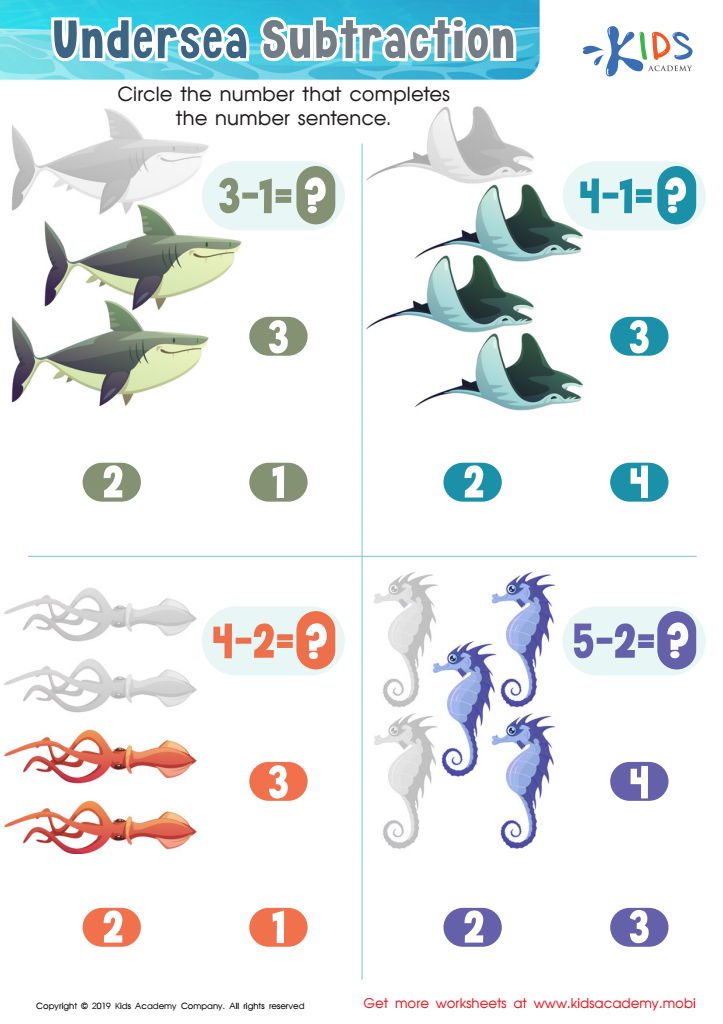
Undersea Subtraction Worksheet
To give your kids an advantage in math, use this worksheet! Begin by having them identify the fish in the picture. Then, have them circle the number that completes the number sentences. This will help them get some extra practice with subtraction!
 Assign to My Students
Undersea Subtraction Worksheet
Worksheet
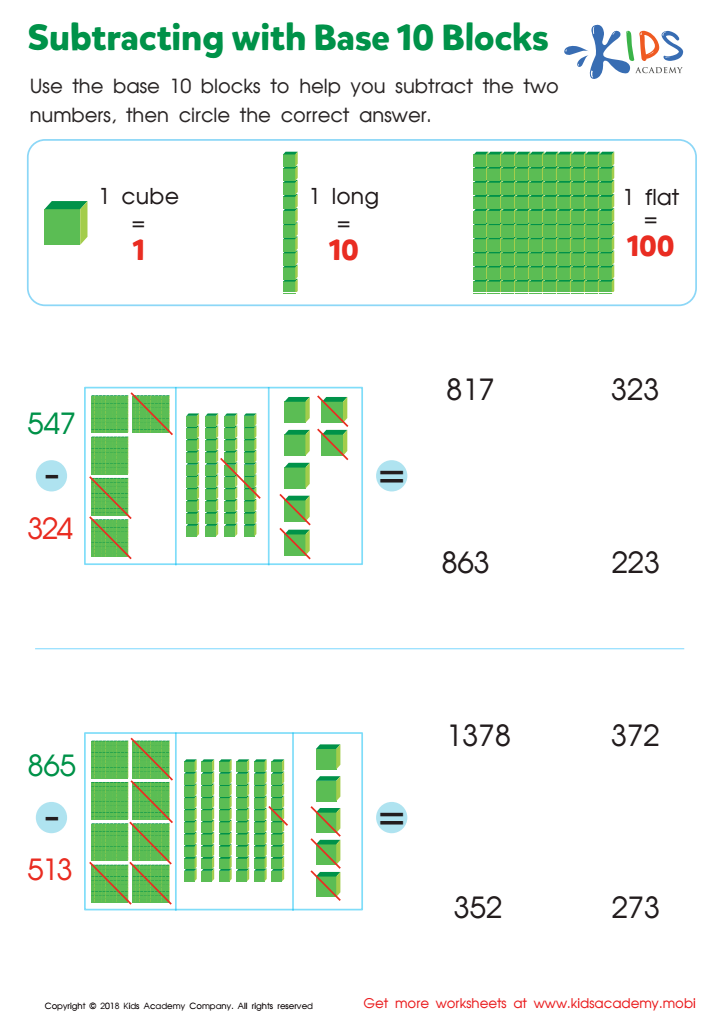
Subtracting with Base 10 Blocks Worksheet
Is your child having difficulty with 3-digit subtraction? They're not alone! Show your kid the idea behind subtracting with the help of Kids Academy's PDF worksheet. Colorful green base blocks are used to visualize the concept. Starting from the tens column, subtract each number and use the images for guidance. Allow your child to circle the correct answer for a comprehensive math lesson.
Subtracting with Base 10 Blocks Worksheet
Worksheet
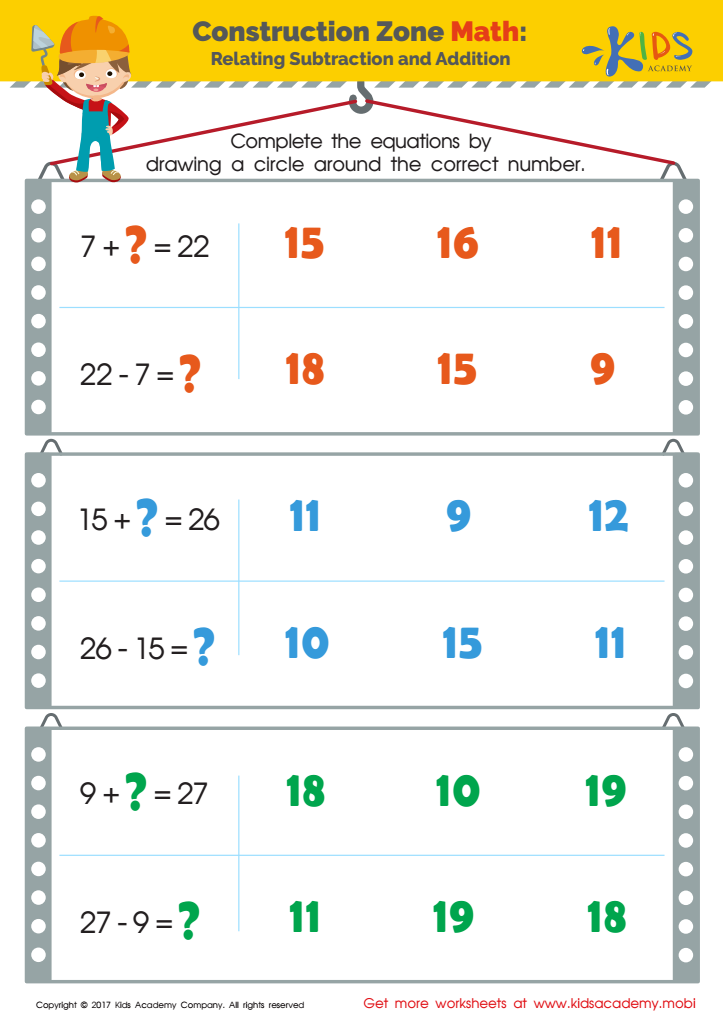
Related Addition and Subtraction Facts Worksheet
Help your child nurture their numeracy skills by introducing them to related addition and subtraction facts. Worksheets like this will give them a fun and easy way to learn how numbers work.
Related Addition and Subtraction Facts Worksheet
Worksheet
Learning Skills
Join Kids Academy for Free
Who is primarily going to use this learning content?








Enhancing subtraction skills for children aged 5-8 is critical for several reasons. First, subtraction is a foundational math concept that not only develops a child’s ability to perform arithmetic but also builds essential problem-solving skills. Mastering subtraction helps children understand practical applications in everyday life, such as handling money, measuring objects, and comparing quantities.
Furthermore, strong calculation skills foster confidence and independence in young learners. Children who struggle with subtraction may feel discouraged, leading to negative attitudes towards math that could persist into later grades. By emphasizing subtraction through engaging activities and supportive teaching practices, parents and teachers can play pivotal roles in nurturing a positive math mindset.
Moreover, enhancing calculation skills supports overall academic performance. A solid understanding of subtraction benefits literacy, as children begin to grasp symbol recognition and pattern identification. Collaborative efforts between parents and teachers in reinforcing these skills creates a cohesive learning environment, ensuring that children receive consistent messaging and support. Ultimately, honing subtraction abilities lays the groundwork for more complex mathematical concepts, paving the way for a successful educational journey and a lifelong appreciation for math. Prioritizing these skills is, therefore, essential for equipping children with essential tools for future success.








