Multiplication practice Subtraction Worksheets for Ages 5-8
3 filtered results
-
From - To
Discover our engaging Multiplication Practice Subtraction Worksheets specially designed for children aged 5-8. These printable worksheets from Kids Academy provide a fun way to master math skills through a blend of subtraction and introductory multiplication exercises. Each worksheet is crafted to reinforce understanding, build confidence, and enhance problem-solving abilities. Ideal for young learners, our interactive activities and colorful graphics make math practice enjoyable. Whether at home or in the classroom, ensure your child develops a strong numerical foundation with our expertly designed resources. Start your child's math adventure today and watch them thrive!
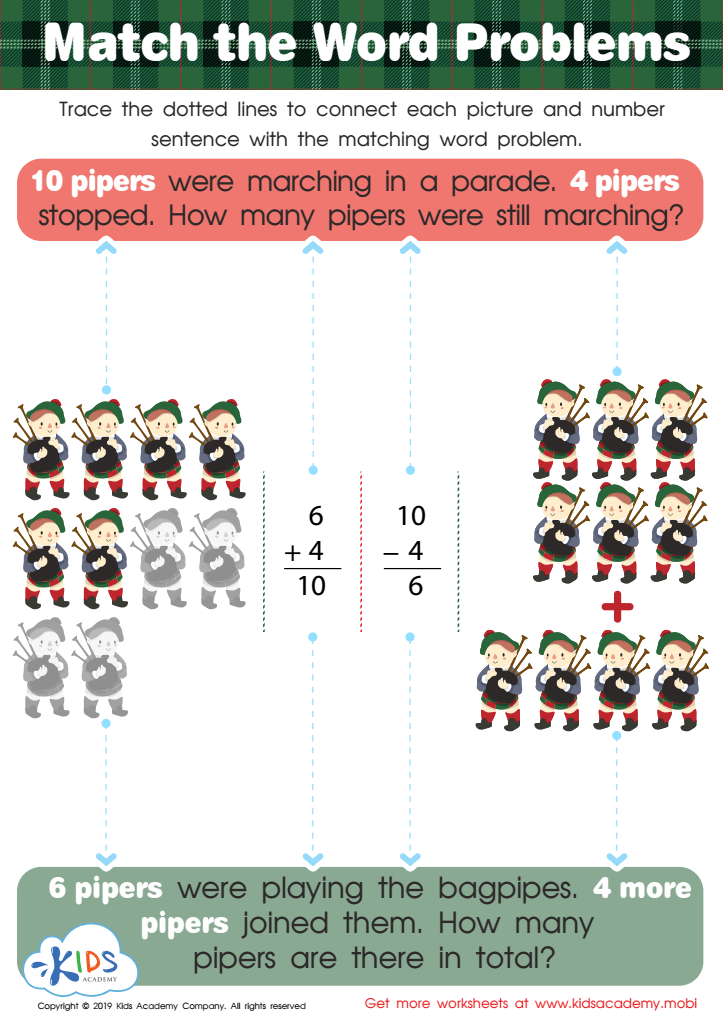
Match the Word Problems Worksheet
 Assign to My Students
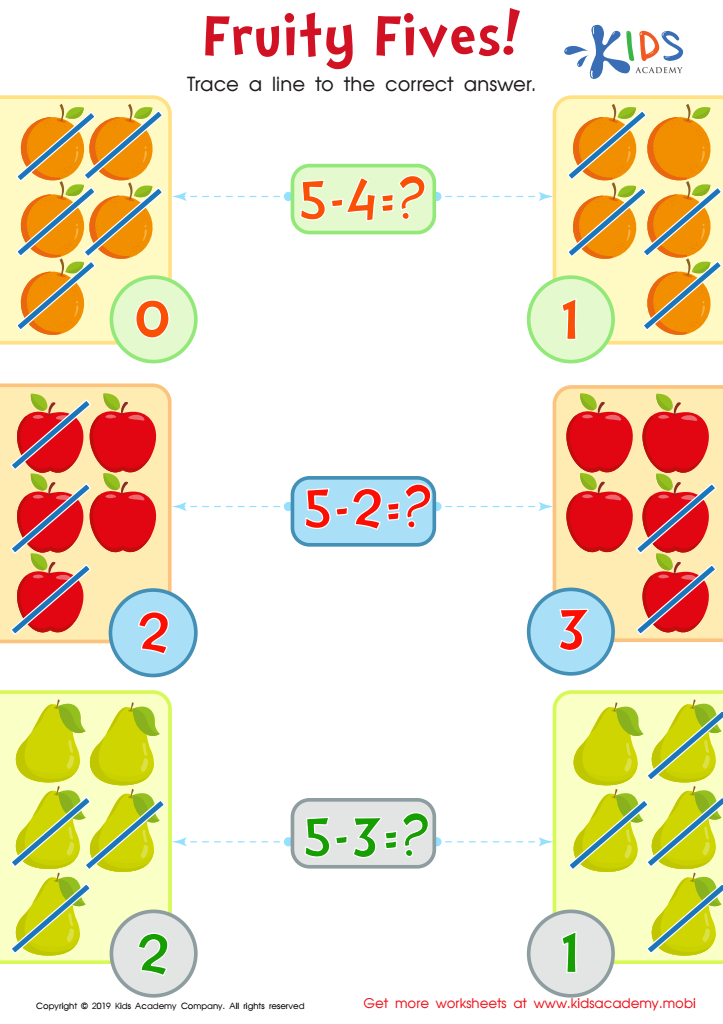
Fruity Fives! Worksheet
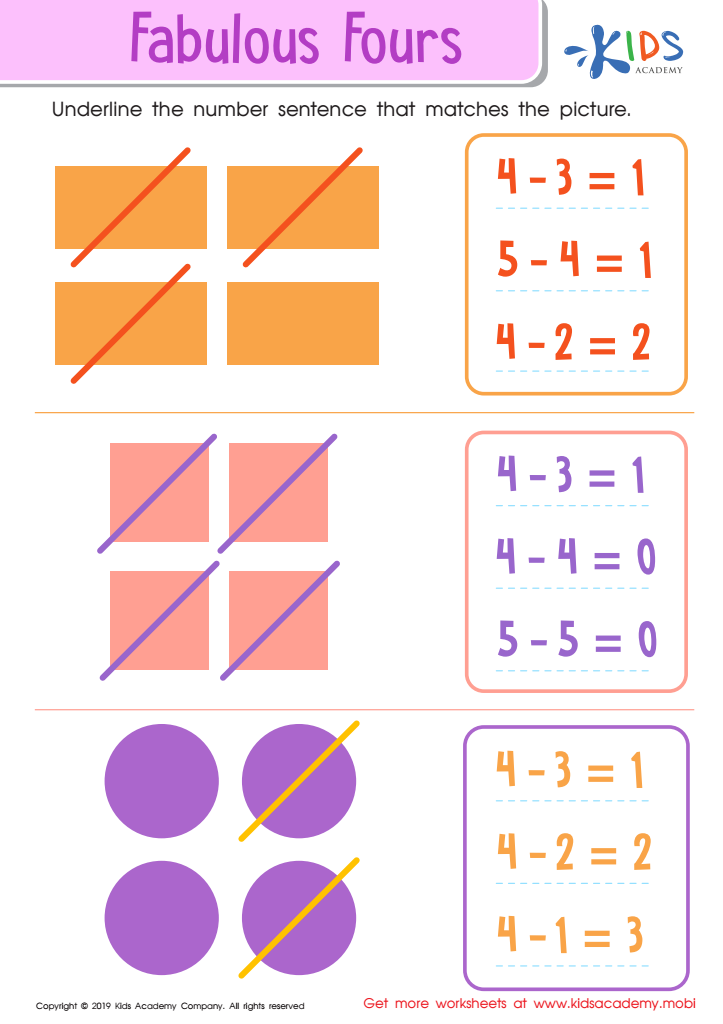
Fabulous Fours Worksheet








Parents and teachers should care about multiplication and subtraction practice for children ages 5-8 because these are foundational math skills critical to their academic development and everyday life competence. Within this age group, children are often in kindergarten through second grade, a pivotal period wherein they build basic arithmetic skills that serve as building blocks for higher-level math concepts.
Subtraction provides a child with an understanding of taking away and finding differences, essential not only in mathematics but in daily problem-solving and logical reasoning. Early mastery of subtraction leads to better comprehension of further arithmetic operations, such as division.
Additionally, even though formal multiplication is usually introduced slightly later, getting young children familiar with the concept of repeated addition lays the groundwork for easier absorption of multiplicative principles. Early familiarity can spark a child’s interest and confidence in math, reducing anxiety toward the subject as they progress academically.
Daily practice enhances speed, accuracy, and confidence, making it easier for children to perform calculations, which are integral even in common activities, such as sharing toys or understanding time and money.
Overall, a strong proficiency in these skills supports cognitive development, boosts academic performance, and equips children with essential tools for everyday life. This practice encourages a positive and proactive attitude towards learning mathematics, fostering lifelong benefits.








