Understanding patterns Times Tables Worksheets for Ages 5-8
3 filtered results
-
From - To
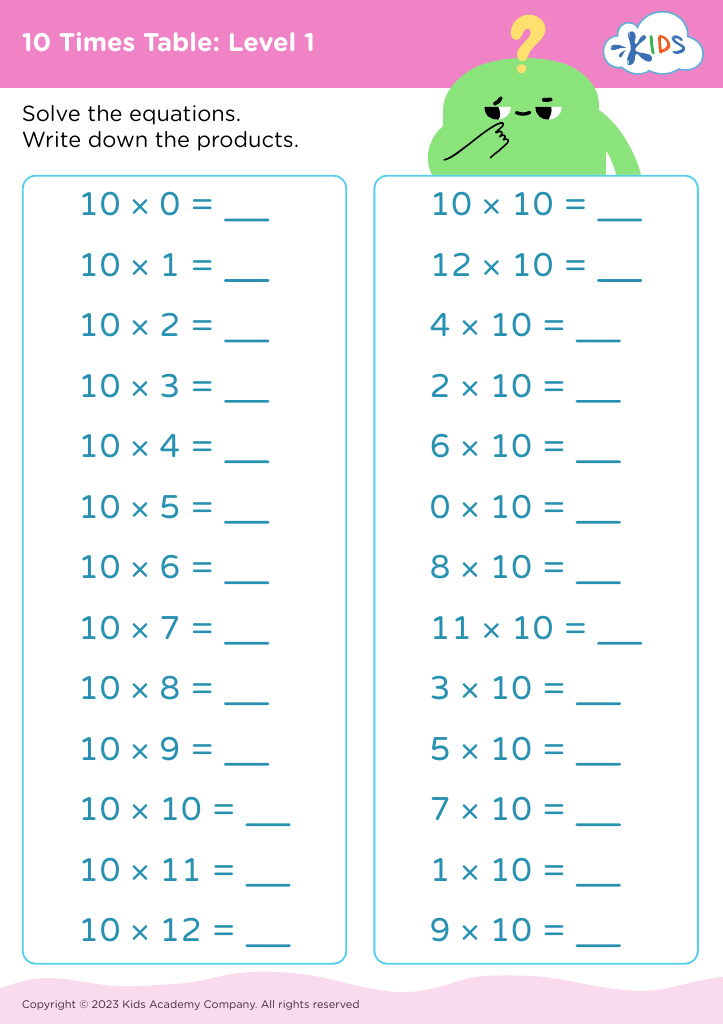
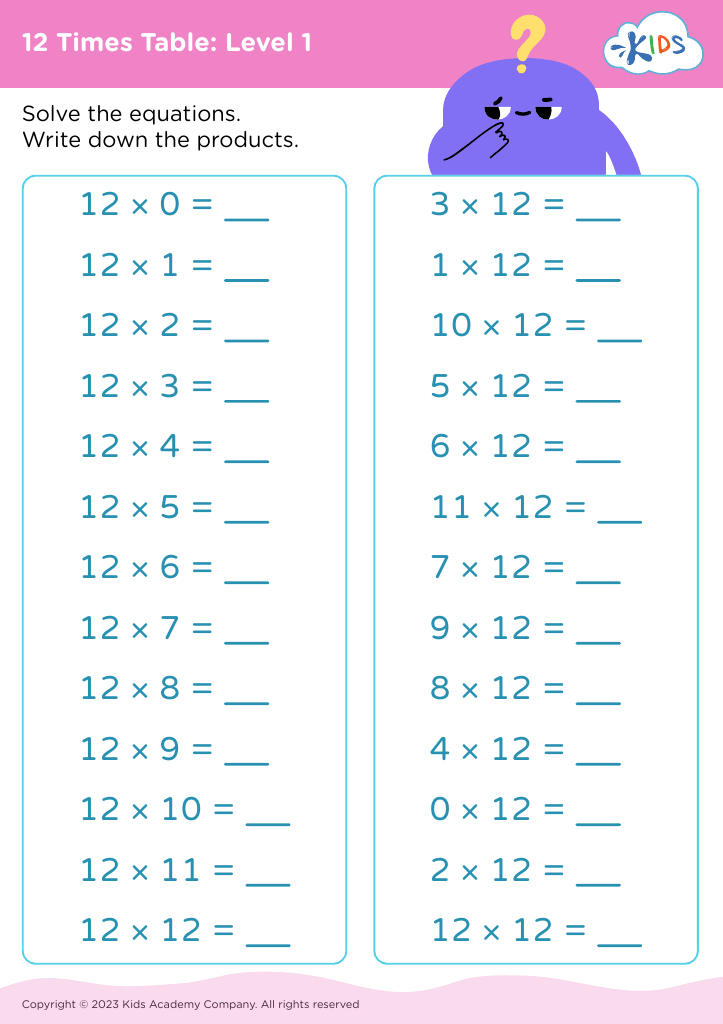
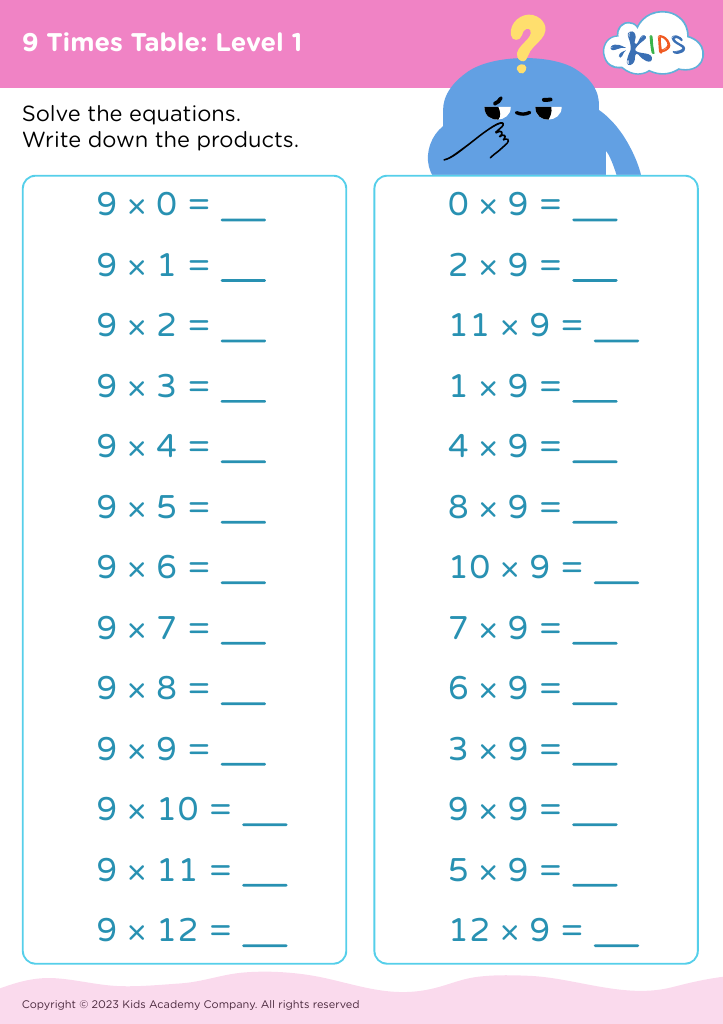
Discover our engaging "Understanding Patterns Times Tables Worksheets" designed for children ages 5-8! These worksheets make learning multiplication easy and fun by focusing on recognizable patterns in times tables. Our carefully crafted exercises help young learners identify and apply various patterns, enhancing their mathematical thinking and problem-solving skills. With colorful visuals and interactive activities, these worksheets ensure a playful and effective learning experience. Perfect for classroom use or at-home practice, they support foundational math learning and encourage confidence in tackling new concepts. Help your child master multiplication while enjoying the process with our enriching worksheets that inspire a lifelong love of math!




Understanding patterns in times tables is crucial for children aged 5-8 as it lays a strong foundation for future math skills. At this developmental stage, children are naturally inclined to recognize and make sense of patterns, and harnessing this instinct can significantly enhance their mathematical understanding.
By engaging with times tables, children start to see the relationships between numbers, which fosters number sense and boosts their ability to solve problems. For instance, understanding that 2's multiplication is just repeating addition helps in grasping larger concepts in math. Recognizing patterns also aids memory retention, making it easier for children to recall multiplication facts, thus increasing their confidence in tackling math problems.
Moreover, a firm grasp of times tables supports not only arithmetic skills but also lays the groundwork for more complex areas of math, such as division, fractions, and even algebra. Parents and teachers play a vital role in facilitating this understanding through interactive activities, games, and discussions.
Encouraging pattern recognition in times tables cultivates a positive attitude towards math, making it an enjoyable learning experience, ultimately preparing them for more advanced mathematical challenges ahead. This skill is fundamental in developing critical thinking and lifelong learning abilities.








