Logical Reasoning Word Problems Worksheets for Ages 5-8
5 filtered results
-
From - To
Unlock the power of critical thinking with our “Logical Reasoning Word Problems Worksheets” designed for ages 5-8! These engaging worksheets promote essential problem-solving skills through interactive and fun scenarios that challenge young minds. Each problem encourages children to analyze, compare, and logically deduce answers, enhancing their mathematical understanding while building confidence. Perfect for both classroom support and at-home learning, these resources cater to diverse learning styles and accommodate various skill levels. Foster your child’s ability to think critically and reason effectively with our carefully crafted worksheets. Start their journey to becoming effective thinkers today! Explore our full collection now!
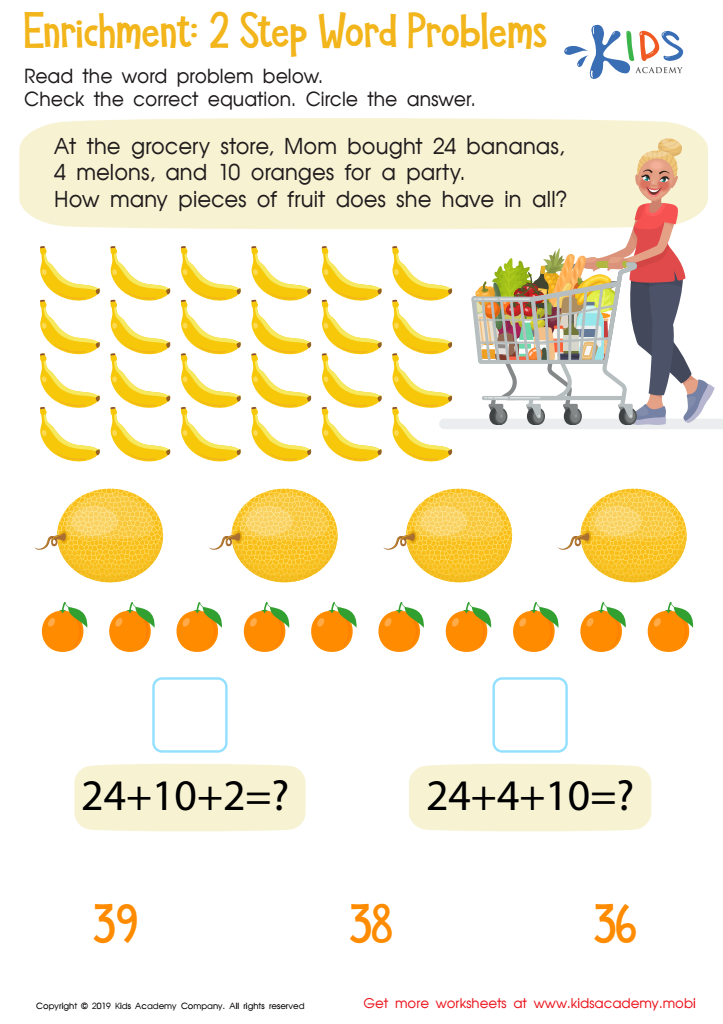
Enrichment -2 Step Word Problems Worksheet
 Assign to My Students
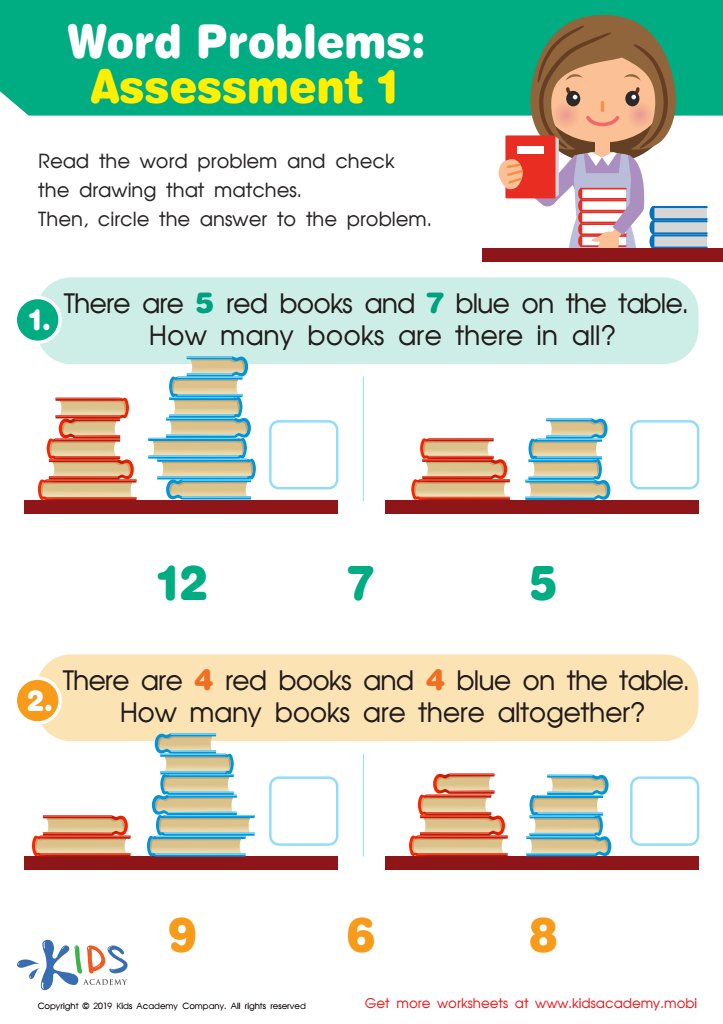
Word Problems: Assessment 1 Worksheet
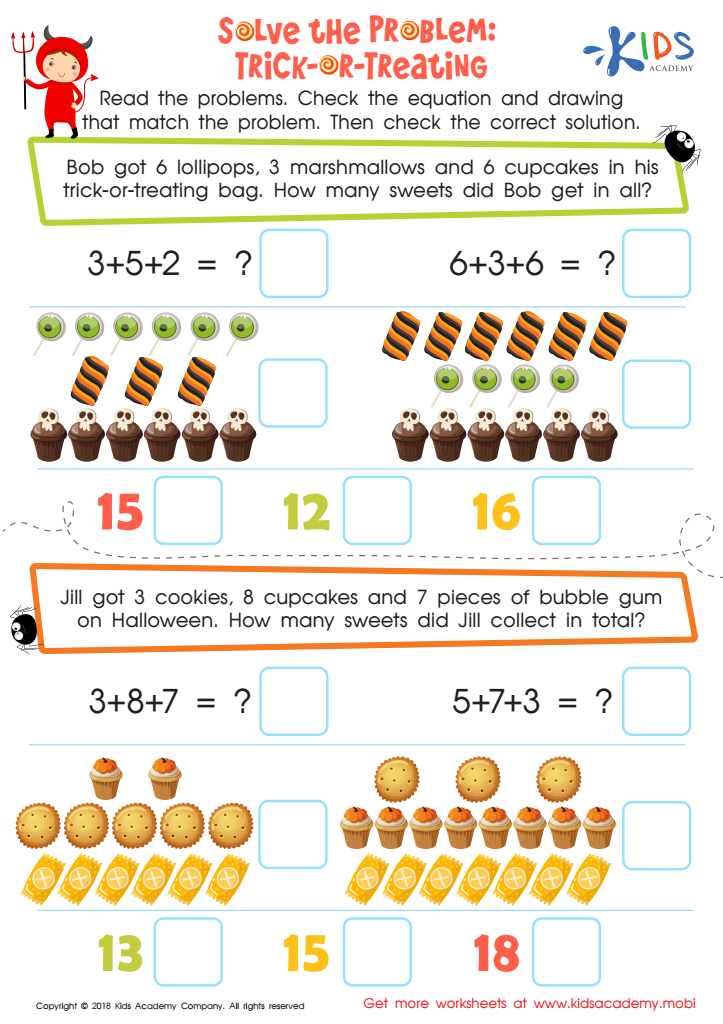
Solve the Problem: Trick–or–treating Worksheet
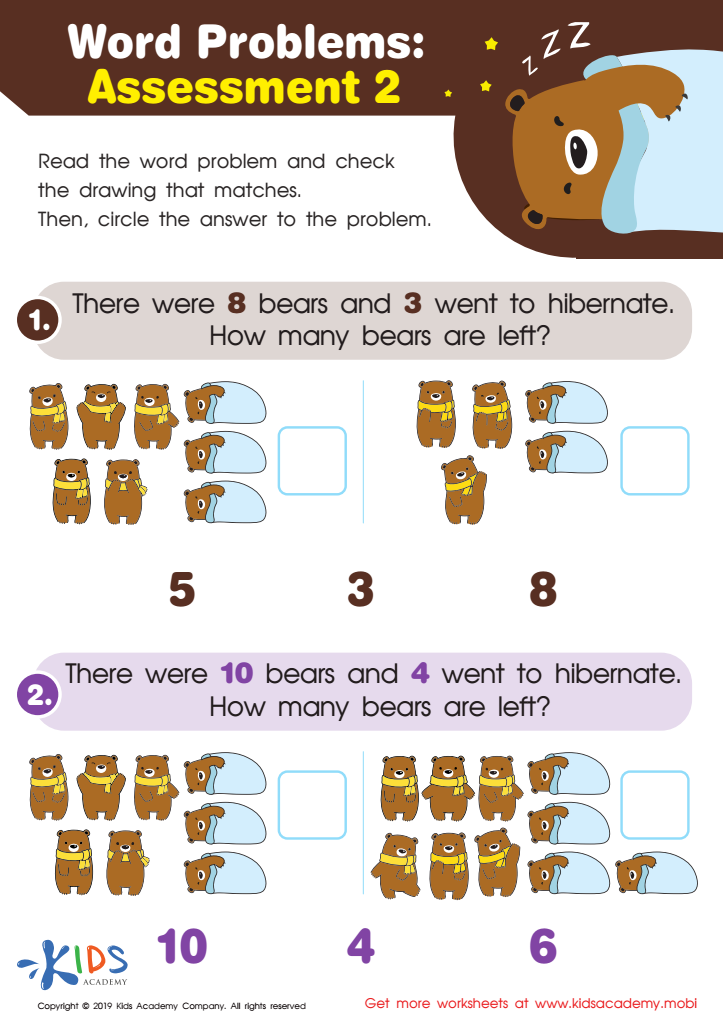
Word Problems: Assessment 2 Worksheet
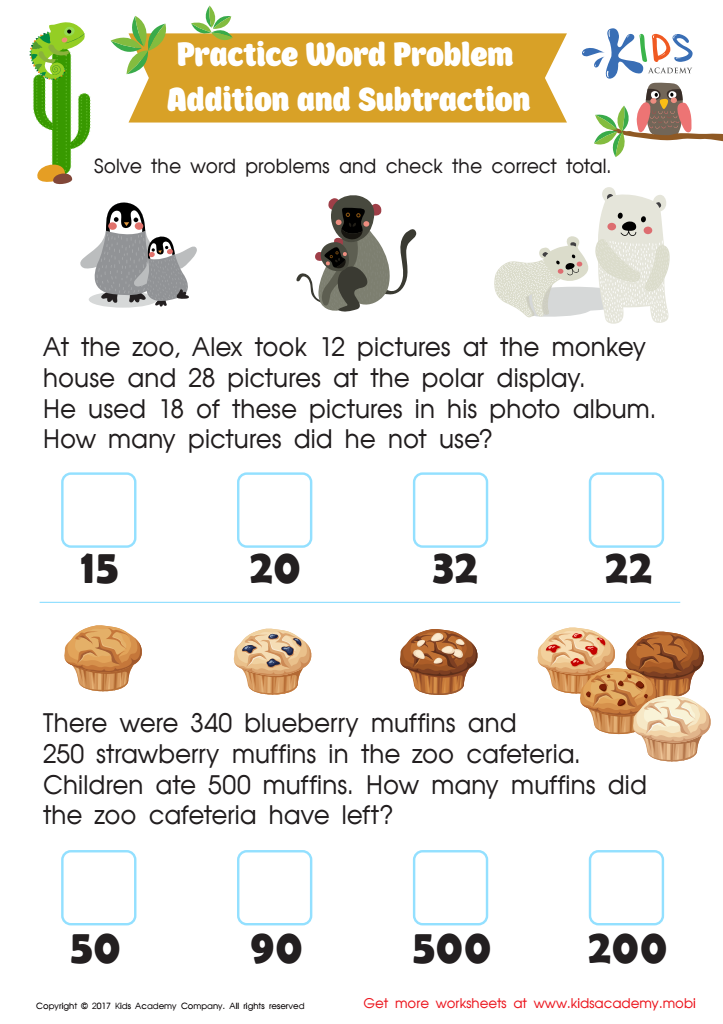
Addition and Subtraction: Word Problems Worksheet








Logical reasoning word problems are crucial for children aged 5-8 as they lay the foundation for critical thinking, problem-solving, and analytical skills. During these formative years, children are naturally curious and keen to make sense of the world around them. Engaging with word problems helps develop their ability to comprehend, analyze, and connect ideas in a structured manner.
These activities also enhance language proficiency, as children learn to interpret and articulate complex information. By deciphering the language of word problems, they are not just solving math but also developing comprehension skills that are essential for success in all academic areas. Logical reasoning challenges encourage creativity, as students explore multiple strategies and think outside the box.
Furthermore, exposure to a variety of problems fosters perseverance and resilience. Children learn to tackle frustrations, understand that failure is a part of learning, and that persistence leads to success. Parents and teachers can create a supportive environment that values effort and celebrates problem-solving endeavors, thus instilling a growth mindset.
In summary, nurturing logical reasoning in young learners is vital in developing the skills they need for future academic success and life challenges.








