
Analytical thinking Building Vocabulary Worksheets for Ages 5-8
4 filtered results
Difficulty Level
Grade
Age
-
From - To
Subject
Activity
Standards
Enhance your child's learning journey with our "Analytical Thinking Building Vocabulary Worksheets" designed specifically for ages 5-8. These engaging worksheets promote critical thinking and comprehension skills by encouraging young learners to analyze words and their meanings. Children will explore vocabulary through fun activities, puzzles, and exercises that stimulate their analytical abilities while expanding their word collections. Perfect for early grade teachers and parents alike, these resources foster a love for reading and enhance language proficiency in a playful way. Download our worksheets today and watch your child improve their vocabulary and critical thinking skills in an enjoyable, interactive format!
Favorites
With answer key
Interactive
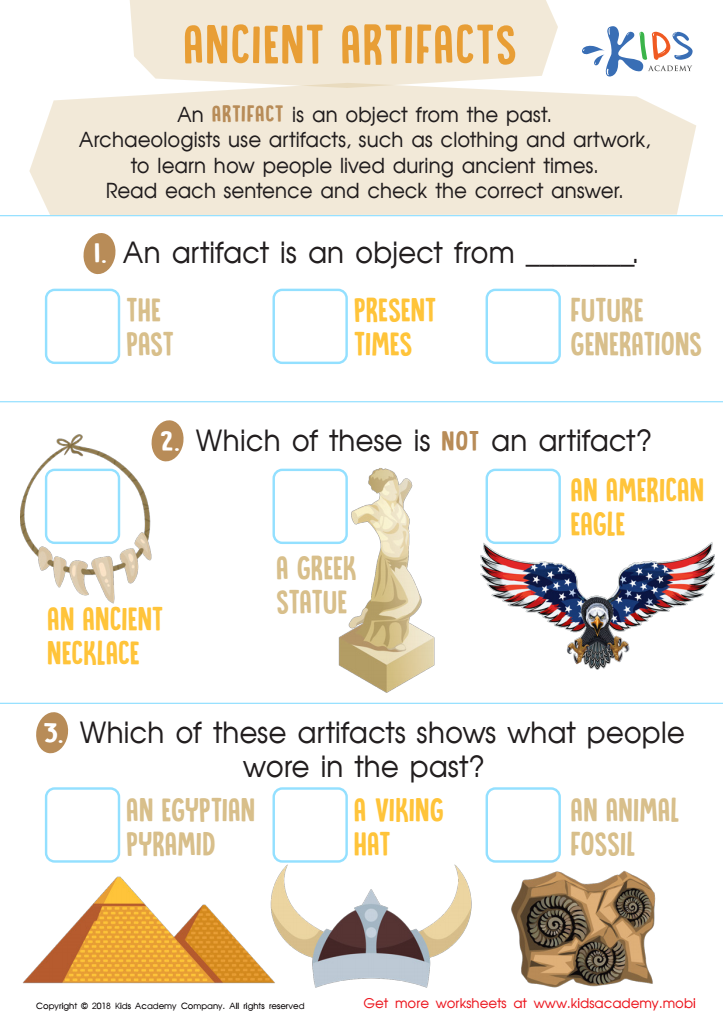
Ancient Artifacts Worksheet
This free worksheet helps kids understand ancient artifacts, from statues to necklaces to fossils. They'll read comprehension questions and select answers from multiple choice options, with pictures to help them grasp the concept. It's a great way for children to learn about artifacts and what they may look like.
 Assign to My Students
Ancient Artifacts Worksheet
Worksheet











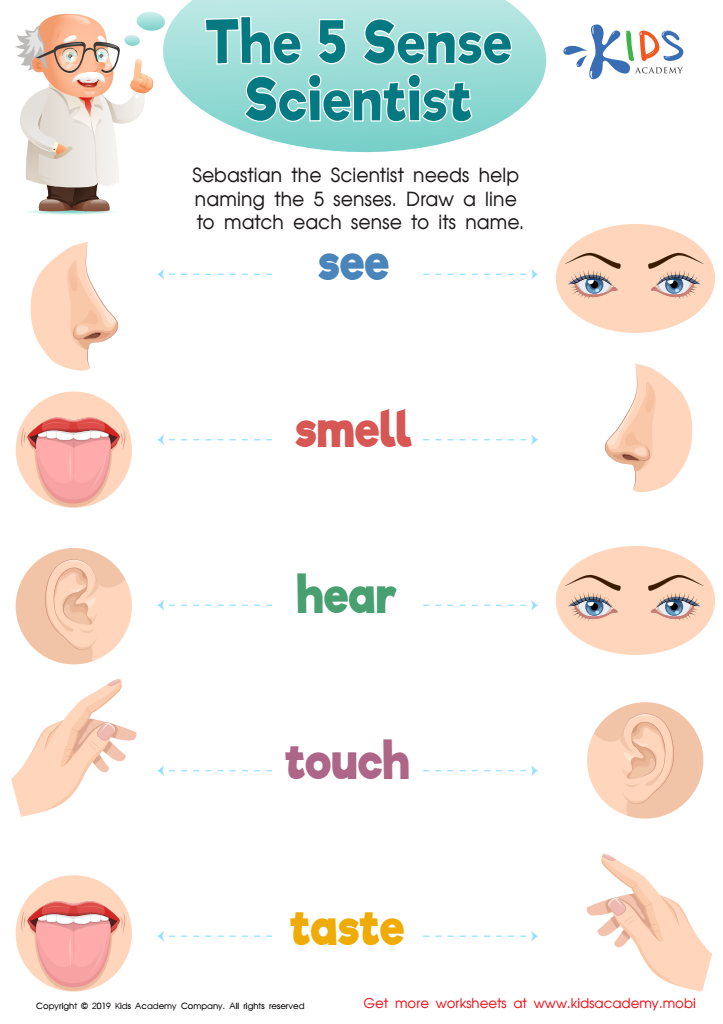
The 5 Sense Scientist Worksheet
Our young children will have fun learning about their five senses with this free Sense Scientist worksheet. Helping Sebastian the Scientist, they'll name the five senses and use traceable lines to connect each picture with its correct sense. Colorful words and pictures will create a memorable picture representation.
The 5 Sense Scientist Worksheet
Worksheet
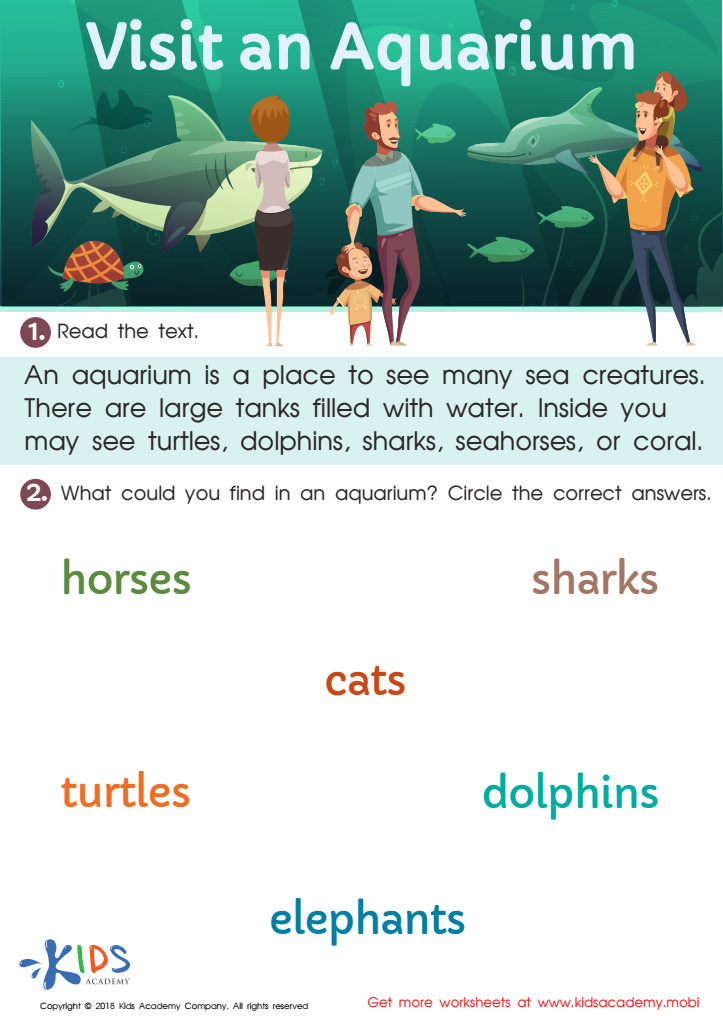
Visit an Aquarium Worksheet
Have your kids ever been to an aquarium? It's a great place to see a variety of sea creatures, like turtles, dolphins, sharks and fish. If they're fascinated by sea life, this worksheet is perfect! Help them circle the aquarium animals among the words in the picture.
Visit an Aquarium Worksheet
Worksheet
Join Kids Academy for Free
Who is primarily going to use this learning content?




.jpg)


.jpg)
Analytical thinking and vocabulary development are crucial components of early education for children aged 5 to 8. At this formative stage, children are developing foundational skills that will influence their academic journeys and daily interactions. Fostering analytical thinking helps children learn to process information, reason logically, and solve problems. This skill allows them to make connections between concepts, leading to a deeper understanding of their environment and improved decision-making skills.
Building vocabulary is vital as it enhances communication abilities, boosts reading comprehension, and enriches speaking skills. A strong vocabulary enables children to express their thoughts and feelings more clearly, facilitating better relationships with peers and adults. Moreover, vocabulary development is linked to success in reading, which is the cornerstone of learning across subjects.
Parents and teachers should prioritize these skills because they set the stage for future academic success and personal growth. Engaging children in activities that encourage analytical thinking—such as puzzles, reasoning games, and open-ended questions—alongside vocabulary-building activities—like reading aloud, storytelling, and conversations—nurtures well-rounded, confident learners. Supporting children in these areas not only fosters intellectual development but also prepares them for challenges in school and life.








