
Language skills development Building Vocabulary Worksheets for Ages 5-8
3 filtered results
Difficulty Level
Grade
Age
-
From - To
Subject
Activity
Standards
Enhance your child's language abilities with our Building Vocabulary Worksheets designed for ages 5-8. At Kids Academy, we offer a diverse assortment of engaging activities that enrich young learners’ vocabulary through fun and interactive exercises. Our worksheets are tailored to strengthen reading comprehension, spelling, and contextual language usage. Each activity, from word matching to sentence creation, promotes critical thinking and communication skills. Perfect for both classroom and at-home learning, these resources give children the foundation they need to become confident readers and effective communicators. Join us in making language skills development an enjoyable journey for your young ones.
Favorites
With answer key
Interactive
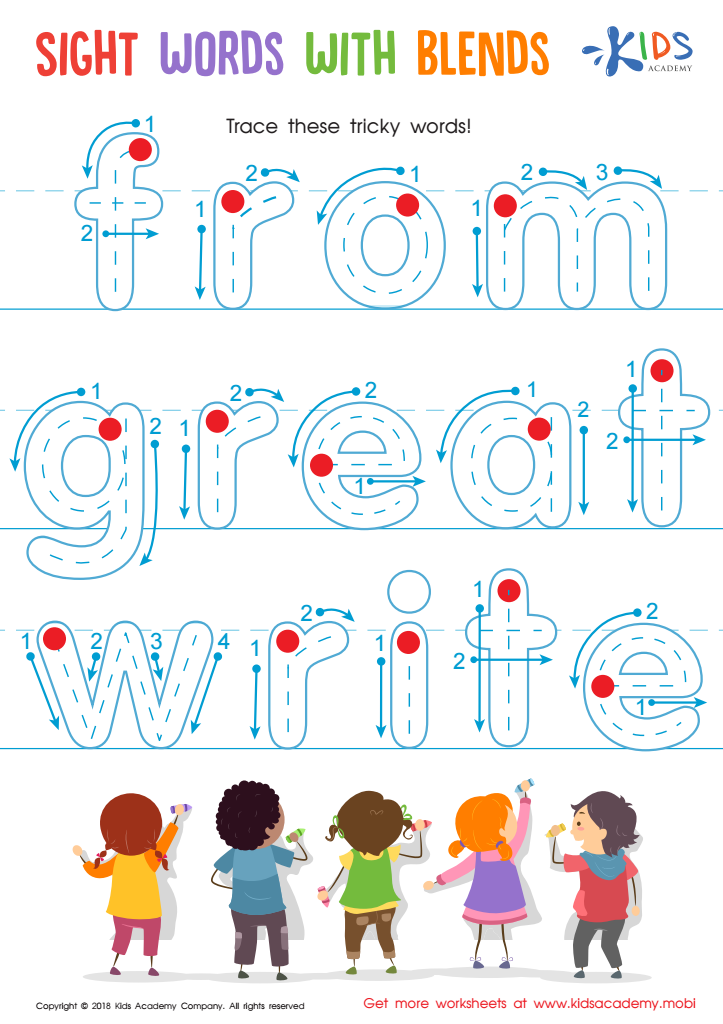
Sight Words with Blends Worksheet
This free PDF lets your children trace and write sight words with tricky blends. The guide numbers help them start from the top, building fine motor skills and enhancing sight word vocab. It's a great way to give your kids a solid foundation for reading!
 Assign to My Students
Sight Words with Blends Worksheet
Worksheet











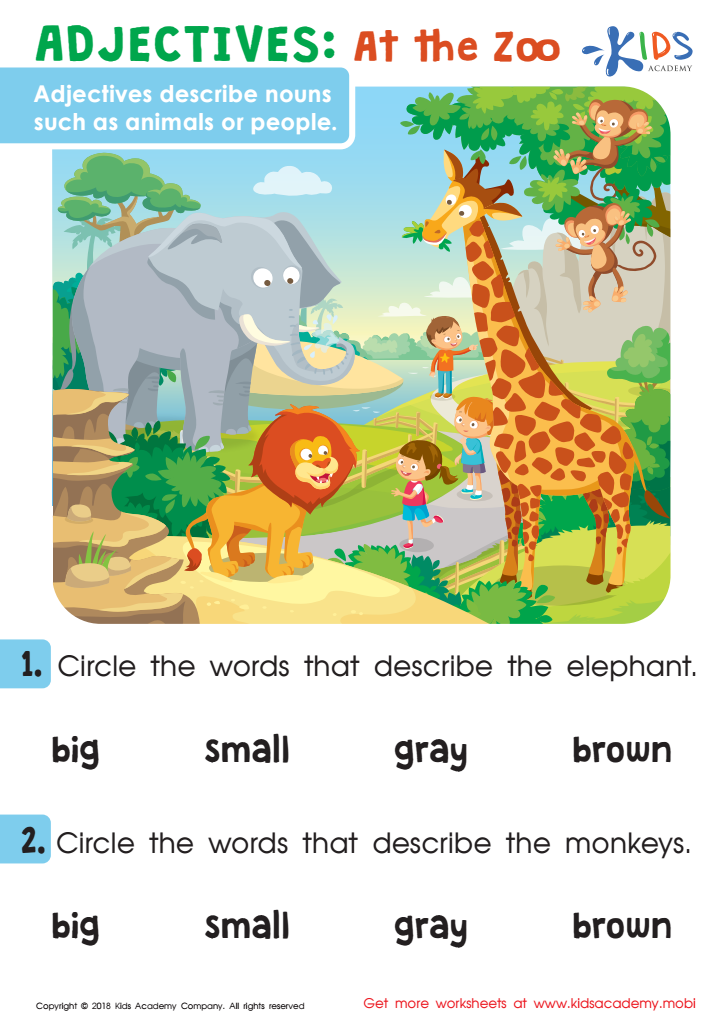
Adjectives: At The Zoo Worksheet
Take your kids to the zoo and ask them about their favorite activities and animals. This worksheet is a great way for kids to learn about adjectives. Explain that adjectives describe nouns like people or animals (e.g. big, tall, dark). Look at the printout with your kids and help them circle words that describe the animals in the picture.
Adjectives: At The Zoo Worksheet
Worksheet
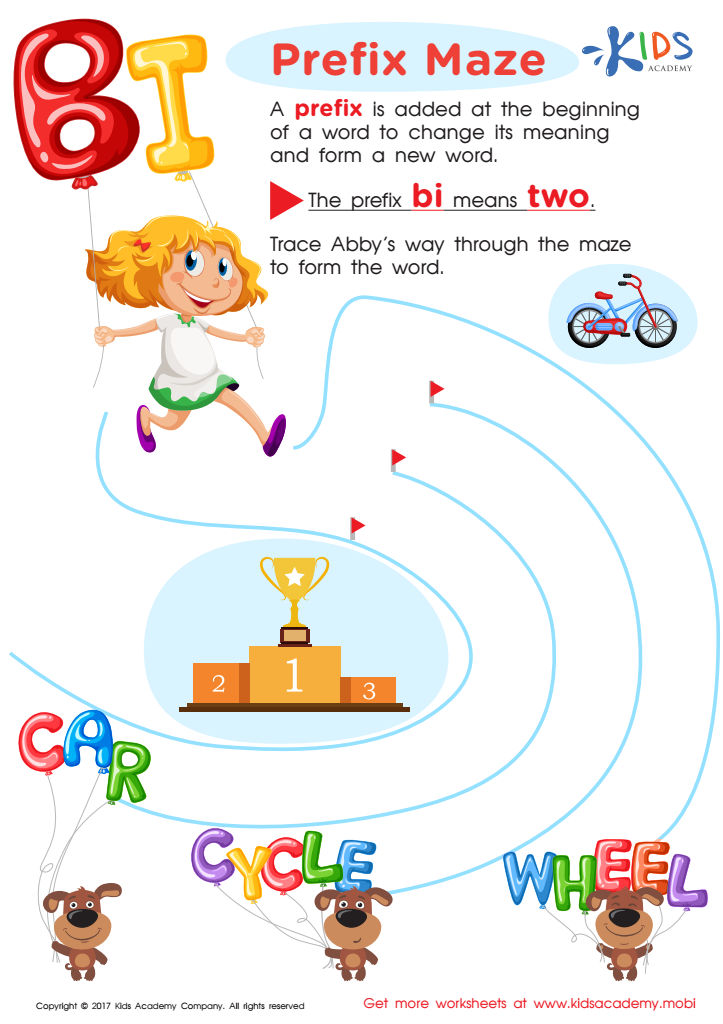
Prefix Bi Words Worksheet
Help "bi" find its root word in this fun and colorful prefix worksheet! Your child will learn how words are built while having a great time!
Prefix Bi Words Worksheet
Worksheet
Join Kids Academy for Free
Who is primarily going to use this learning content?








Developing robust language skills and building vocabulary for children aged 5-8 is crucial for several reasons. First and foremost, strong language skills form the foundation for effective communication, both spoken and written. This early stage is critical as children rapidly absorb new words and language concepts, making it an optimal time for vocabulary development.
Additionally, a rich vocabulary supports reading comprehension. As children learn to read, understanding the meanings of words allows them to better grasp the context and content of texts. This understanding leads to improved academic performance across all subjects, as most areas of learning require the ability to read and understand instructions and content.
Moreover, language skills are essential for cognitive development. Engaging with a wide range of vocabulary helps children develop critical thinking and problem-solving skills. When children have a vast set of words to express themselves, they are better equipped to explain their thoughts, feelings, and ideas clearly and confidently.
Furthermore, effective language skills are vital for social-emotional development. Children who can articulate their needs, emotions, and experiences are more capable of building and maintaining relationships. This also promotes empathy, as understanding and using emotions-related vocabulary can enhance their social interactions.
In sum, prioritizing language and vocabulary development in these early years equips children with the tools they need for lifelong learning, effective communication, and robust personal and academic growth.








