
Understanding context Building Vocabulary Worksheets for Ages 5-8
4 filtered results
Difficulty Level
Grade
Age
-
From - To
Subject
Activity
Standards
Unlock your child's language potential with our "Understanding Context: Building Vocabulary Worksheets" designed for ages 5-8. These engaging and interactive worksheets help young learners enhance their vocabulary through rich contextual understanding. By placing words within meaningful situations, children discover how context influences word meaning and usage. Our kid-friendly activities promote critical thinking, encourage reading comprehension, and foster a love for language. Each worksheet is tailored to be entertaining and educational, ensuring that your child enjoys the process of learning new words. Give your little ones the tools they need for effective communication and lifelong literacy success with our context-focused vocabulary resources!
Favorites
With answer key
Interactive
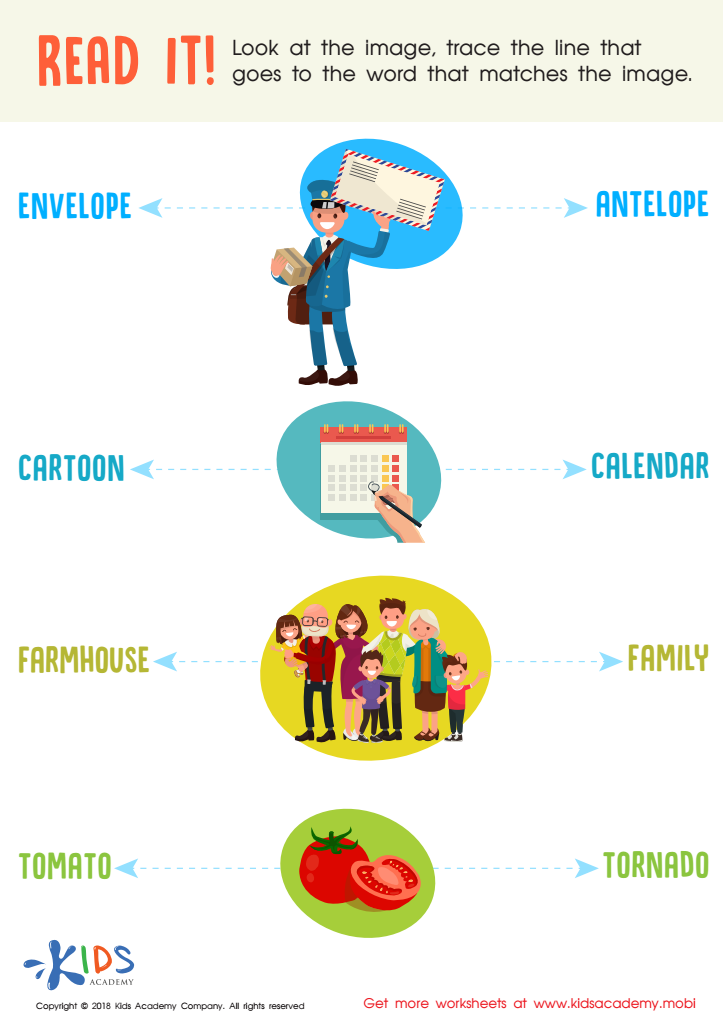
Read It! Worksheet
Point to each image on this worksheet, asking your child what it is. Read the 2 options then help your child trace the line to the correct word. It'll keep them engaged and provide visual stimulation.
 Assign to My Students
Read It! Worksheet
Worksheet











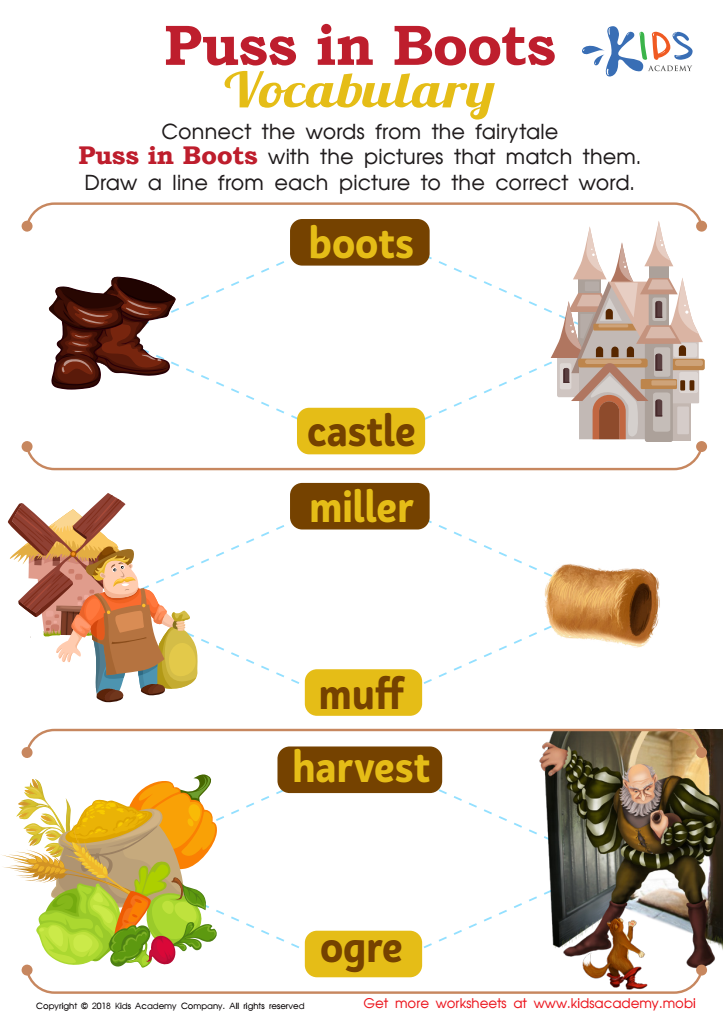
Puss in Boots Vocabulary Worksheet
Let your kids enjoy story-telling while learning at the same time. Help them learn from the fairytale, Puss in Boots, by connecting words from the worksheet with the matching pictures. Ask them to draw a line between each picture and corresponding word to build their vocabulary.
Puss in Boots Vocabulary Worksheet
Worksheet
Join Kids Academy for Free
Who is primarily going to use this learning content?








Understanding context and building vocabulary are crucial for the educational development of children aged 5-8, and parents and teachers play a vital role in this process. At this age, children's brains are highly receptive to language acquisition, which provides a golden opportunity to expand their vocabulary. A rich vocabulary enhances reading comprehension, enabling children to better understand stories and information they encounter.
Context helps children infer meanings of new words and phrases they encounter. When they can relate vocabulary to their experiences or situations, they are more likely to retain and use those words effectively. Engaging children in conversations about everyday situations, books, and media exposes them to diverse language, thereby enriching their vocabulary.
Furthermore, vocabulary development is linked to academic achievement. A broad vocabulary not only improves reading and writing but also fosters critical thinking skills, allowing children to express their thoughts and ideas clearly.
By encouraging discussions, reading together, and introducing new words meaningfully, parents and teachers can create a strong language foundation. Ultimately, a focus on understanding context and expanding vocabulary helps prepare children for future academic challenges and lifelong learning. Thus, embracing this responsibility is essential for anyone involved in a child's education.








