Understanding suffixes Building Vocabulary Worksheets for Ages 5-8
6 filtered results
-
From - To
Boost your child’s vocabulary skills with our "Understanding Suffixes Building Vocabulary Worksheets for Ages 5-8." Perfect for young learners, these engaging printable worksheets help children understand and apply common suffixes like -ed, -ing, and -s. Through fun educational activities, kids will enhance their reading comprehension, spelling, and word-building skills. The worksheets are designed to suit early grade curricula and are perfect for classroom use or at-home practice. Support your child's language development and build a strong foundation in vocabulary with interactive exercises that make learning an enjoyable experience!
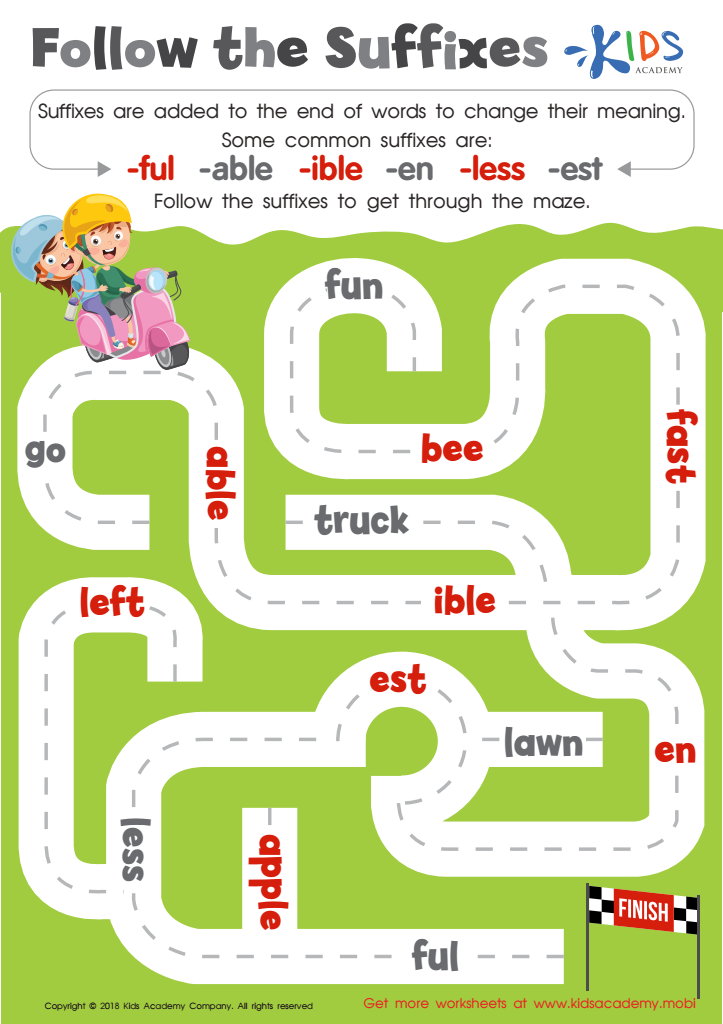
Reading: Follow the Suffixes Worksheet
 Assign to My Students











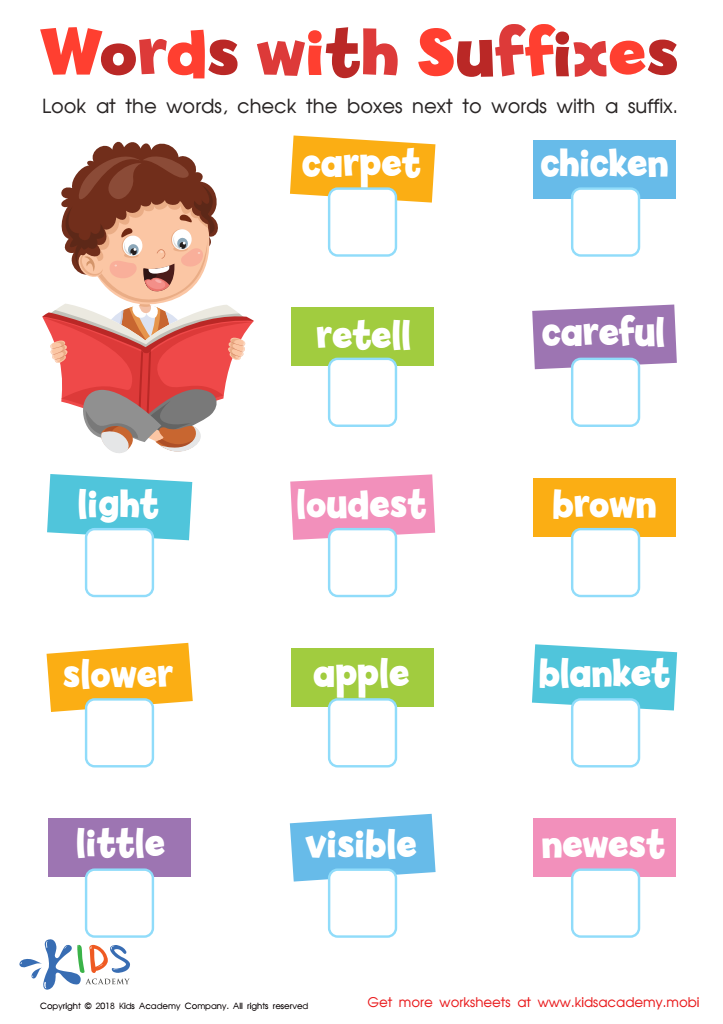
Reading: Words With Suffixes Worksheet
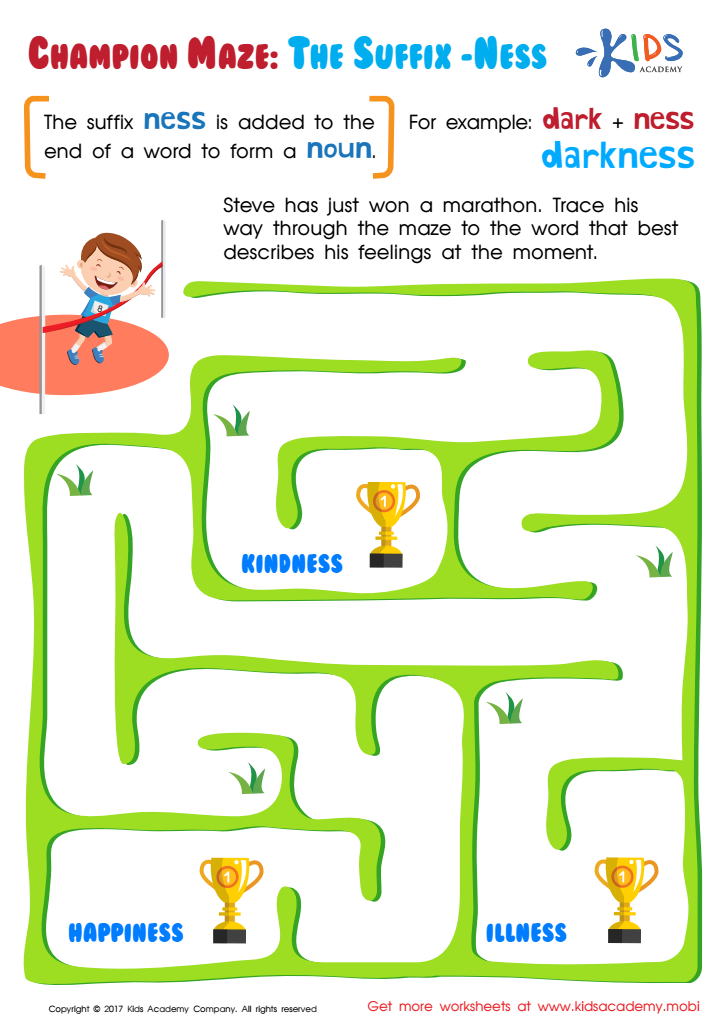
Suffix Ness Worksheet
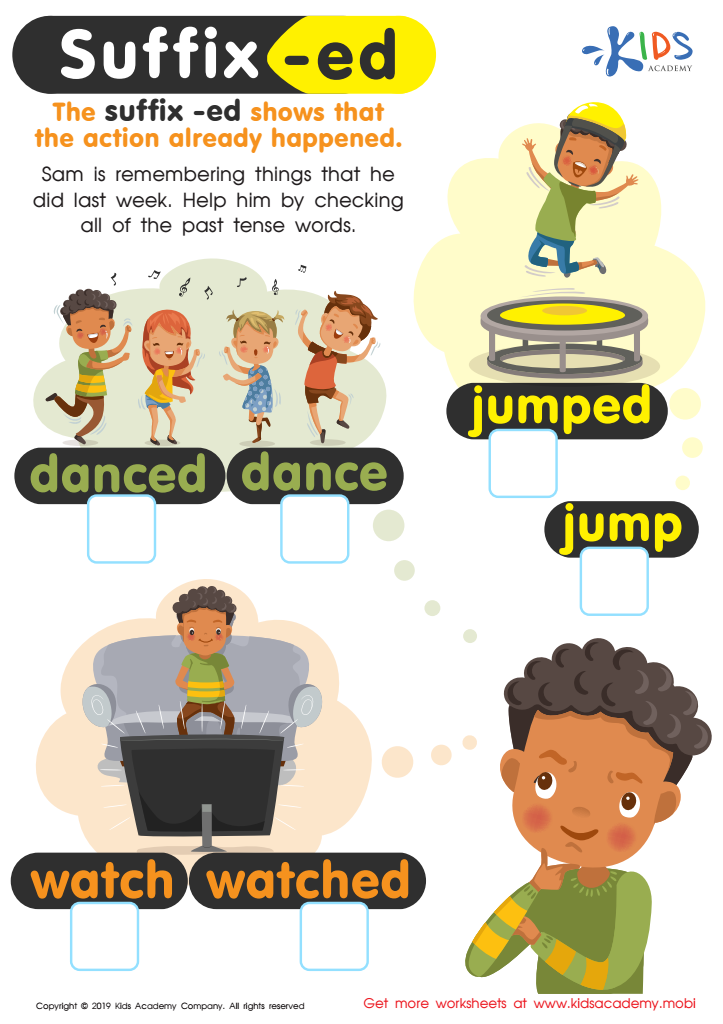
Suffix-ed Worksheet
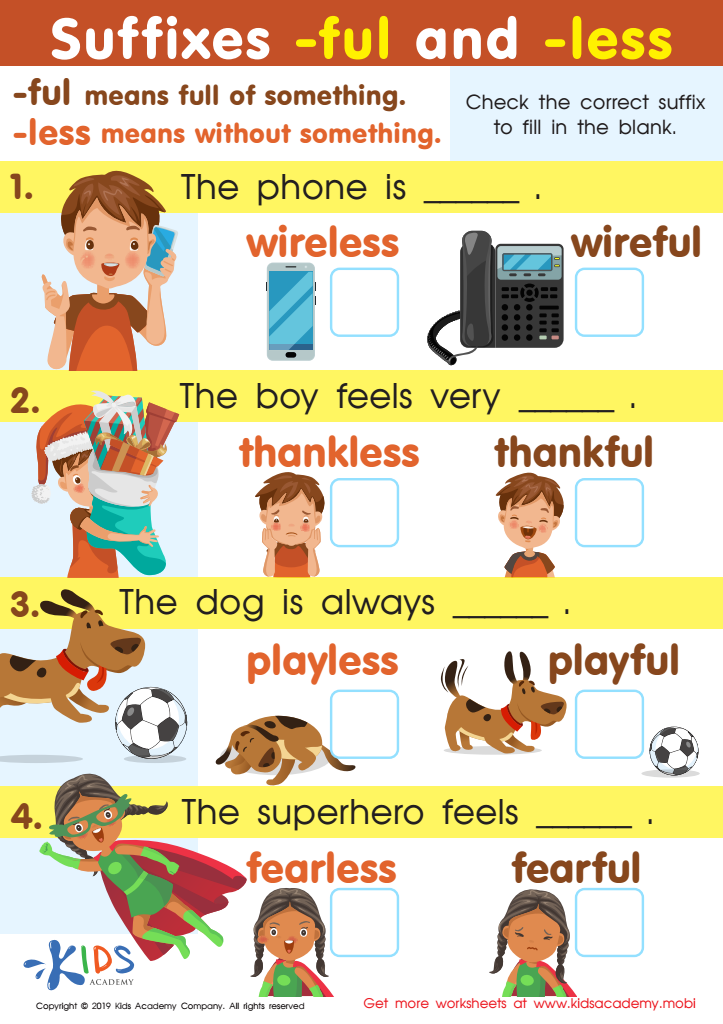
Suffixes –ful and –less Worksheet
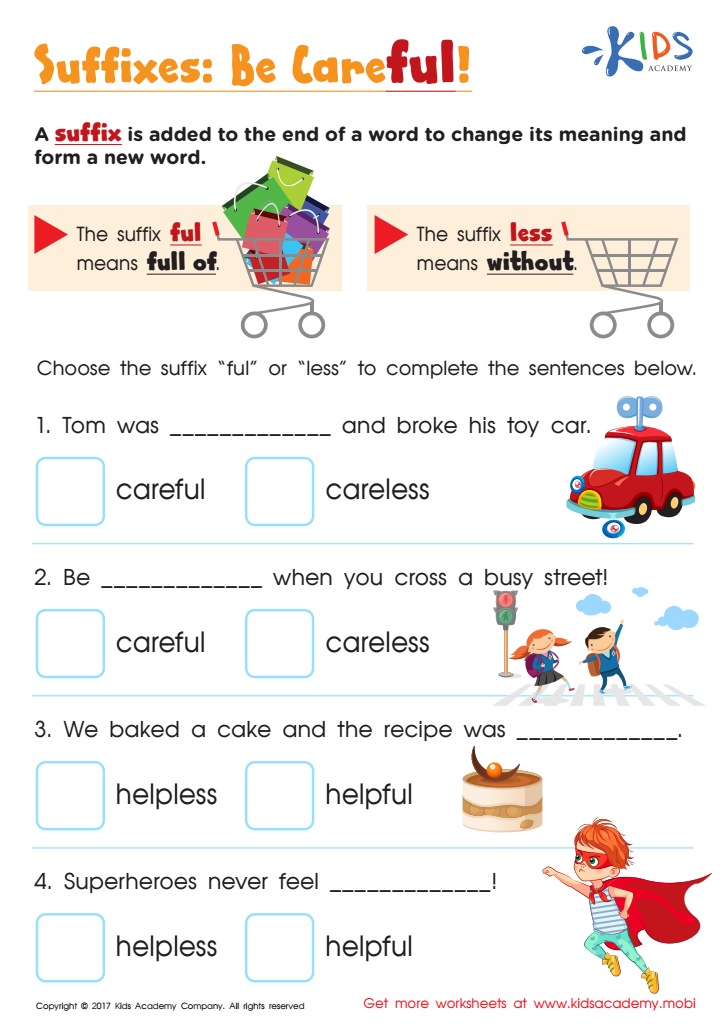
Suffixes Ful and Less Worksheet



.jpg)




Understanding suffixes is crucial for young learners, especially between the ages of 5-8, as it lays a solid foundation for vocabulary development and overall language acquisition. During these formative years, children are rapidly expanding their understanding of language. Introducing suffixes helps children decipher meanings of new words; for example, knowing that adding "-ful" turns "hope" into "hopeful" enhances their comprehension and communication skills.
Suffixes also promote spelling and grammatical accuracy. Learning common suffixes like "-ed," "-ing," or "-ly" guides children in correctly forming past tense, continuous actions, and descriptive words, respectively. This builds their proficiency in reading and writing, which are critical skills for educational success.
Moreover, an awareness of suffixes empowers children to decode unfamiliar words independently. This fosters a sense of confidence and curiosity in their reading adventures. Understanding word parts like roots, prefixes, and suffixes enriches their analytical skills, enabling them to extrapolate meanings without constant external help.
Incorporating suffixes into early education encourages a love of words and nurtures linguistic growth. Parents and teachers who prioritize this aspect of language instruction better equip children with the tools needed for advanced literacy, clearer communication, and a lifelong passion for learning.








