Critical thinking development Reading Fiction Worksheets for Ages 5-8
4 filtered results
-
From - To
Enhance your child's critical thinking skills with our Reading Fiction Worksheets for Ages 5-8. These engaging activities aren’t just for honing reading proficiency; they're designed to cultivate analytical minds. Our worksheets inspire young learners to delve deeper into stories, asking probing questions and making thoughtful connections. Perfect for classroom settings or at-home enrichment, these printables help children understand character motivations, plot structures, and thematic elements. By challenging young readers to think critically about fiction, we aim to foster a lifelong love of reading and thinking deeply. Visit Kids Academy today to unlock your child's potential!
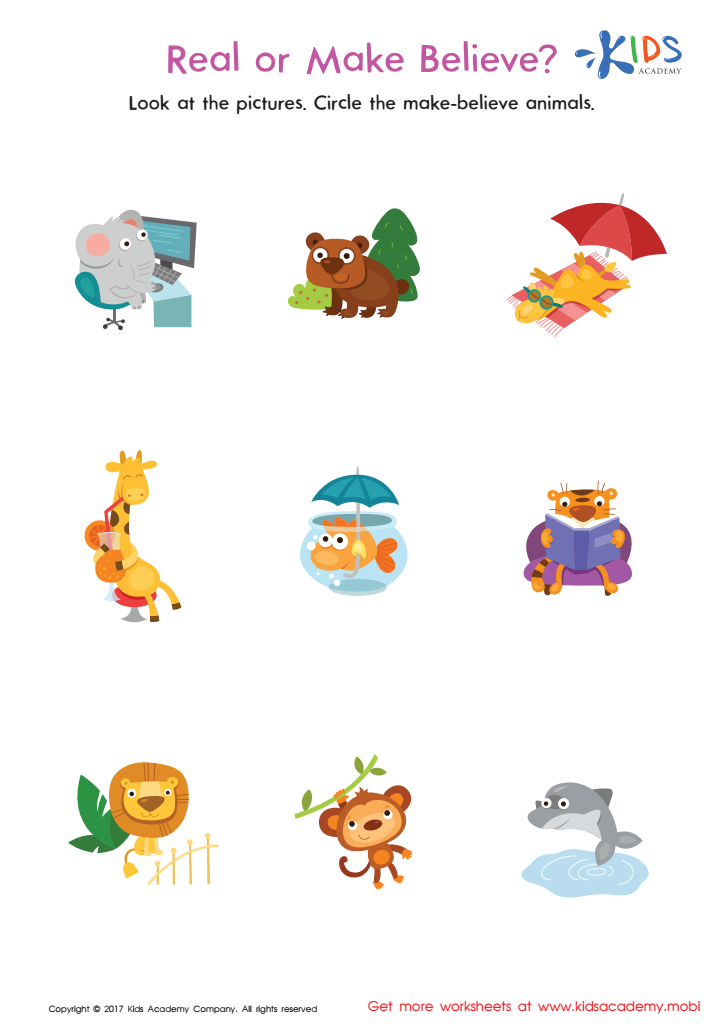
Fact or Make Believe Worksheet
 Assign to My Students
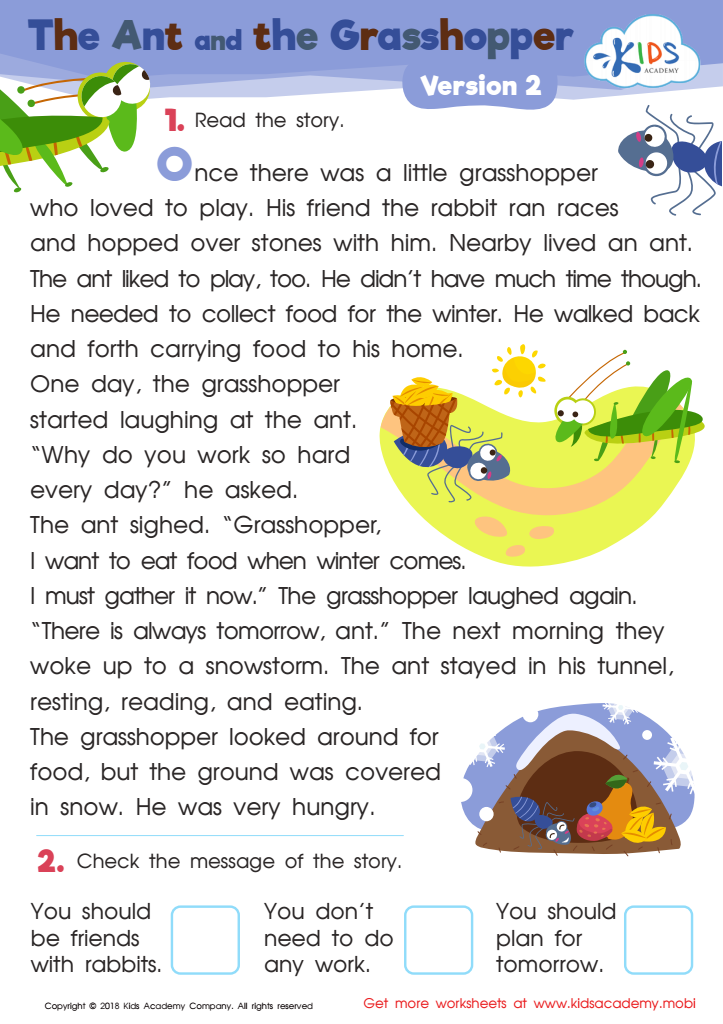
The Ant and The Grasshopper Version 2 Worksheet
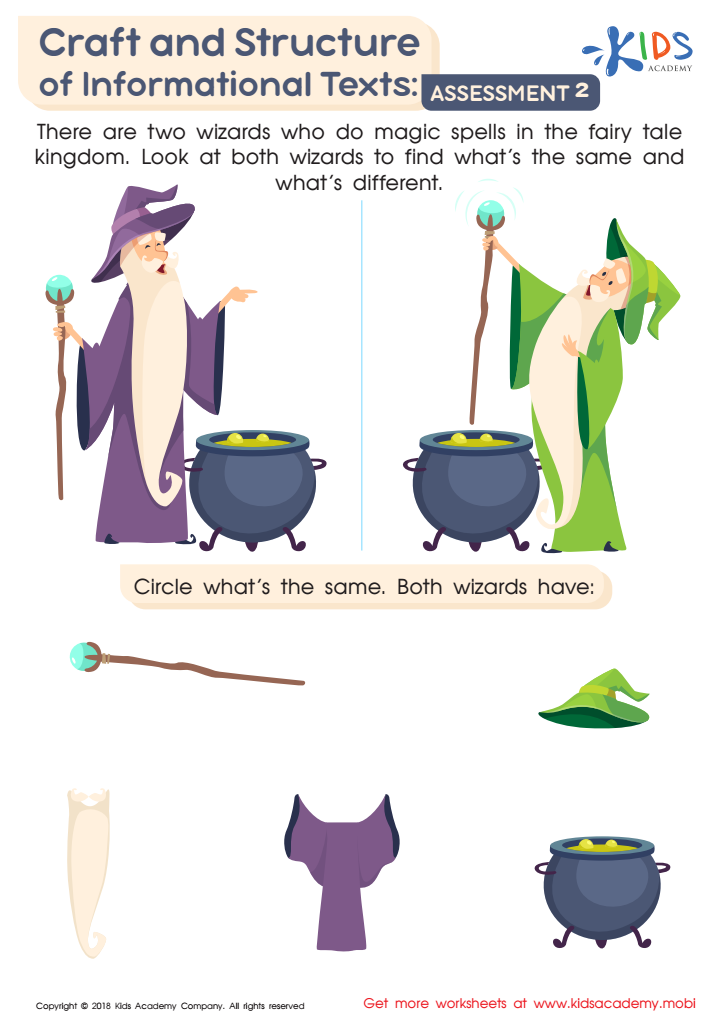
Craft and Structure of Informational Texts: Assessment 2 Worksheet
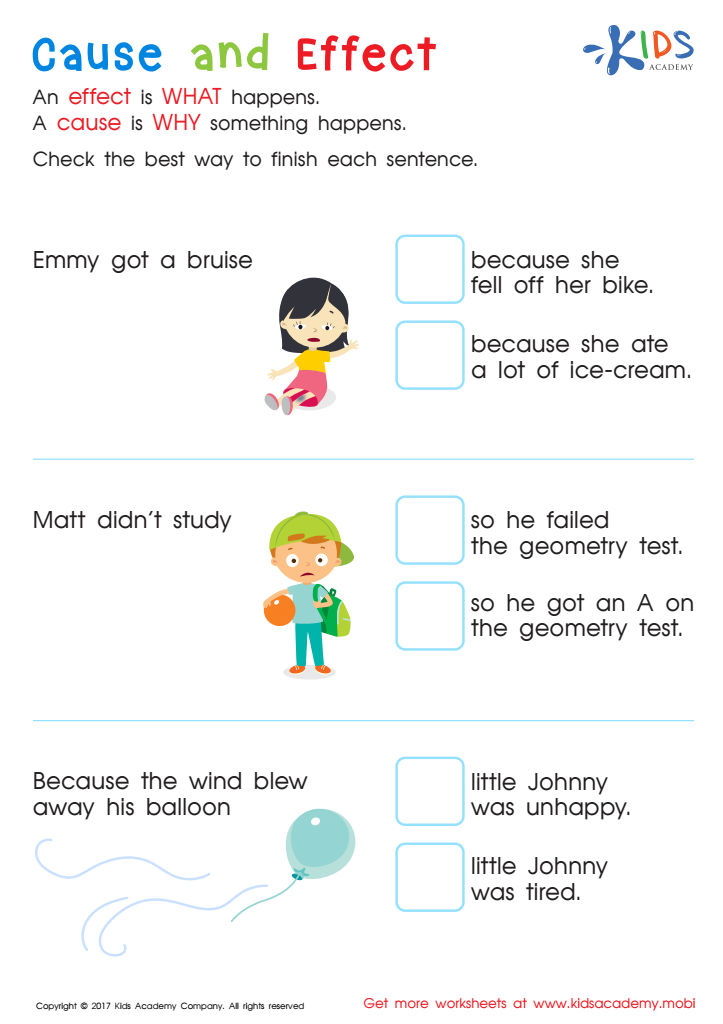
Cause and Effect Worksheet






.jpg)

Critical thinking is an essential life skill that empowers children to analyze information, solve complex problems, and make decisions grounded in reason. For children aged 5-8, fostering critical thinking development through reading fiction can be profoundly beneficial. At this stage, young minds are highly receptive and curious, which makes it a prime time to instill these skills.
Reading fiction captivates children's imaginations and invites them to explore a variety of scenarios and perspectives. When stories pose moral dilemmas or present characters with different viewpoints, children are encouraged to think critically about the motives, actions, and consequences within the narrative. This helps them understand cause-and-effect relationships and enhances their ability to empathize with others.
Moreover, discussing the stories helps children learn to express their thoughts clearly and ask pertinent questions. For instance, they might ponder why a character made a particular choice or consider alternative outcomes. These discussions not only improve critical thinking but also language skills and emotional intelligence.
In sum, embedding critical thinking through reading fiction in early childhood not only lays a foundation for academic success but also for overall personal development, preparing children to navigate an increasingly complex world thoughtfully and competently. Parents and teachers play a pivotal role in guiding this development, making it a high priority in early education.








