Rhyme recognition Reading Fiction Worksheets for Ages 5-8
3 filtered results
-
From - To
Discover our engaging Rhyme Recognition Reading Fiction Worksheets tailored for children ages 5-8! These interactive activities seamlessly blend fun and learning, helping young readers identify and appreciate rhymes in beloved fictional stories. Perfect for early learners, each worksheet is designed to develop crucial reading and comprehension skills while fostering a love for literature. With vibrant illustrations and captivating storylines, our worksheets transform reading practice into an enjoyable adventure. Whether used at home or in the classroom, these resources support your child’s phonemic awareness, paving the way for future reading success. Start your child’s literary journey today with Kids Academy!
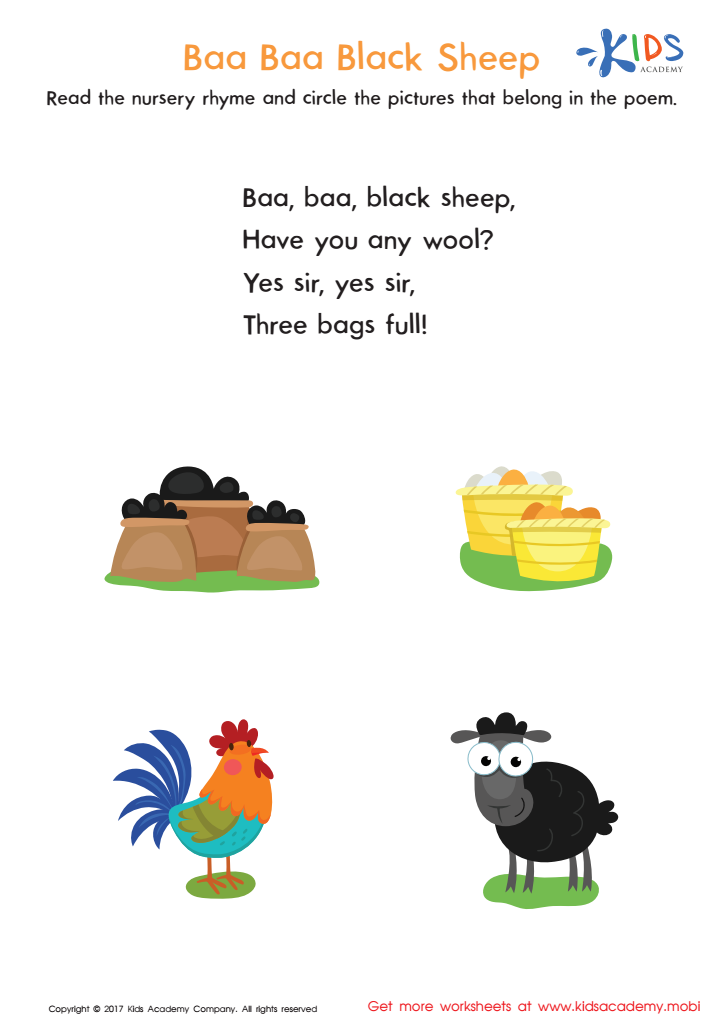
Baa Baa Black Sheep Printable
 Assign to My Students
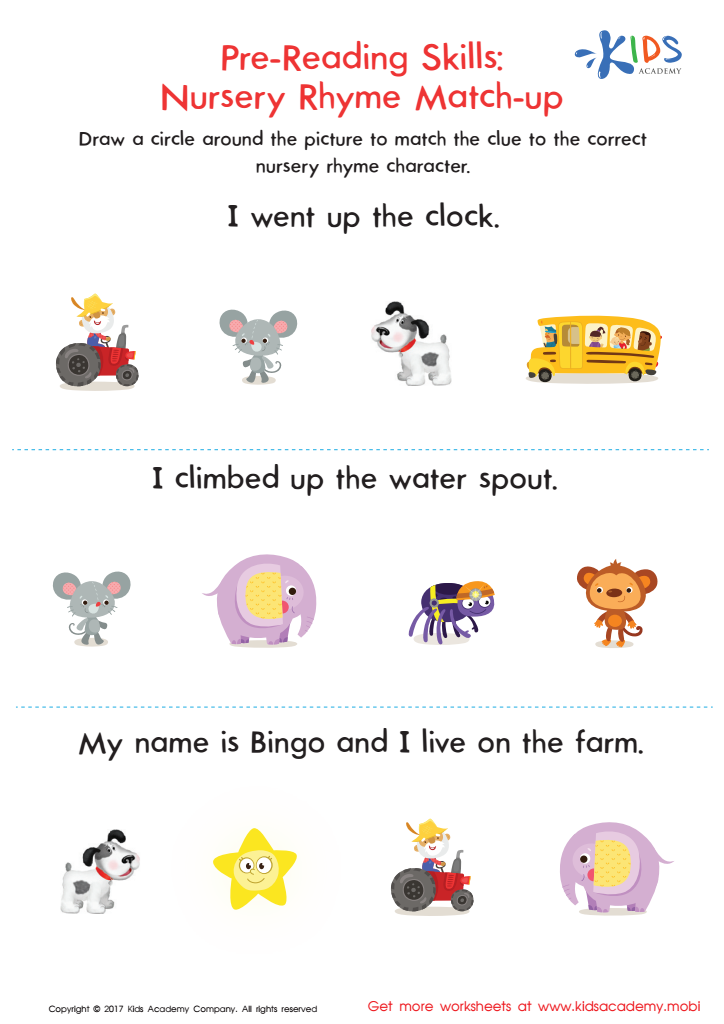
Nursery Rhyme Match–Up Worksheet
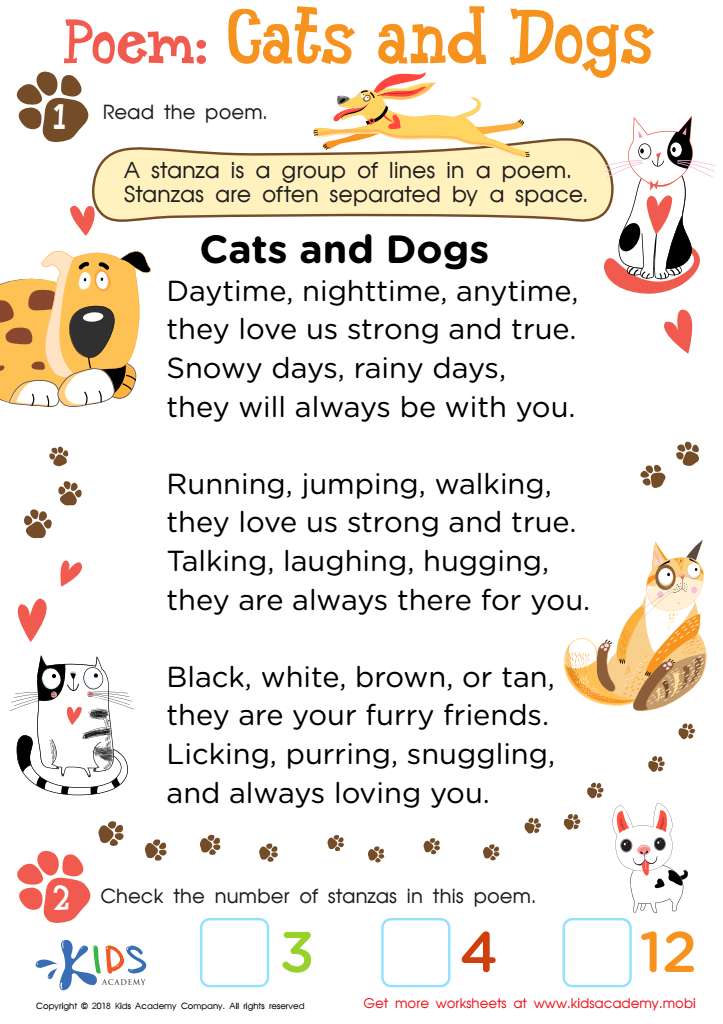
Poem: Cats and Dogs Worksheet







.jpg)
Rhyme recognition and reading fiction are crucial components of early literacy development for children aged 5-8. First, understanding and identifying rhymes enhances phonemic awareness—a fundamental skill that helps children recognize and manipulate sounds in words. This ability is foundational for successful reading and writing, enabling children to decode new words and grasp spelling patterns quickly.
Additionally, engaging with fiction fuels imagination, introduces children to new ideas, and helps build empathy by exposing them to diverse characters, scenarios, and problems. Fictional stories often use rich and varied language, which expands vocabulary and language comprehension.
Rhyme and fiction also make learning enjoyable. Fun, rhythmic texts and imaginative tales captivate children's interest, fostering a positive attitude toward reading. When children enjoy what they read, they are more likely to stick with it, building stamina and a lifelong love of reading.
Moreover, parents and teachers should use rhyme recognition and fictional stories to bond with children, sharing experiences that solidify emotional connections and offer opportunities for meaningful conversations. This relational aspect promotes social and emotional development alongside literacy skills.
In summary, rhyme recognition and fiction reading develop essential early reading skills, nurture imagination and empathy, create positive associations with reading, and strengthen parent-child and teacher-student relationships.








