Unlock your child's imagination with our Story Analysis Reading Fiction Worksheets, designed specifically for ages 5-8! These engaging worksheets provide young learners with an exciting opportunity to dive into their favorite stories while developing critical reading skills. Each worksheet encourages children to explore characters, settings, and plot elements, aiding comprehension and analytical thinking. Perfect for classroom use or fun at home, our resources foster a love for reading and help nurture budding storytellers. Join us in making reading a delightful adventure for your little ones, guiding them as they learn to decipher tales and express their ideas creatively!

Check out this FREE Trial Lesson on Reading Fiction for age 5-8!

Relationship Between Illustrations and the Story

Favorites
With answer key
Interactive
  • 5-8
  • Story analysis
  • Reading Fiction
Who Are The Characters Worksheet

Who Are The Characters Worksheet

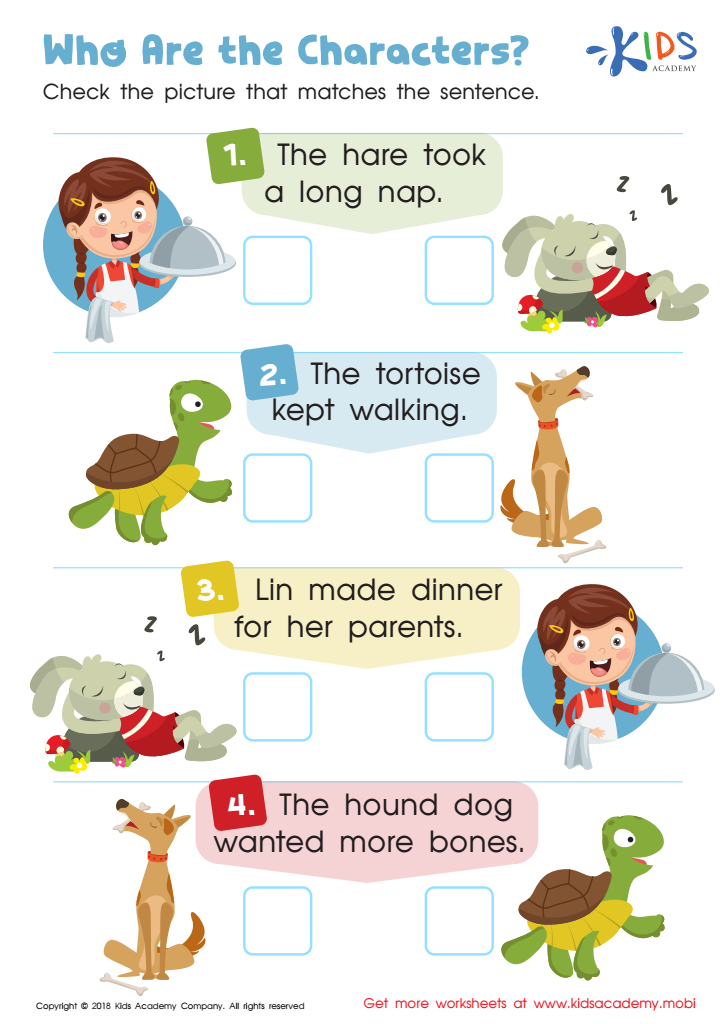
This worksheet tests your child's reading skills. Read each sentence out loud with them, then ask which of the two pictures match it. Help them check, then repeat this for the other sentences.
Who Are The Characters Worksheet
Worksheet
Key Details from the Princess and the Pea Worksheet

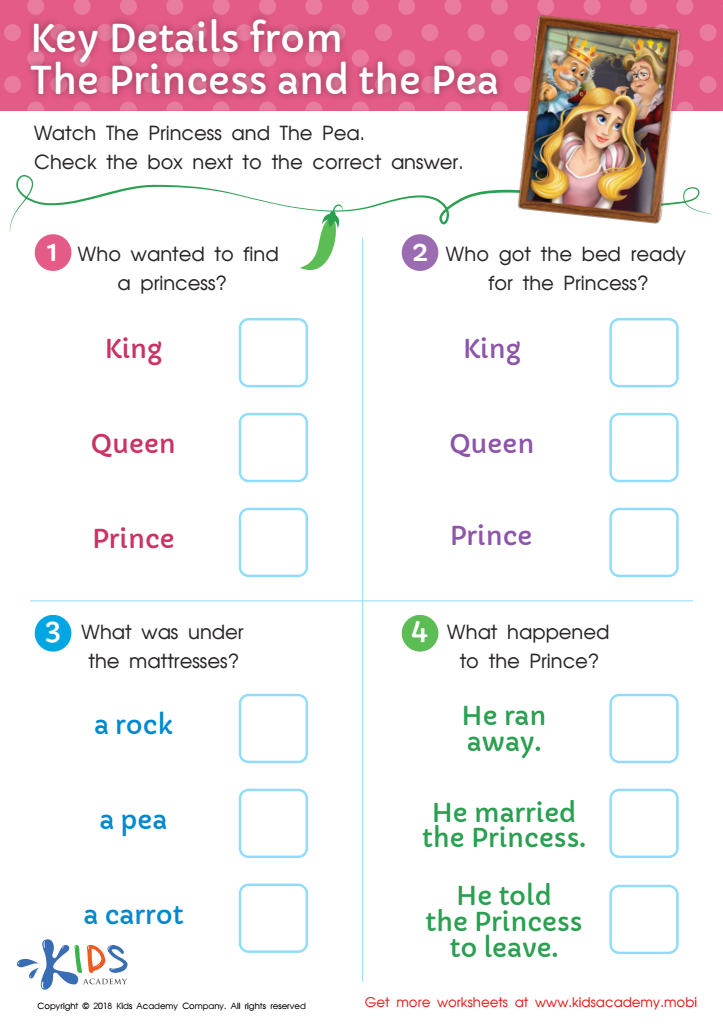
Key Details from the Princess and the Pea Worksheet

After reading The Princess and the Pea, ask your students questions to assess their comprehension of the story. Check their knowledge of key details. This printable can be used to help evaluate their understanding. Encouraging the recall of story events helps build important reading skills.
Key Details from the Princess and the Pea Worksheet
Worksheet
Questions About Stories: Assessment 3 Worksheet

Questions About Stories: Assessment 3 Worksheet

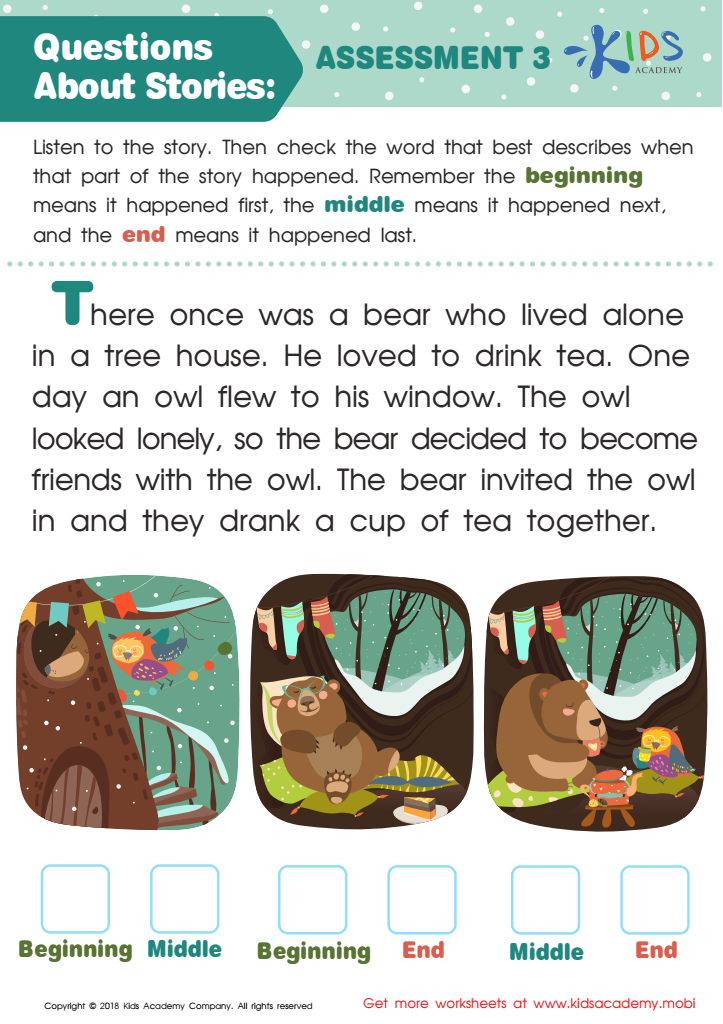
Help kids understand stories by having them listen to a story and check boxes for the beginning, middle, and end. This worksheet makes it fun for even the youngest learners to recall story elements and sequence of events. Let them listen to the story from start to finish, then look at the pictures to check which part of the story they depict.
Questions About Stories: Assessment 3 Worksheet
Worksheet
Craft and Structure of Stories: Assessment 2 Worksheet

Craft and Structure of Stories: Assessment 2 Worksheet

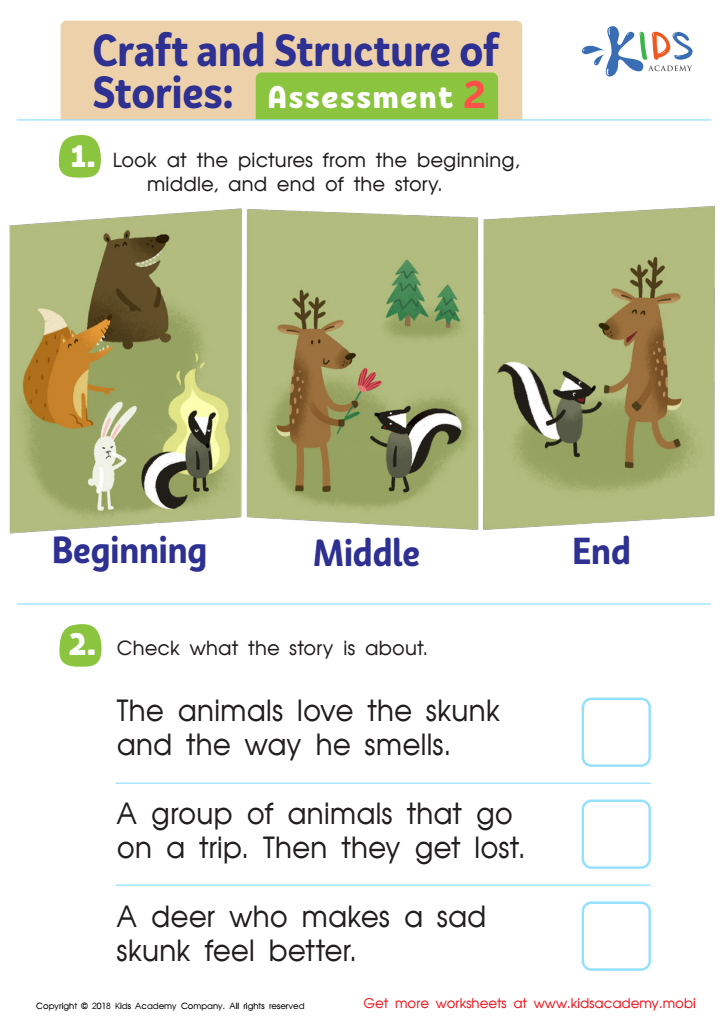
Help your child assess their story sequencing and reading comprehension skills using this cute worksheet! It encourages them to look at the three pictures on the page, each representing a scene from the beginning, middle and end. Ask them what the story is about, then let them check the box next to the correct answer. This is a great way to ensure they understand the main events of a story.
Craft and Structure of Stories: Assessment 2 Worksheet
Worksheet
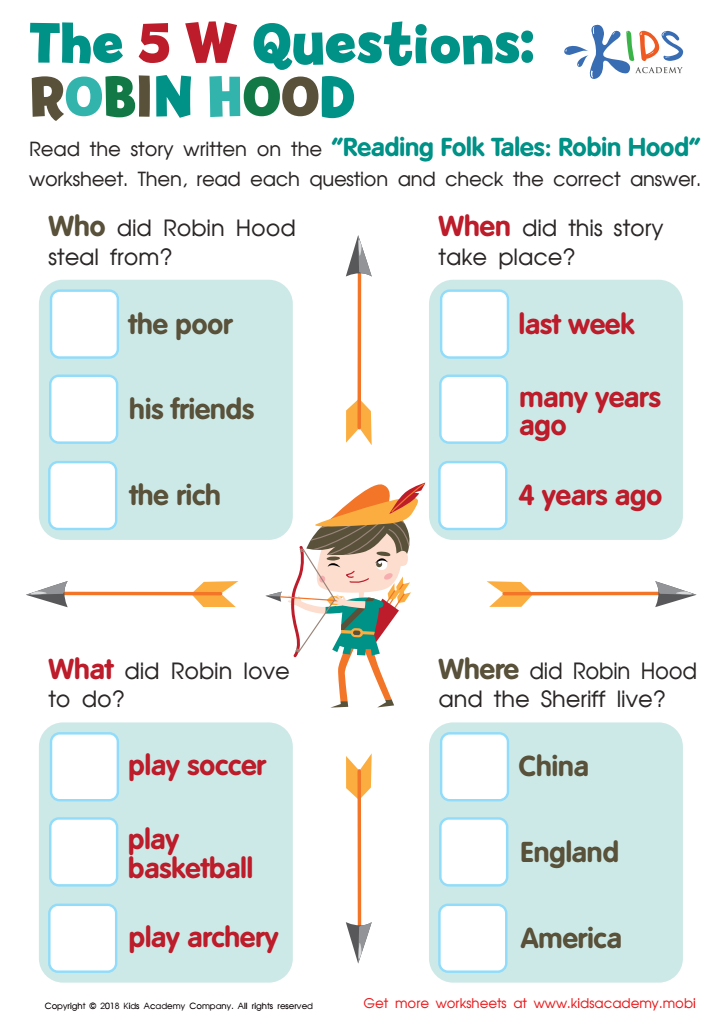
The 5 W Questions: Robin Hood Worksheet

The 5 W Questions: Robin Hood Worksheet

Before embarking on this Robin Hood adventure, ensure your child reads and comprehends the 'Reading Folk Tales: Robin Hood' worksheet. Have them consider the story's lessons, and observe the details. Read the questions and help your kids select the correct answers.
The 5 W Questions: Robin Hood Worksheet
Worksheet
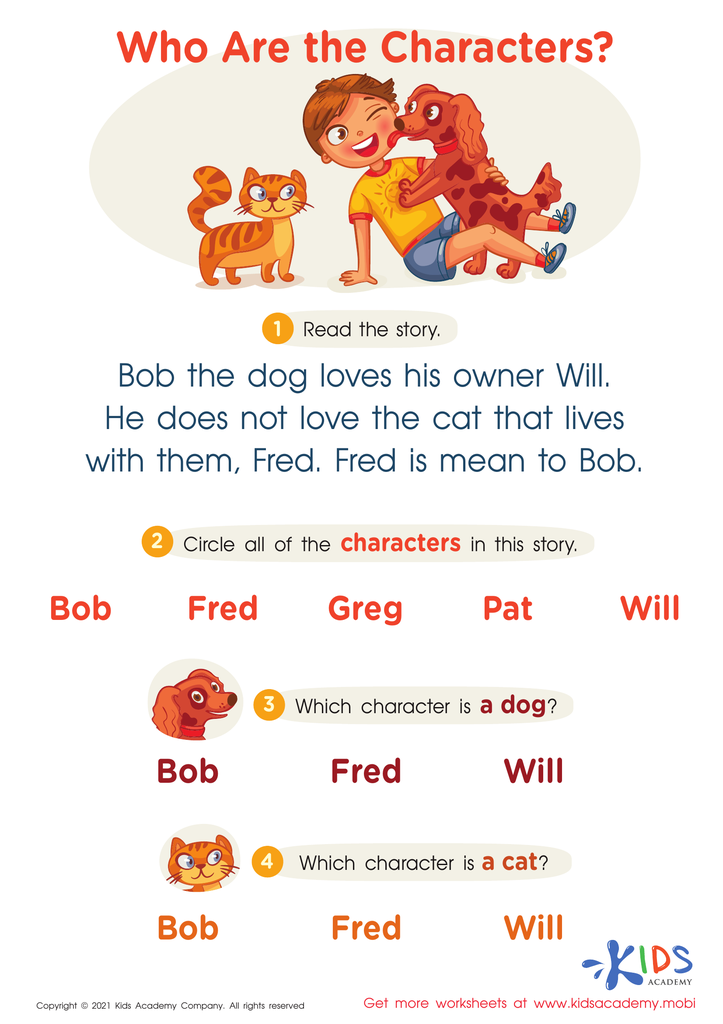
Who Are the Characters? Worksheet

Who Are the Characters? Worksheet

Original: The annual summer festival takes place on the last day of June and is celebrated with a parade and a carnival that features rides, games, and yummy food. Rewrite: Every June end marks the annual summer festival with a parade and carnival. Enjoy rides, games, and delicious food!
Who Are the Characters? Worksheet
Worksheet
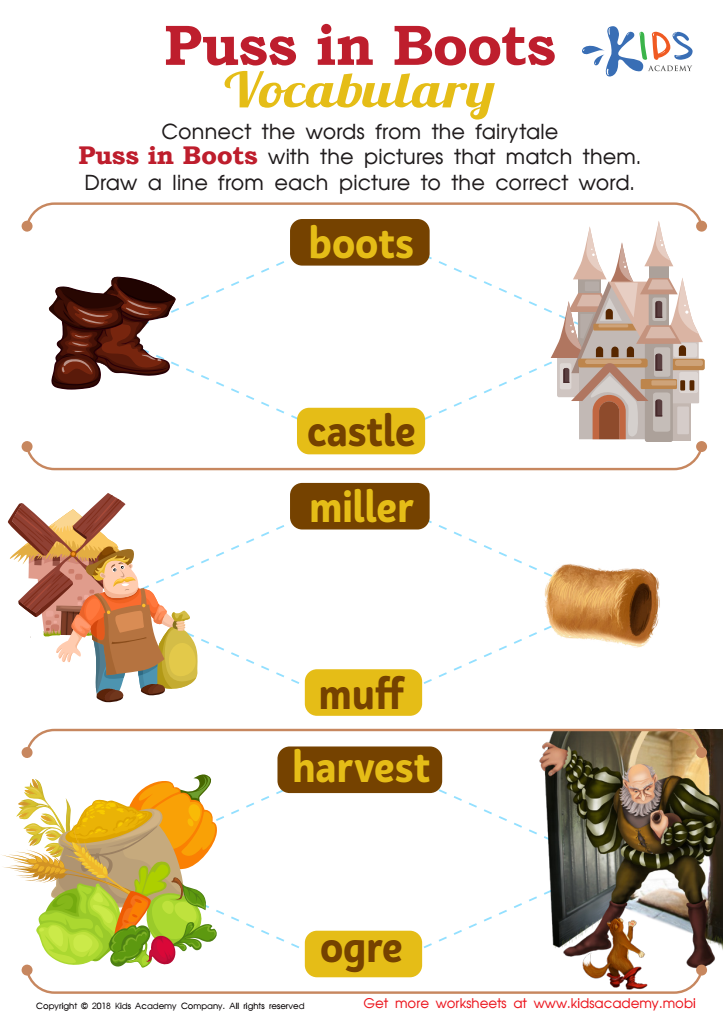
Puss in Boots Vocabulary Worksheet


Puss in Boots Vocabulary Worksheet

Let your kids enjoy story-telling while learning at the same time. Help them learn from the fairytale, Puss in Boots, by connecting words from the worksheet with the matching pictures. Ask them to draw a line between each picture and corresponding word to build their vocabulary.
Puss in Boots Vocabulary Worksheet

Worksheet


Story analysis in reading fiction for children aged 5-8 is crucial for their cognitive and emotional development. At this age, children are beginning to navigate complex narratives, understand character motivations, and build empathy through stories. Engaging with fiction allows young readers to explore different perspectives, fostering emotional intelligence and social awareness.

Parents and teachers should care because story analysis helps children enhance critical thinking skills. By discussing plots, themes, and character choices, children learn to question and reflect, which are essential skills for lifelong learning. Furthermore, analyzing stories promotes language development as it introduces young readers to new vocabulary and the structure of narratives. This is particularly vital as basic literacy skills form a cornerstone for academic success.

Moreover, story analysis provides a foundation for creativity. As children analyze plots and characters, they develop the ability to think imaginatively and craft their own tales. It encourages a love for reading, which is an invaluable gift that fosters knowledge, curiosity, and motivation. Overall, story analysis transforms reading from a mere skill into a powerful tool for personal growth and understanding the world, making it essential for both parents and educators.