Understanding road signs Community Worksheets for Ages 5-8
3 filtered results
-
From - To
Help young learners grasp essential road safety concepts with our "Understanding Road Signs" community worksheets designed for ages 5-8. These engaging, print-friendly resources from Kids Academy combine fun activities with key educational insights, introducing children to essential traffic signs and symbols. Each worksheet is crafted to enhance recognition, comprehension, and application of road safety rules. Perfect for teachers and parents, our worksheets support both classroom learning and home practice, fostering a safe and knowledgeable community of young pedestrians and future drivers. Equip your kids with the skills they need to navigate roads responsibly and confidently. Download now!
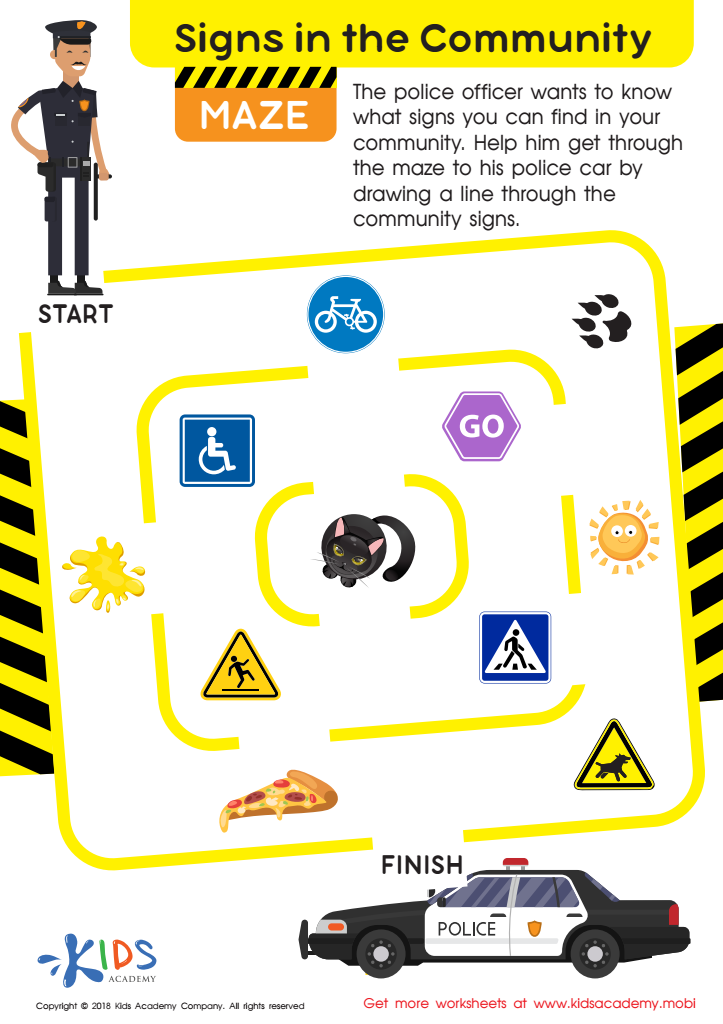
Signs in the Community: Maze Worksheet
 Assign to My Students
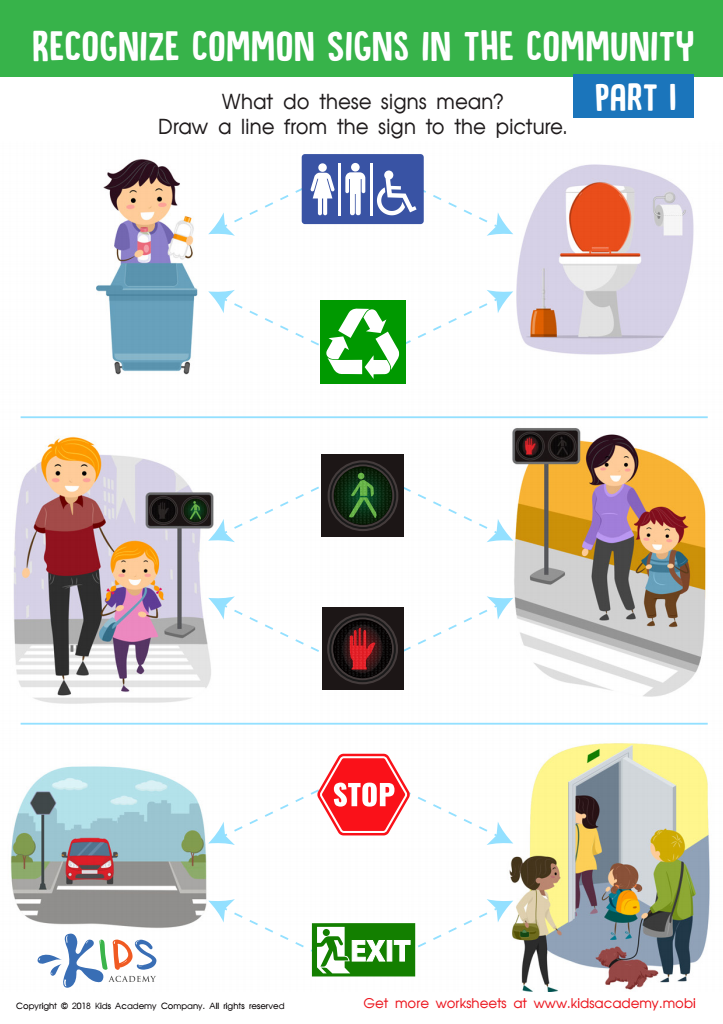
Recognize Common Signs: Part 1 Worksheet
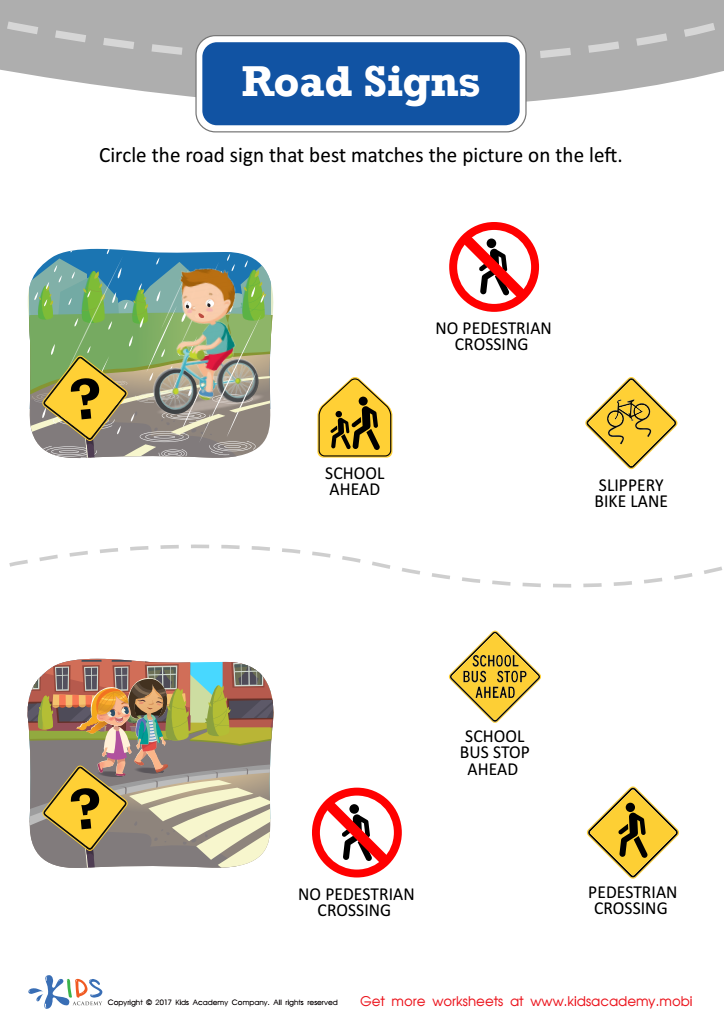
Road Signs (Part 2) Printable




.jpg)



Understanding road signs is crucial for young children, ages 5-8, as they begin to explore their communities more independently. For parents and teachers, prioritizing this knowledge lays a foundation for lifelong safety and responsible citizenship.
Firstly, road signs are intrinsic to everyday life, providing essential information to ensure everyone’s safety. Recognizing common signs like stop, yield, and school zones helps children navigate their environments more confidently and prevents accidents. Teaching these signs early serves as a preventive measure when children transition from pedestrian activities like walking or cycling to potentially becoming future drivers.
Moreover, understanding road signs promotes community awareness and social responsibility. Children learn the importance of rules and the reasons behind them, fostering a respect for authority and the community's infrastructure. This understanding encourages them to contribute positively to their community as they grow.
Educationally, learning about road signs can be an engaging exercise to develop comprehension and memory skills. Matching signs with their meanings can make learning experiential, interactive, and fun, which is particularly effective for young minds.
In summary, equipping children with the knowledge of road signs ensures their safety, nurtures responsible community behavior, and supports cognitive development, benefiting both individual growth and broader societal well-being.