Categorization skills Plants and Animals Worksheets for Ages 5-8
3 filtered results
Difficulty Level
Grade
Age
-
From - To
Subject
Activity
Standards
Enhance your child's learning with our "Categorization Skills: Plants and Animals Worksheets" designed for ages 5-8. These engaging printable worksheets promote critical thinking while helping young learners observe and distinguish between various plants and animals. Through interactive activities, children will develop essential categorization skills, learning to group items based on shared characteristics. Our worksheets also enhance vocabulary and foster a deeper appreciation for the natural world. Perfect for at-home learning or classroom settings, these resources provide a fun and educational way for children to explore their environment. Set them on a path to success with these stimulating categorization exercises!
Favorites
With answer key
Interactive
 Assign to My Students
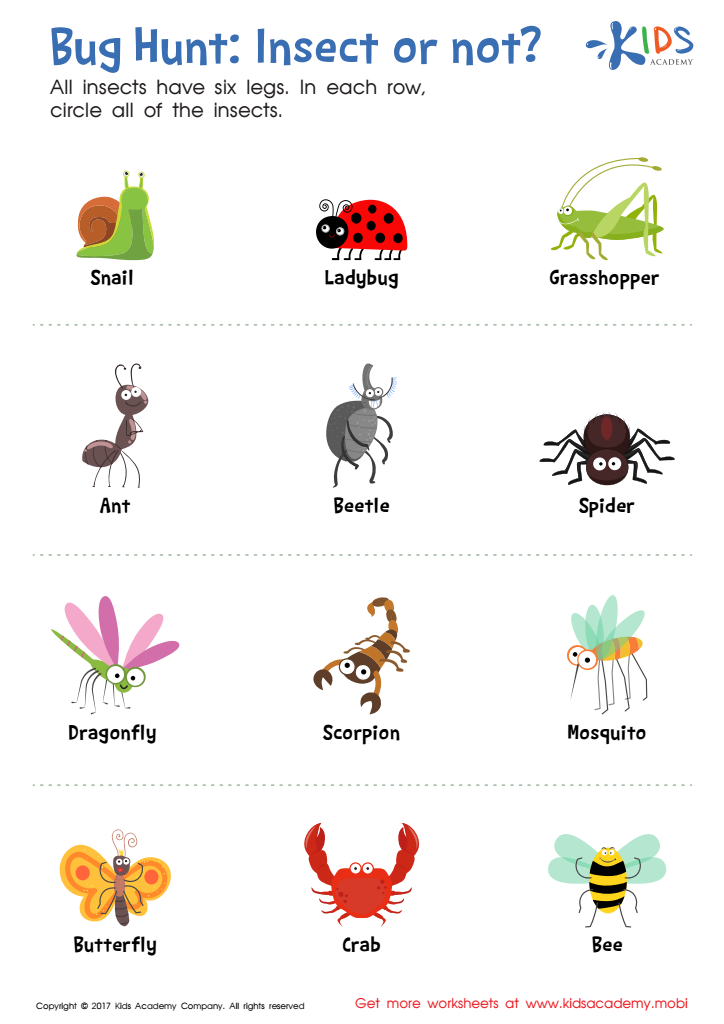
Insect or Not? Worksheet
Worksheet











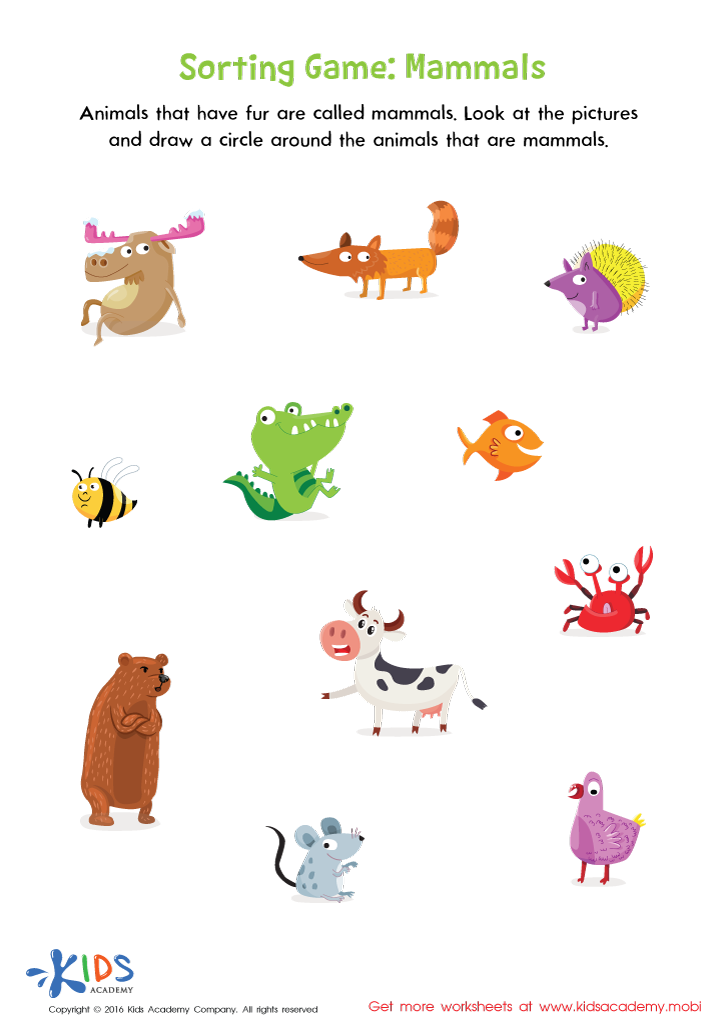
Mammals Sorting Worksheet
They'll practice sorting animals and learn their features with this fun worksheet.
Kids can test their scientific knowledge with this fun worksheet! They'll view pictures of animals, identify mammals based on their fur, and practice sorting them. This colorful worksheet is a great way for kids to learn about the differences between mammals and other animals.
Mammals Sorting Worksheet
Worksheet
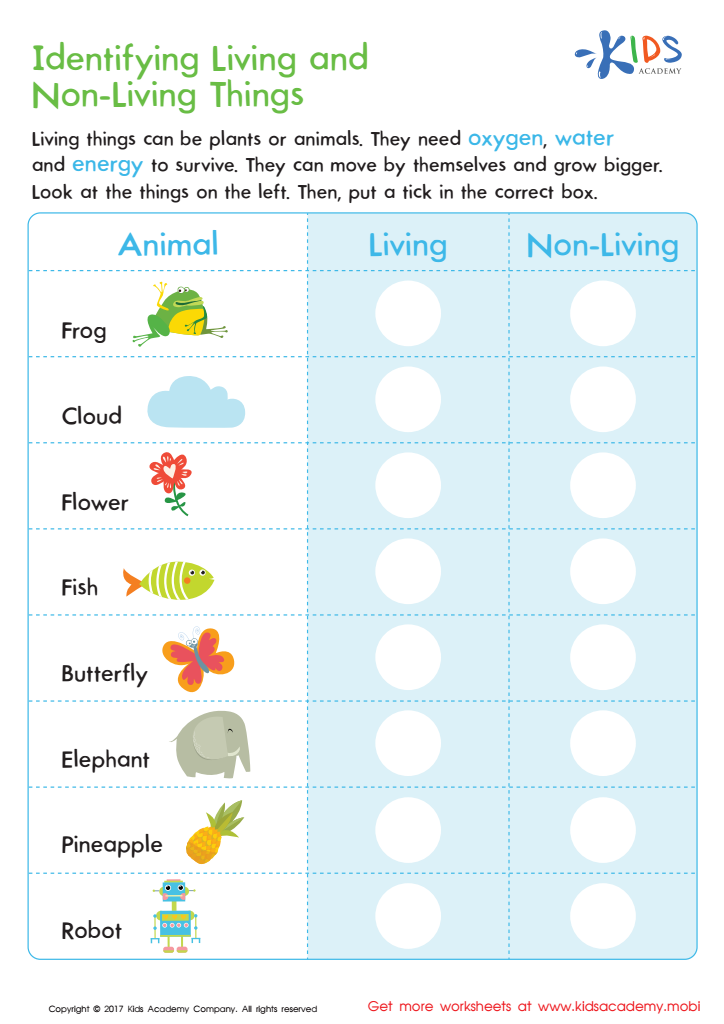
Identifying Living or Non–living Worksheet
Help your child learn to sort and categorize in a new way! Teach them to classify things as living or non-living using this worksheet. It's the perfect way to build their scientific understanding, and to have some learning fun! Print this worksheet and watch them discover the world of science!
Identifying Living or Non–living Worksheet
Worksheet
Join Kids Academy for Free
Who is primarily going to use this learning content?



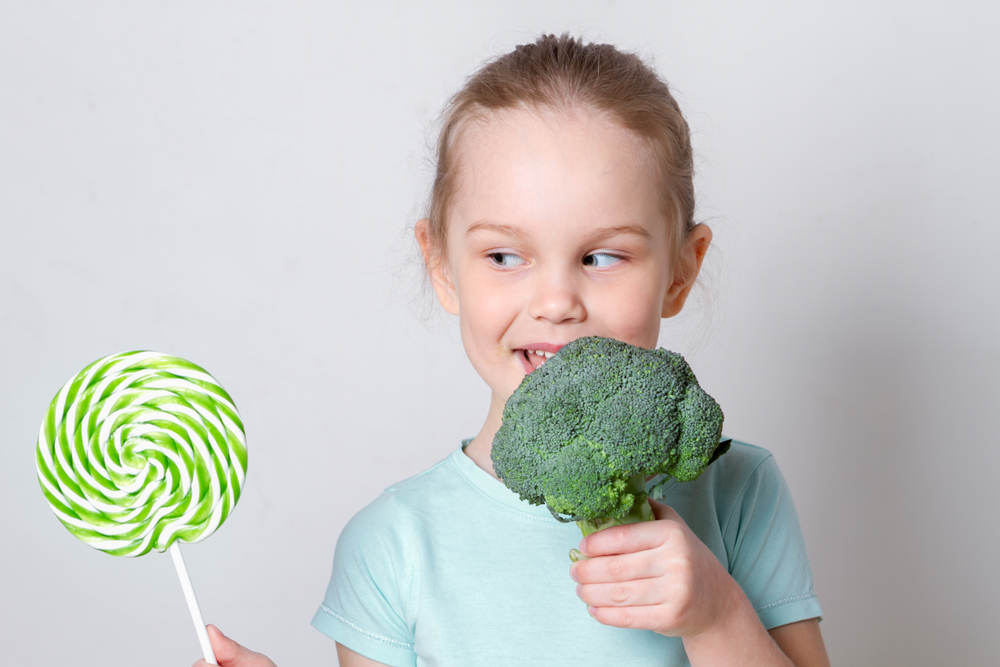




Categorization skills, particularly in understanding plants and animals, are crucial for children aged 5-8 as they lay the foundation for critical thinking and scientific literacy. During these formative years, children naturally explore their environment, and effectively categorizing living things helps them make sense of the world around them.
Learning to classify plants and animals not only enhances vocabulary and comprehension but also fosters observational skills. As children engage in activities that require them to group organisms by common traits—such as habitat, size, or color—they develop analytical skills that are essential for problem-solving.
Moreover, understanding categorization encourages curiosity and inquiry. Kids begin to ask questions about why different species exist, their roles in ecosystems, and how they relate to one another, stimulating further exploration.
Additionally, these skills support interdisciplinary learning, integrating science with art (through drawing or creative projects), language (via storytelling or descriptions), and even math (by using categories to organize data). In essence, nurturing categorization skills in early education helps build a strong groundwork for lifelong learning, preparing children to comprehend and engage with more complex concepts in biology and environmental science in the future. Thus, parents and teachers play a vital role in facilitating this critical understanding.