Weather identification Weather Worksheets for Ages 5-8
4 filtered results
-
From - To
Discover our engaging Weather Identification Worksheets designed for children ages 5-8! These thoughtfully crafted resources help young learners explore various weather conditions while enhancing their observation and comprehension skills. With fun activities, colorful illustrations, and interactive exercises, kids will learn to identify weather types such as sunny, rainy, cloudy, and windy. Our worksheets support early education by fostering critical thinking and increasing vocabulary related to the environment. Perfect for homeschoolers or classroom use, these worksheets make learning about weather both enjoyable and educational. Inspire your child's curiosity about the world around them with our fun-filled weather resources today!
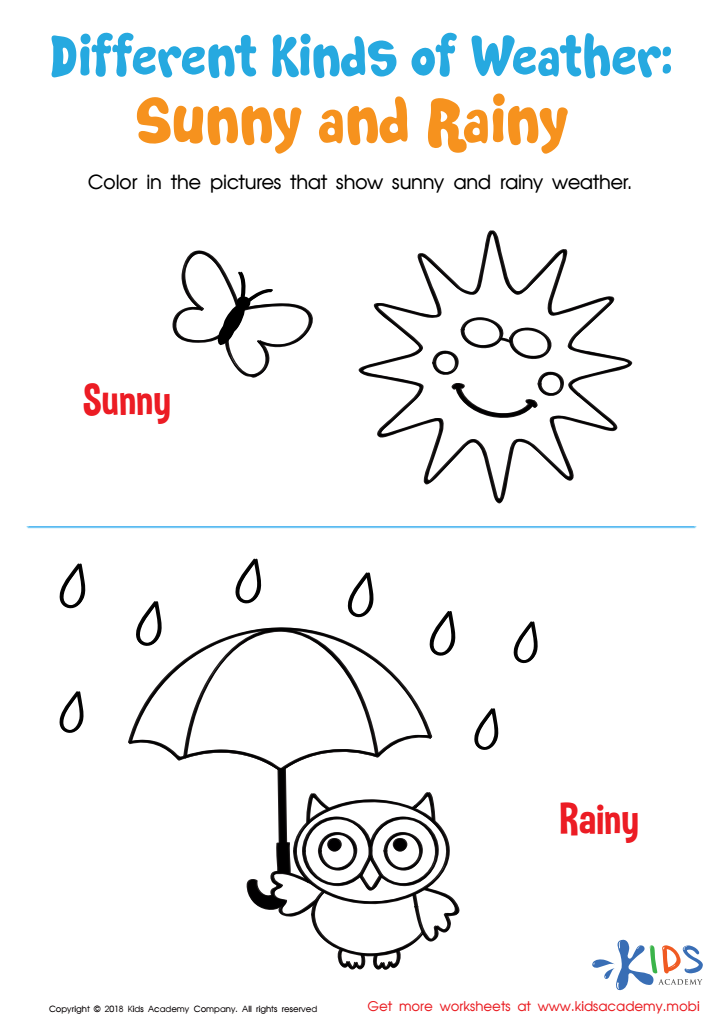
Different Kinds of Weather: Sunny and Rainy Worksheet
 Assign to My Students
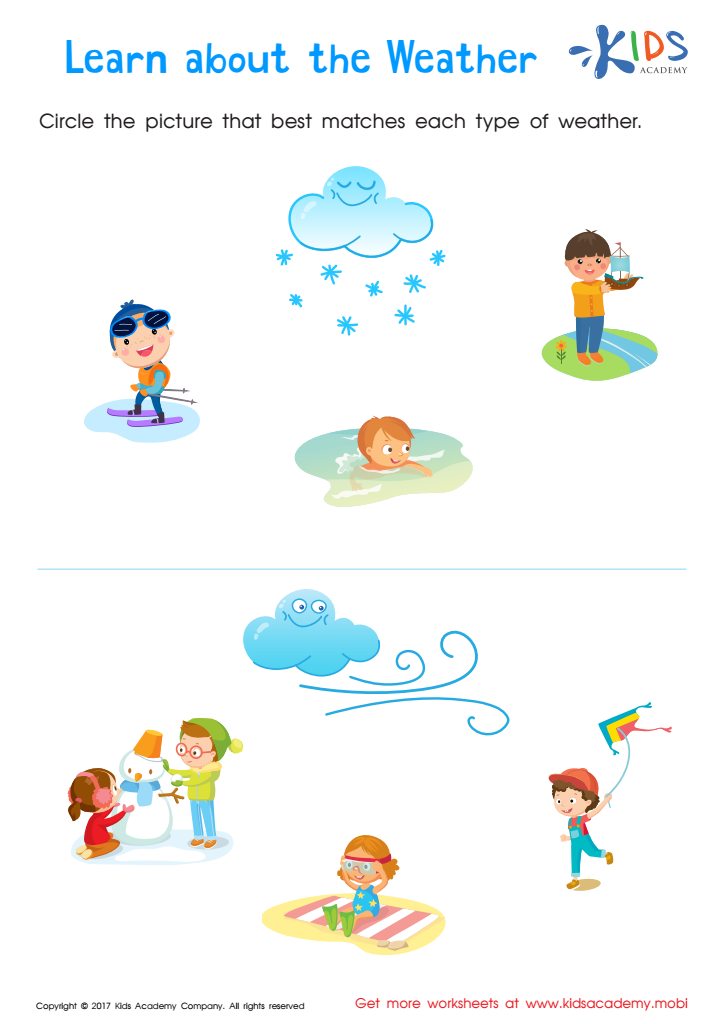
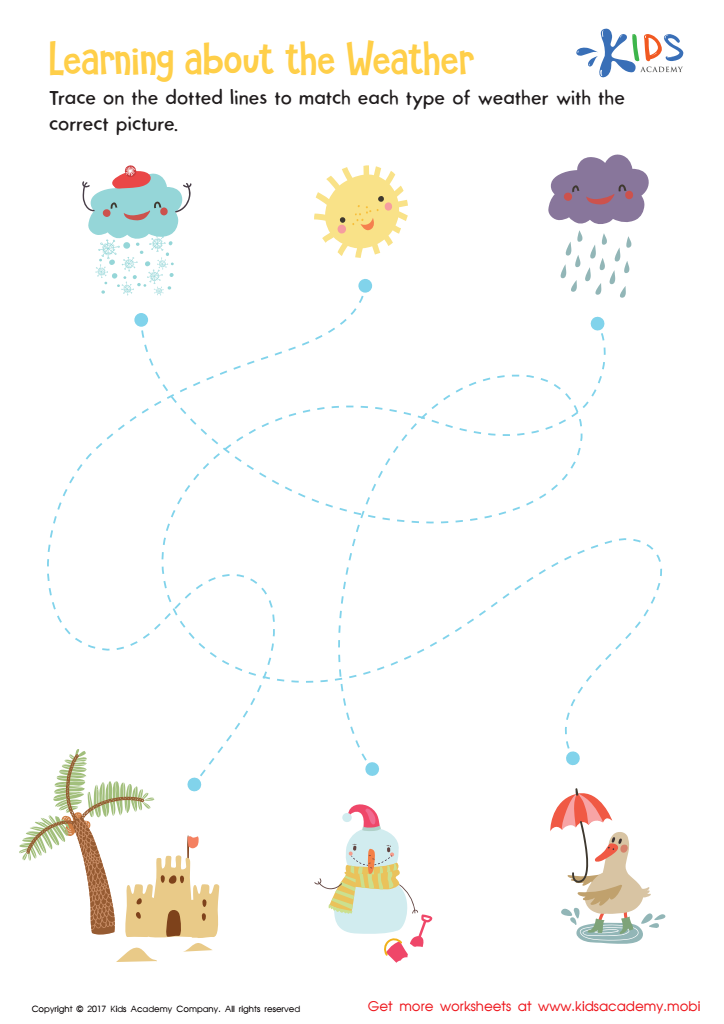
About the Weather Printable
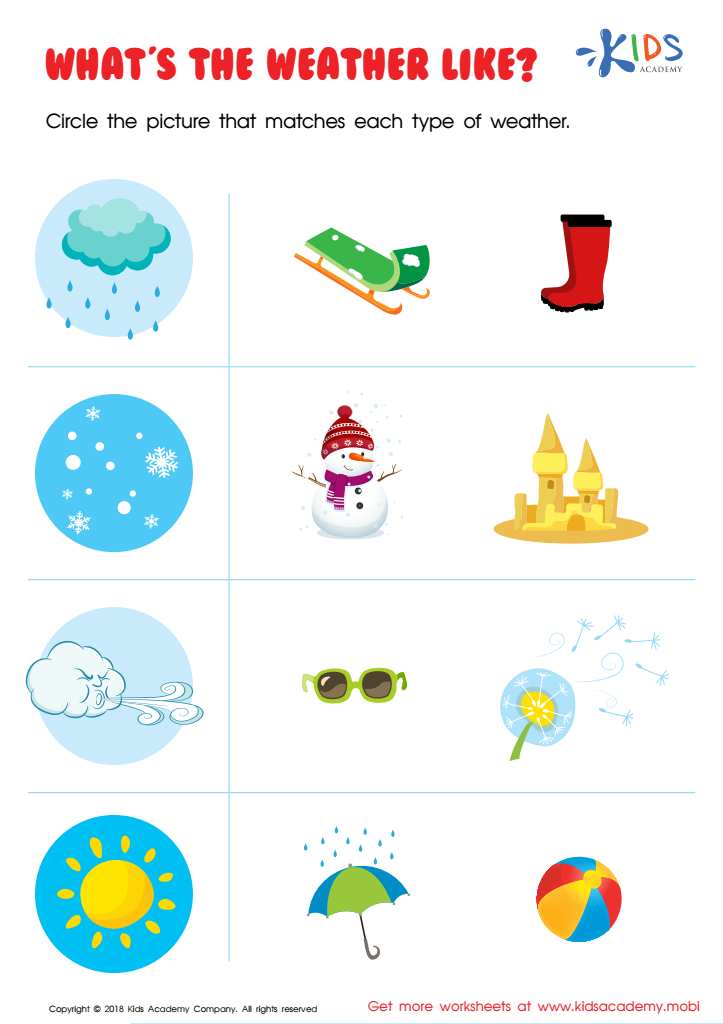
What's the Weather Like? Worksheet






Weather identification is crucial for children aged 5-8 for several reasons. Firstly, understanding the weather helps children connect with their environment. They learn to observe daily changes, such as sunny or rainy days, fostering curiosity and critical thinking skills. This engagement in observation lays the foundation for scientific inquiry, enhancing their cognitive development.
Secondly, weather education promotes safety. By recognizing different weather conditions, children can learn the importance of dressing appropriately and preparing for outdoor activities. Understanding concepts like storm warnings, wind chill, or even the importance of hydration on hot days can help them make safer choices.
Moreover, weather discussions facilitate language development. As children learn weather-related vocabulary, they enhance their communication skills, enabling them to express ideas clearly. This also promotes discussions among peers and adults, strengthening their social connections.
Additionally, knowledge of weather patterns supports emotional intelligence. Children can relate weather phenomena to their feelings, understanding how certain conditions (like rain) can affect mood and outdoor activities.
In short, teaching weather identification enriches children's understanding of the world, fosters safety, enhances language skills, and aids in emotional development, making it a key aspect of early education.