Phonics skills improvement Grammar Worksheets for Ages 5-8
3 filtered results
-
From - To
Boost your child's reading and writing abilities with our engaging Phonics Skills Improvement Grammar Worksheets designed specifically for ages 5-8. These carefully crafted resources offer fun and interactive activities that help reinforce essential phonics concepts, including letter sounds, blending, and decoding words. Each worksheet is tailored to make learning enjoyable while enhancing your child's language skills. With easy-to-follow instructions and vibrant visuals, kids will gain confidence in their phonics knowledge. Perfect for classroom use or at-home learning, these worksheets are an excellent tool for early learners to build a strong foundation in grammar and literacy. Start your learning adventure today!
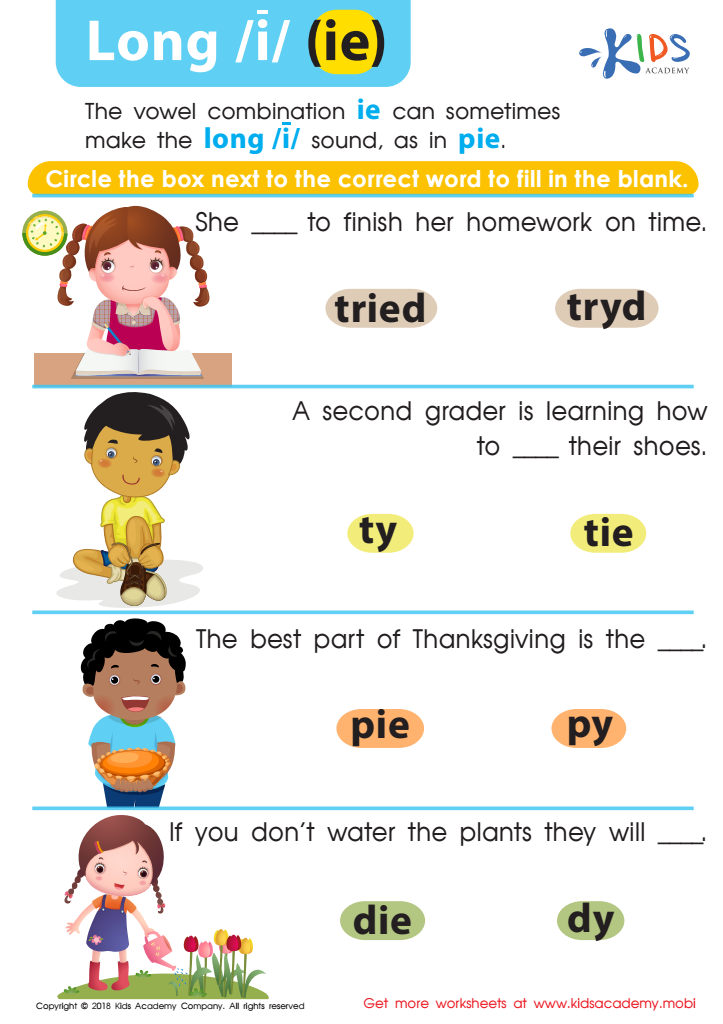
Reading: Long I and IE Worksheet
 Assign to My Students
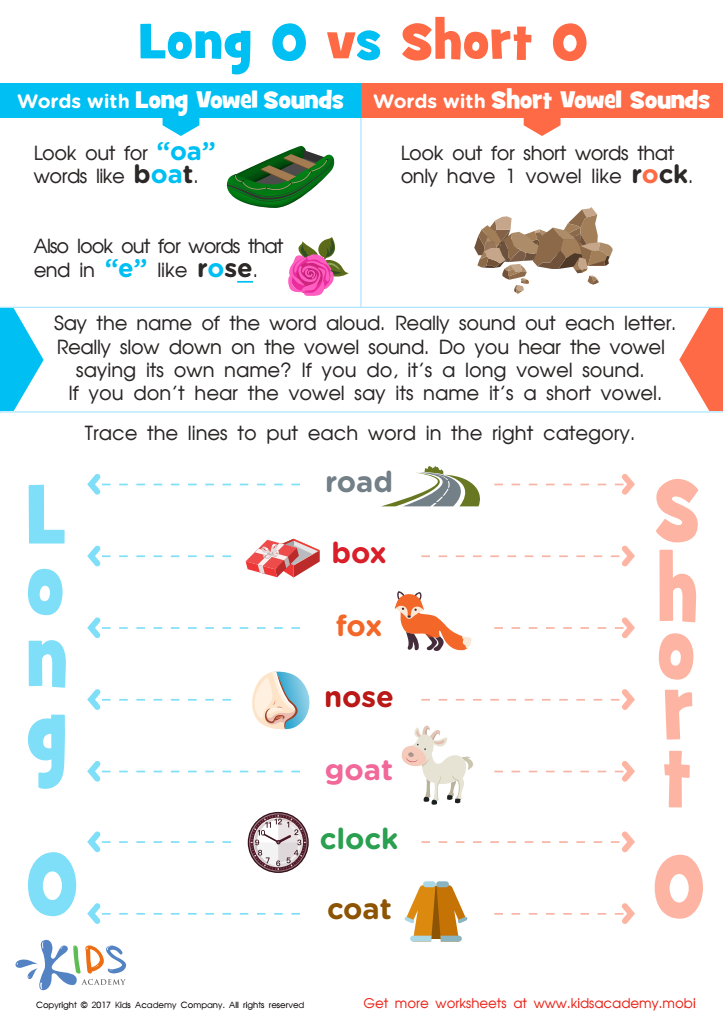
Long and Short Vowel O Spelling Worksheet
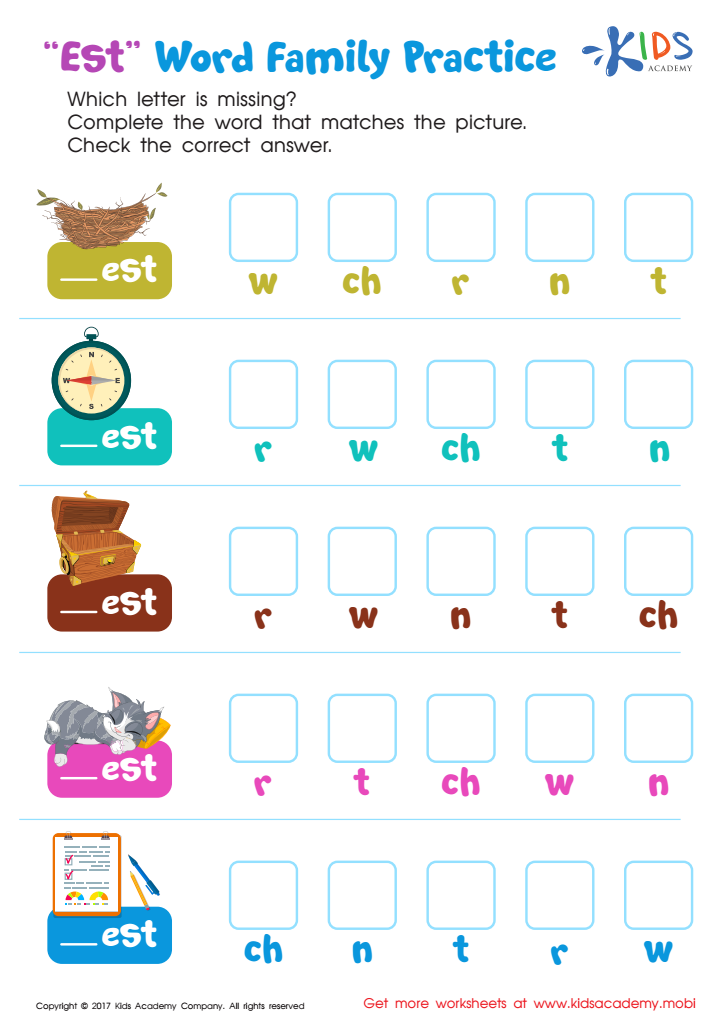
Words Family "est" Spelling Worksheet








Phonics skills play a critical role in literacy development for children aged 5 to 8. Understanding the relationship between letters and sounds is essential for reading and writing, and it forms the foundation for more advanced language skills. Parents and teachers should prioritize phonics programs because they provide children with the tools to decode words, enabling them to read independently and build confidence.
Strong phonics skills contribute to improved spelling and grammar, as children learn to recognize patterns in words and construct sentences accurately. This foundational knowledge supports overall academic success, equipped children not just for future literacy tasks but also for subjects that require clear communication and comprehension.
Additionally, phonics instruction often engages students through interactive, multisensory activities, making learning enjoyable and fostering a love for reading. By focusing on phonics, parents and teachers empower children to navigate increasingly complex texts, helping them to keep pace with their peers and reducing frustration associated with literacy challenges. In essence, emphasizing phonics skills establishes a solid groundwork for lifelong learning, critical thinking, and effective communication, making it vital for parents and teachers to invest their efforts in this essential aspect of early education.








