
Sound differentiation Alphabet Worksheets for Ages 5-9
4 filtered results
Difficulty Level
Grade
Age
-
From - To
Subject
Activity
Standards
Discover our engaging Sound Differentiation Alphabet Worksheets designed specifically for children ages 5-9! These worksheets provide a fun and interactive way for young learners to distinguish between different sounds associated with letters. By integrating auditory and visual learning, these resources help kids improve their phonemic awareness, fostering essential reading skills early on. Ideal for homeschool, classroom activities, or supplemental learning at home, each worksheet encourages hands-on practice with phonics through stimulating exercises. Empower your child’s literacy journey by enhancing their sound recognition skills today! Explore our collection and watch their confidence grow as they master the alphabet's sound system!
Favorites
With answer key
Interactive
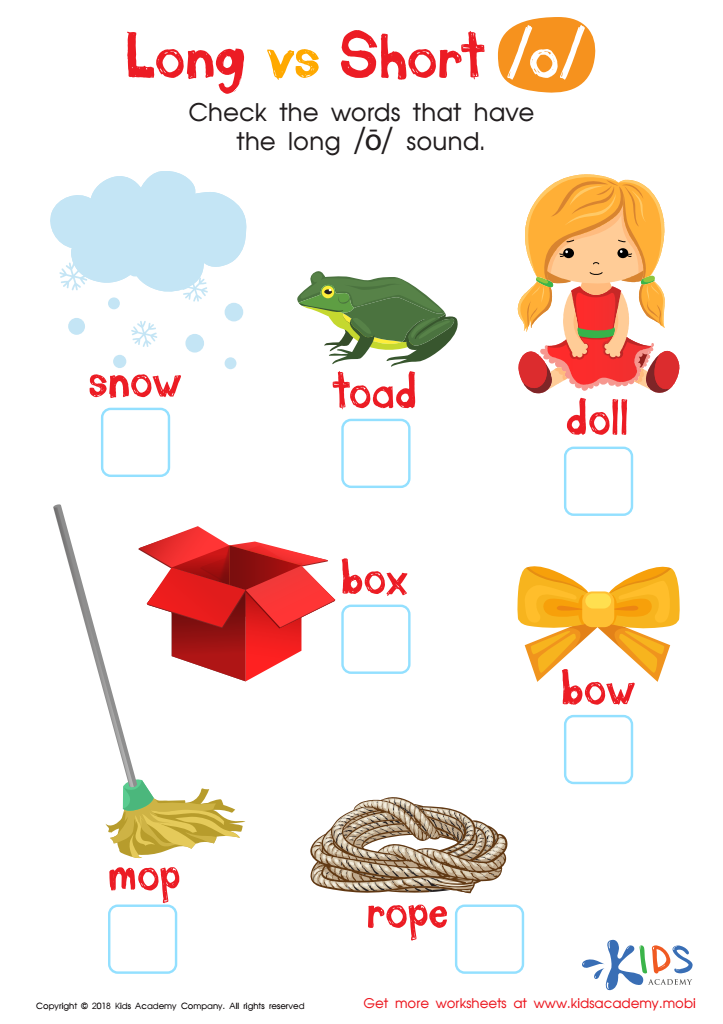
Long vs Short O Reading Worksheet
Help your child learn to identify the long and short «o» sound with this colourful worksheet. Guide them as they spot words with the long or short «o» sound. With practice, your child will find it easier to tell the difference between the two.
 Assign to My Students
Long vs Short O Reading Worksheet
Worksheet
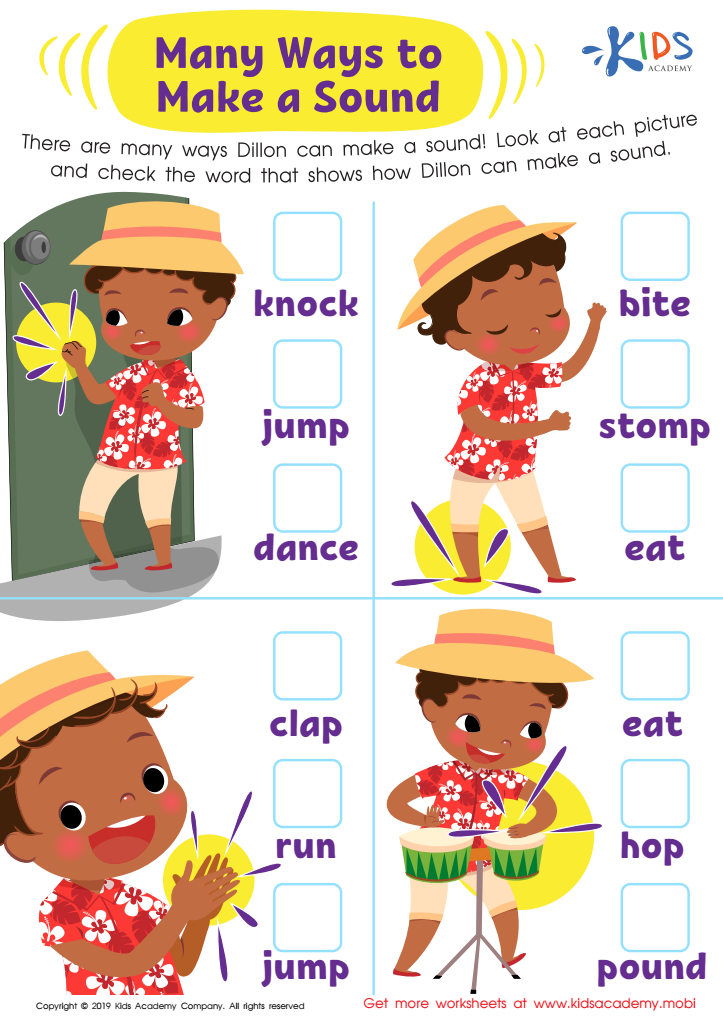
Many Ways to Make a Sound Worksheet
This interactive worksheet encourages creativity and imagination as kids use picture clues to match sound words. It helps them identify the sound methodology and build fine motor skills. Plus, with learning through play, they'll develop stronger vocabularies without even knowing it!
Many Ways to Make a Sound Worksheet
Worksheet
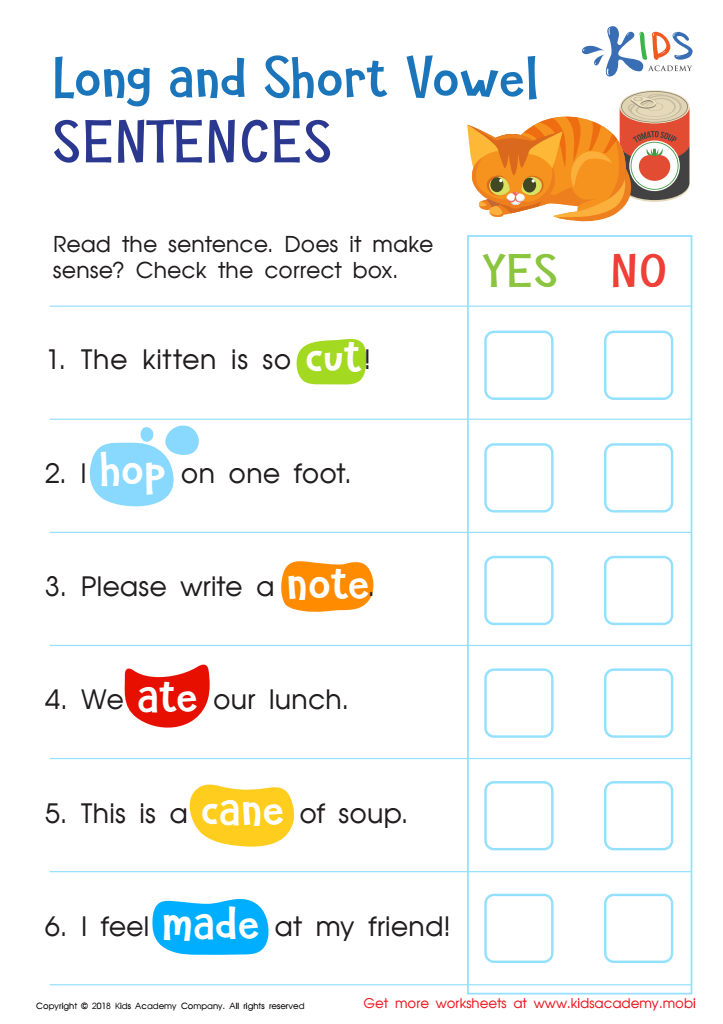
Long and Short Vowel Sentences: Assessment Worksheet
This printable worksheet helps kids practice differentiating between short and long vowel sounds. They'll use context clues to figure out which words make sense in simple sentences. A great way to build reading and writing skills!
Long and Short Vowel Sentences: Assessment Worksheet
Worksheet
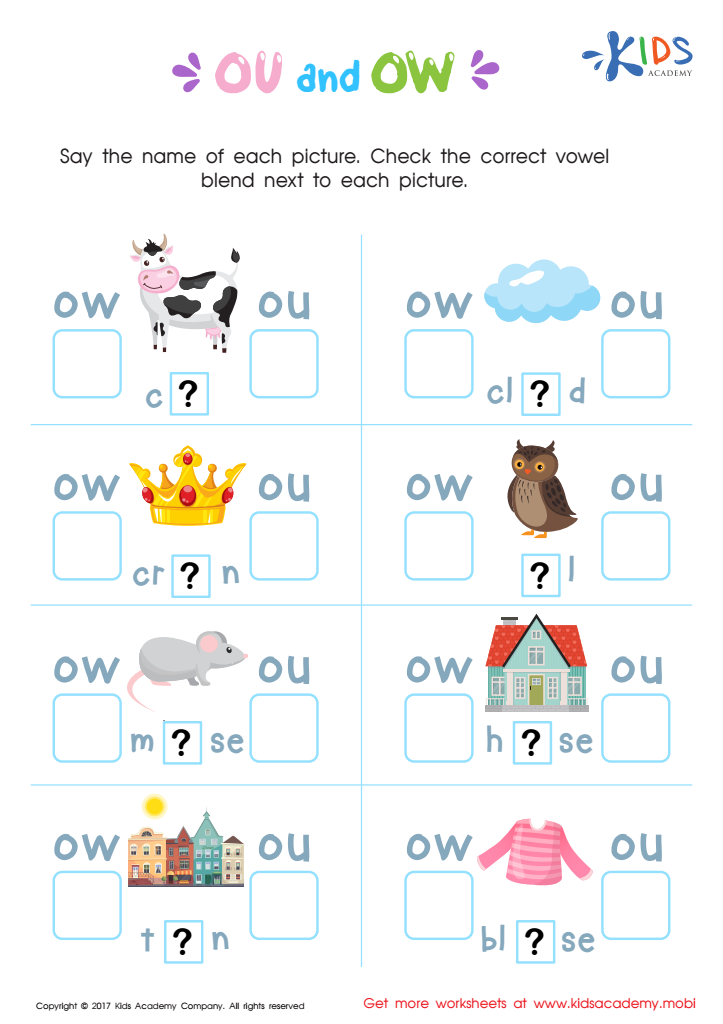
OU and OW Words Worksheet
Enhance your child's reading and spelling with this ou and ow words worksheet! Fun pictures and common words make mastering the diphthongs ou and ow easy and enjoyable.
OU and OW Words Worksheet
Worksheet
Join Kids Academy for Free
Who is primarily going to use this learning content?







Sound differentiation in the alphabet is crucial for children aged 5-9 as it forms the foundation for reading and writing skills. This developmental stage is marked by significant cognitive growth, where the ability to distinguish and manipulate sounds enables children to decode words effectively.
Parents and teachers should prioritize sound differentiation because it enhances phonemic awareness, which is essential for successful literacy development. When children can accurately perceive and differentiate between sounds, they become more proficient in spelling and reading. This skill also supports language development, allowing children to expand their vocabulary and improve their comprehension abilities.
Moreover, mastering sound differentiation aids in developing analytical thinking and problem-solving skills. Children learn to recognize patterns and make connections between sounds and letters, fostering a love for language and literature. Early intervention to strengthen these skills can help prevent reading difficulties later in life, leading to greater academic success and confidence.
Involving parents and teachers in this process creates a supportive educational environment, reinforcing sound differentiation through engaging activities, storytelling, and phonics games. Ultimately, nurturing this foundation will set children on a path to lifelong learning and empower them to express themselves effectively in writing and communication.







