Sound identification Alphabet Worksheets for Ages 5-9
5 filtered results
-
From - To
Discover our engaging Sound Identification Alphabet Worksheets designed for children ages 5-9. These interactive worksheets help young learners connect spoken sounds with their corresponding letters, enhancing early reading skills. Each activity is crafted to make learning fun and effective, fostering phonemic awareness and language development. Whether at home or in the classroom, our worksheets provide a comprehensive tool for teaching the alphabet and sound recognition. With colorful illustrations and diverse exercises, these worksheets ensure that children stay motivated and excited about learning. Empower your child’s education journey with our expert-crafted resources!
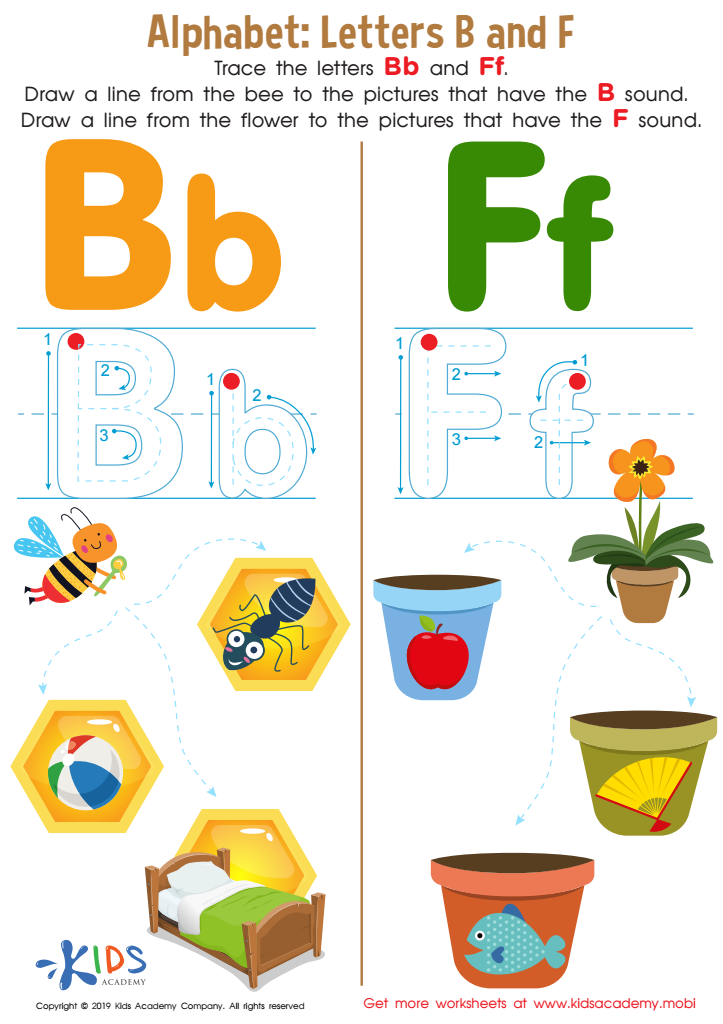
Letters B and F Tracing Worksheet
 Assign to My Students
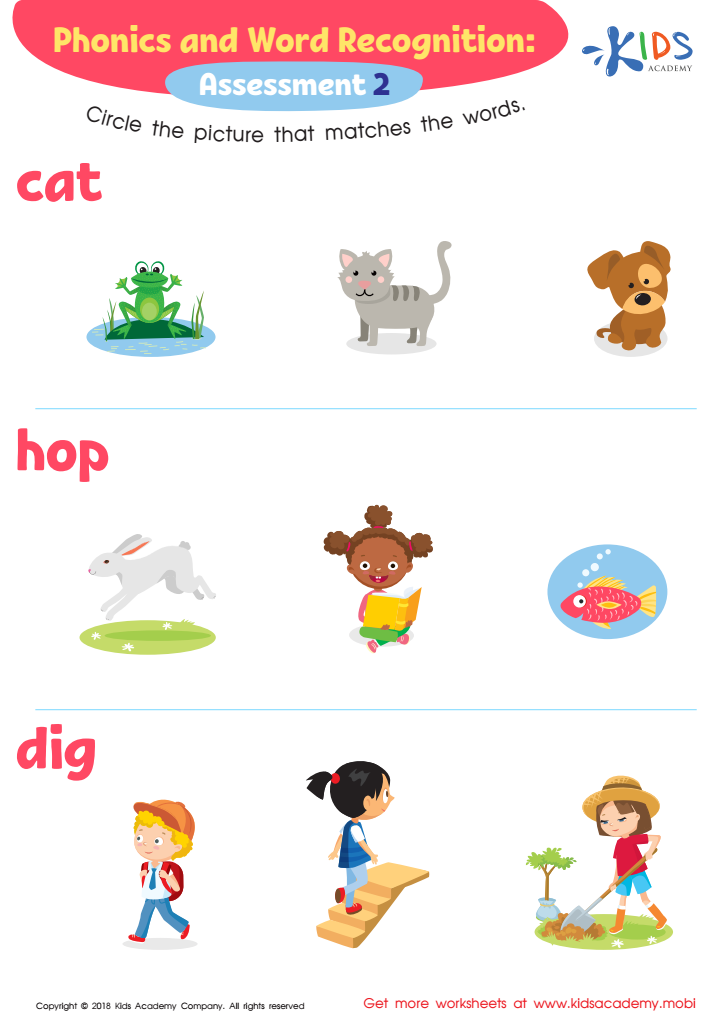
Phonological Awareness: Assessment 2 ELA Worksheet
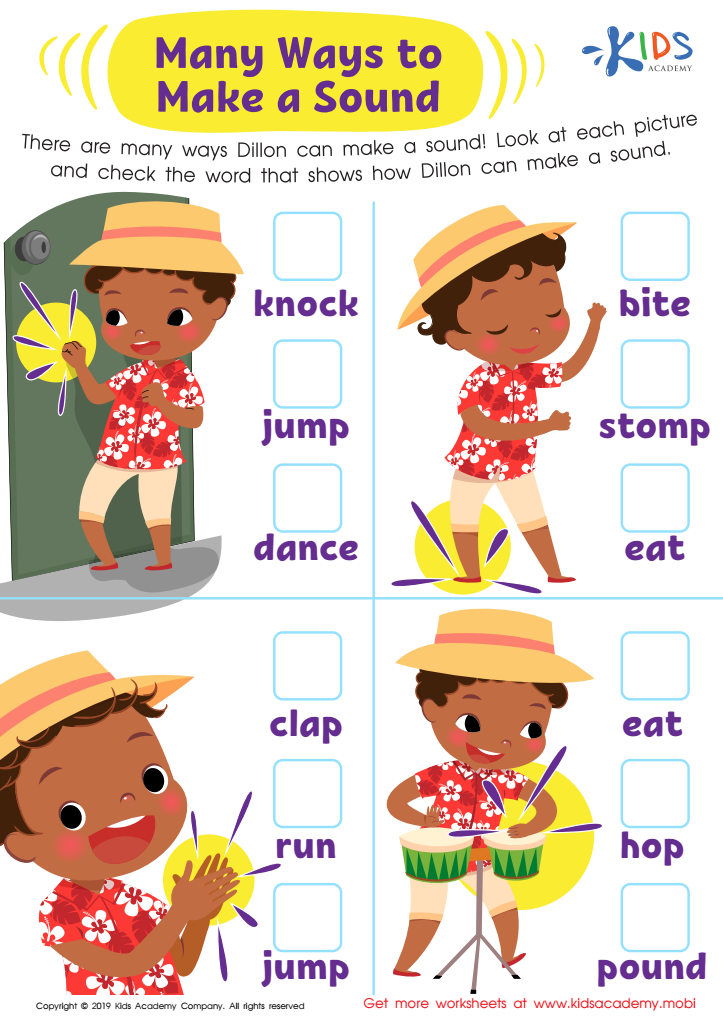
Many Ways to Make a Sound Worksheet
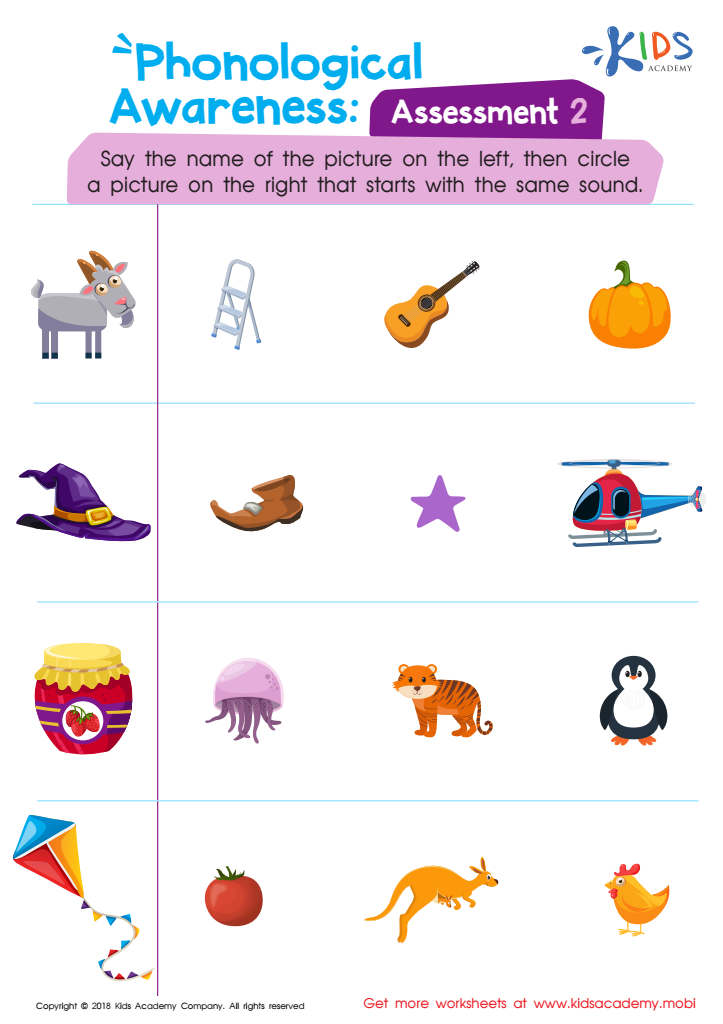
Phonological Awareness: Assessment 2 Worksheet
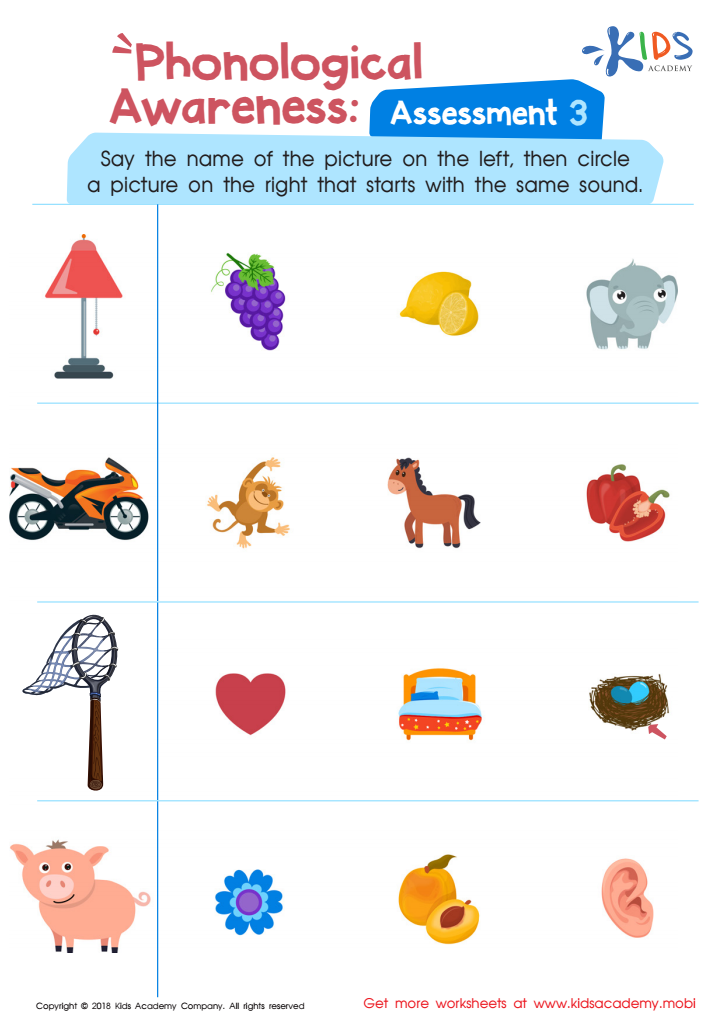
Phonological Awareness: Assessment 3 Worksheet






Parents and teachers should care about sound identification in the alphabet for children ages 5-9 because it lays the cornerstone for reading proficiency and overall academic success. During these formative years, children develop vital literacy skills that are essential for learning in all subjects. Sound identification involves recognizing the correspondence between letters and their associated sounds, a foundational aspect of phonemic awareness. This skill is crucial because it enables children to decode words while reading, facilitating comprehension and allowing them to build a richer vocabulary.
Additionally, sound identification supports effective spelling and writing. When children understand the sounds that letters make, they can better segment words into constituent sounds and spell them accurately. This skill is also tied to verbal abilities, enabling children to enhance their speaking and listening skills.
Early mastery of sound identification increases confidence in young learners, fostering a positive attitude towards learning and enabling greater academic achievements. For educators and parents, monitoring and encouraging this skill allows for early intervention if a child shows signs of struggling, thus providing timely support to avoid prolonged difficulties.
By prioritizing sound identification in the alphabet for children aged 5-9, parents and teachers invest in their long-term educational development, laying the groundwork for future success in a linguistically rich and complex world.







