Lowercase identification Letter Recognition Worksheets for Ages 5-9
5 filtered results
-
From - To
Discover our engaging Lowercase Identification Letter Recognition Worksheets, specially designed for children ages 5-9! These interactive activities foster essential literacy skills by helping young learners identify and differentiate lowercase letters. Each worksheet features vibrant illustrations and fun exercises that make learning enjoyable and effective. Perfect for classroom settings or at-home practice, these resources encourage children to recognize letters, improve handwriting, and build foundational reading skills. With a variety of activities tailored to different learning styles, it’s easy to keep students motivated and excited about learning. Equip your young learners with the tools they need for reading success today!
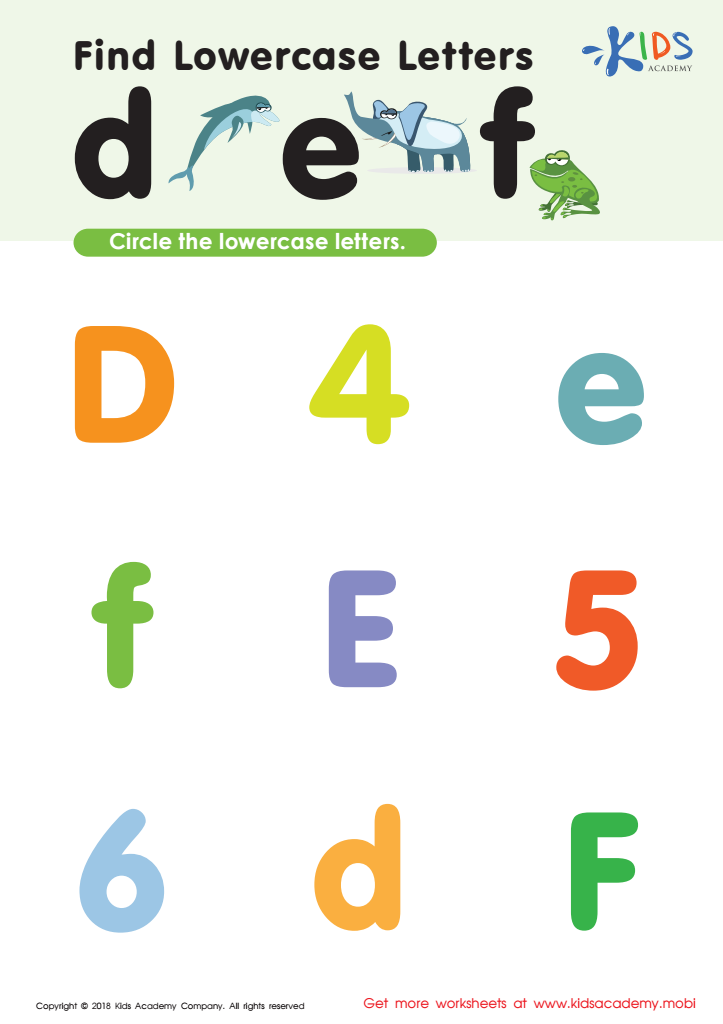
Find Lowercase Letters d e f Worksheet
 Assign to My Students
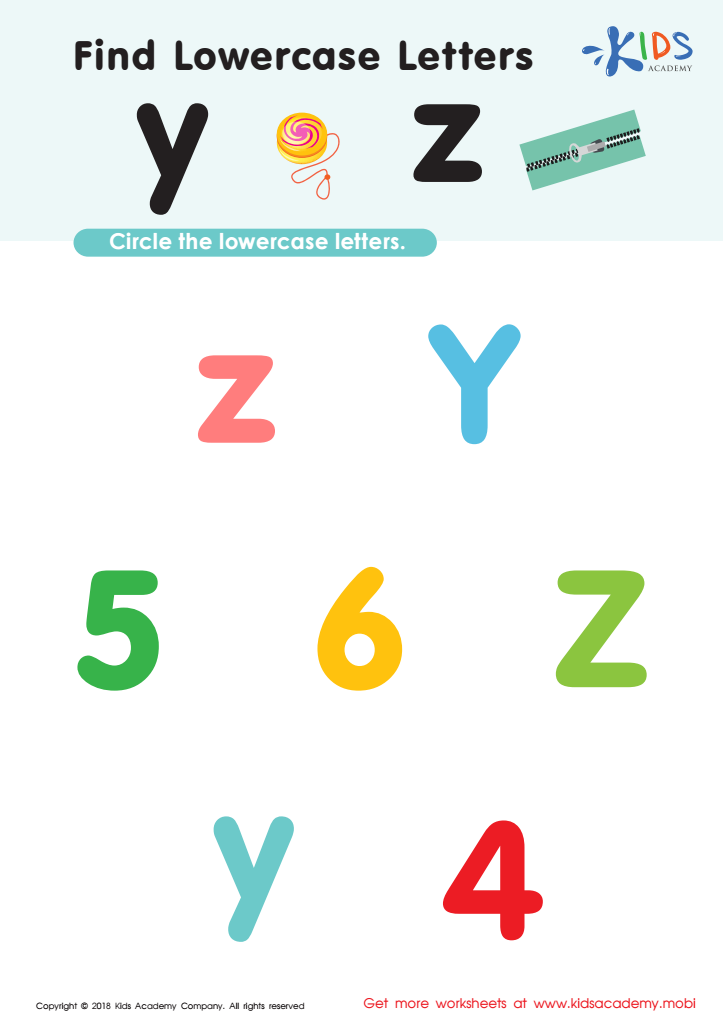
Find Lowercase Letters y z Worksheet
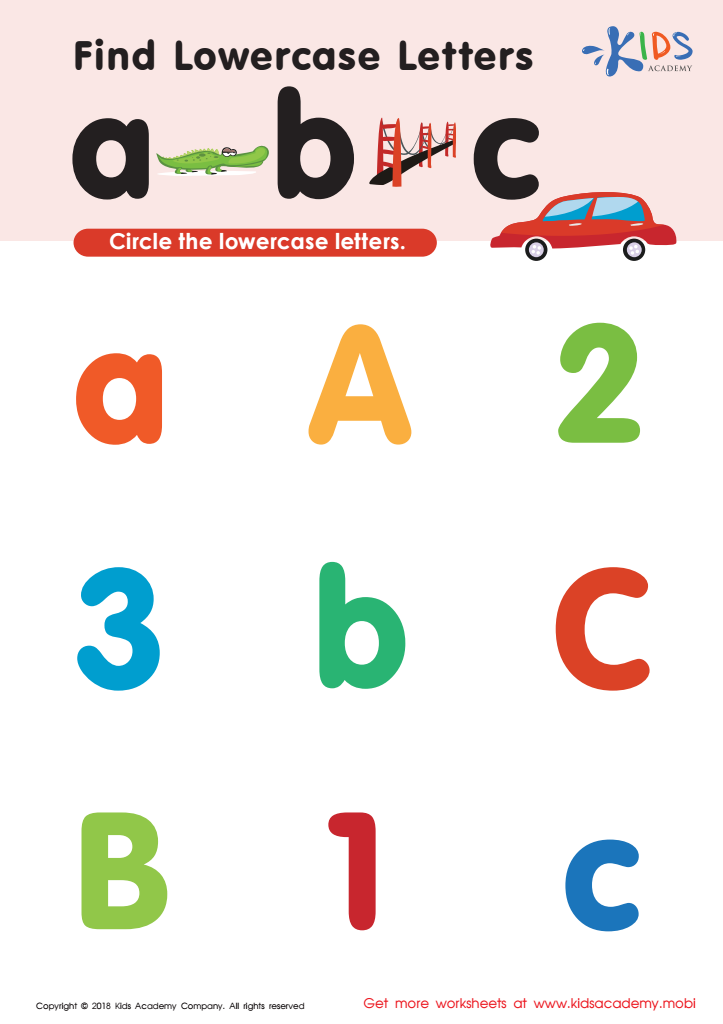
Find lowercase letters a b c Worksheet
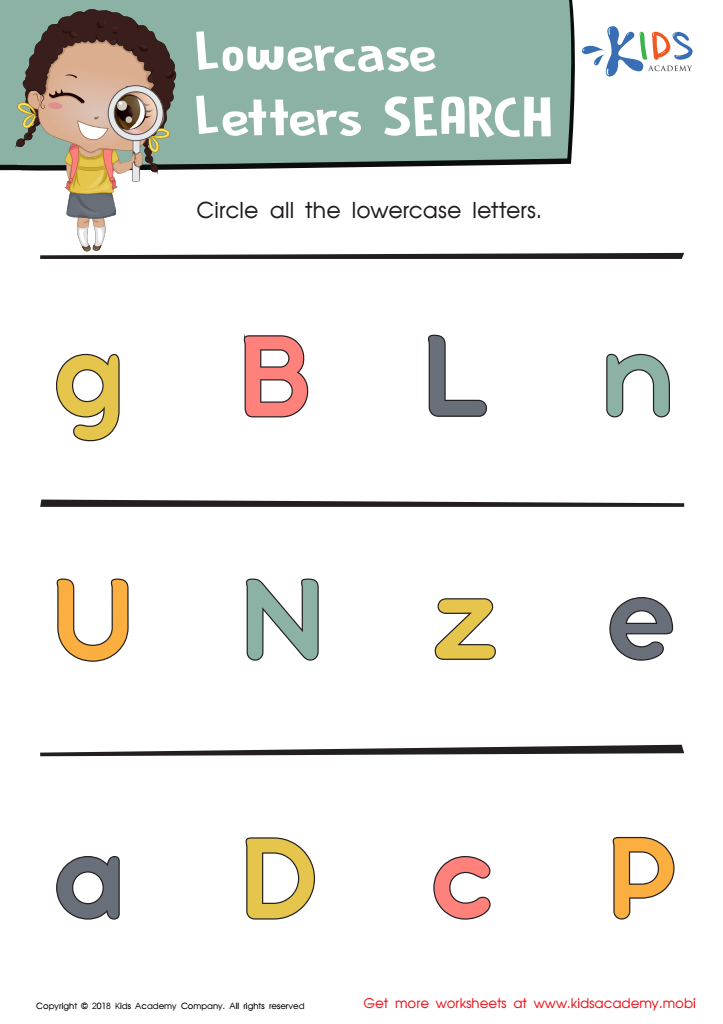
Lowercase Letters Search: Assessment Worksheet
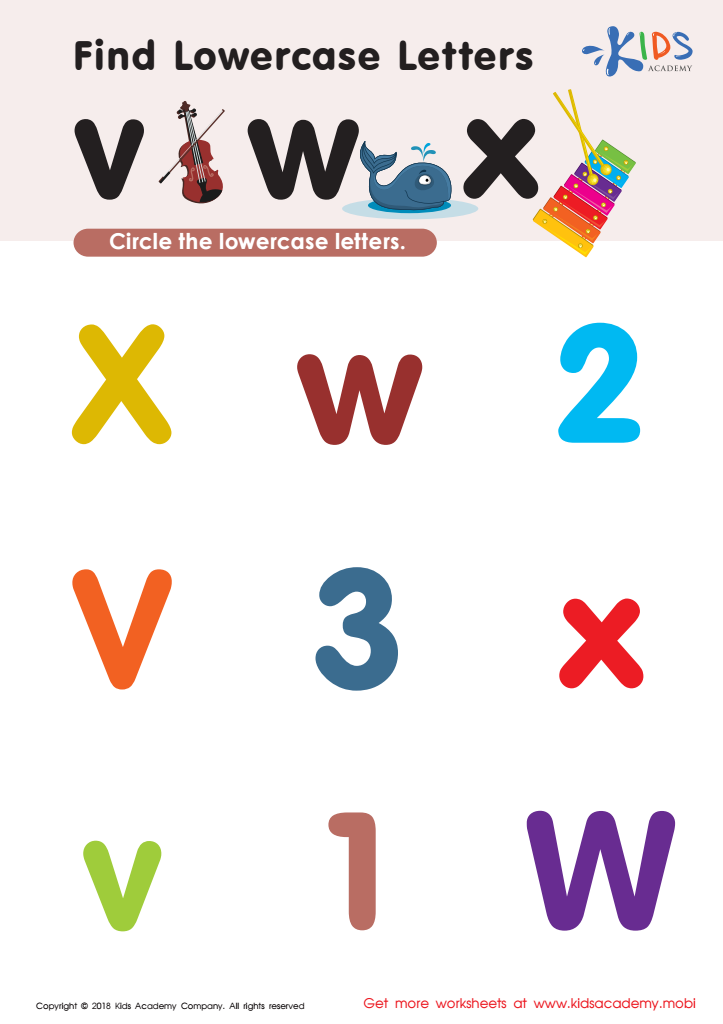
Find Lowercase Letters v w x Worksheet








Lowercase letter identification is a crucial skill for children aged 5-9 as they lay the foundation for effective reading and writing. Unlike uppercase letters, lowercase letters appear more frequently in texts, making their recognition vital for improving fluency and comprehension. When children can identify and differentiate between lowercase letters swiftly, they are more prepared to tackle common words, sentences, and eventually, paragraphs, fostering a love for reading.
Additionally, understanding lowercase letters can boost children's confidence in writing. This skill enables them to form words and sentences, encouraging self-expression and creativity as they communicate their thoughts. For teachers and parents, fostering lowercase letter recognition in this age group also supports overall literacy development, which is linked to academic success across subjects.
Moreover, recognizing lowercase letters is essential for educational consistency. As children transition from preschool to early elementary grades, they face increasingly complex texts. A solid grasp of lowercase letters streamlines this transition, allowing them to focus on more advanced literacy skills. By promoting lowercase letter identification, parents and teachers play a pivotal role in enhancing children's communication abilities, setting them on a path toward academic achievement and lifelong learning.







