Filters

9 filtered results

Clear all filters
Favorites
With answer key
Interactive

9 filtered results

Difficulty Level

Grade


Enhance your child’s reading journey with our engaging Phonics Skills Letter Sounds Worksheets, perfect for ages 5-9. These expertly designed worksheets offer a fun and interactive way to reinforce letter-sound relationships, essential for reading success. Children will enjoy various colorful activities, from matching sounds to letters and practice writing each letter. Each worksheet focuses on different phonetic skills, ensuring a comprehensive learning experience. Ideal for both classroom and at-home learning, these printable resources support early literacy, boost confidence, and make learning phonics enjoyable. Turn phonics practice into a delightful adventure with our worksheets today!

Check out this FREE Trial Lesson on Letter Sounds for age 5-9!

The Letter C Sound

Favorites
With answer key
Interactive
  • 5-9
  • Phonics Skills
  • Letter Sounds
Letter Q Sounds Worksheet

Letter Q Sounds Worksheet

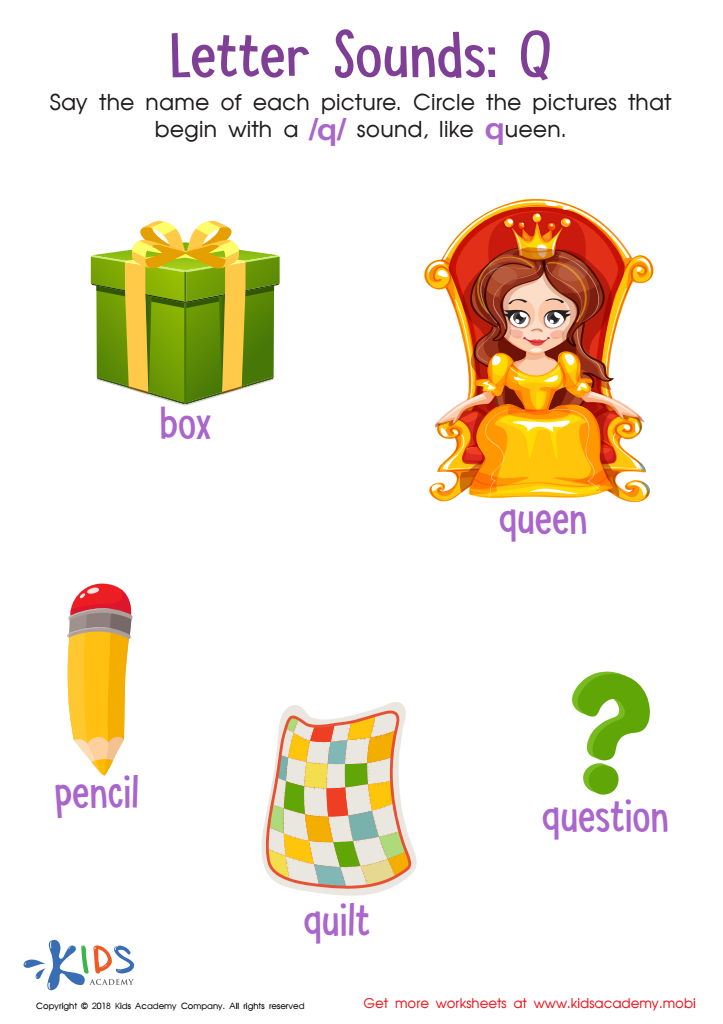
Kids can get confused between "K" and "Q" sounds. Help them learn with this phonics worksheet. They'll name each image and read the word underneath. Point out that words with "Q" also have a "U" which affects how it sounds. Have them circle the matching pictures and watch as they learn this unique letter sound.
Letter Q Sounds Worksheet
Worksheet
Letter B and C Sounds Worksheet

Letter B and C Sounds Worksheet

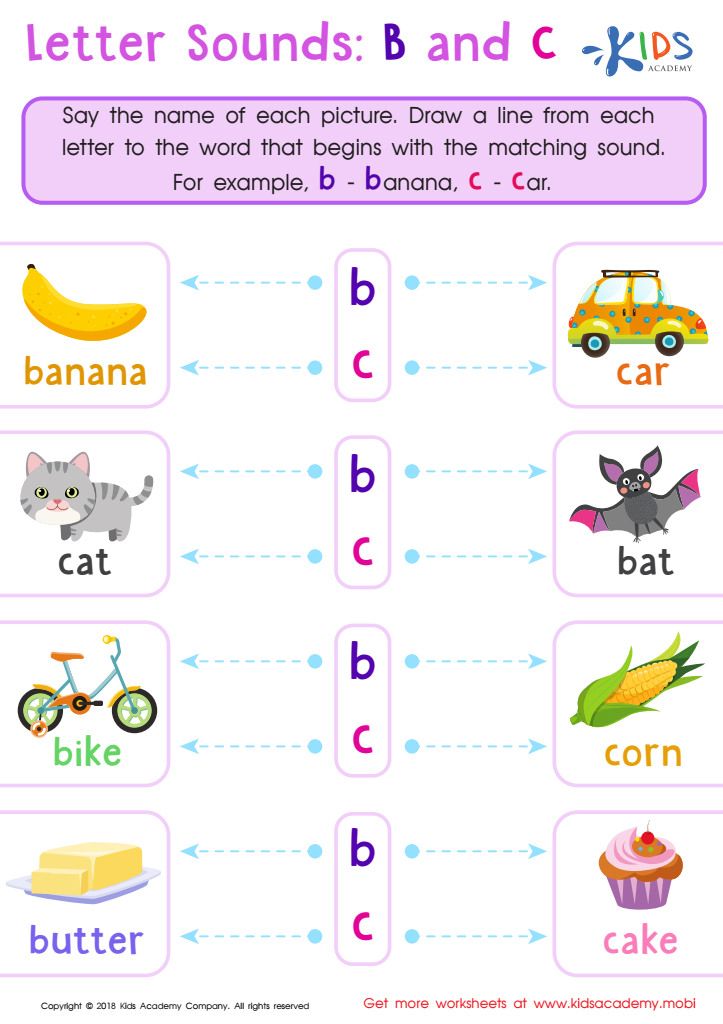
This fun worksheet offers bright, engaging pictures and helps kids learn to distinguish between the sounds of "B" and "C". With the use of pictures and familiar items, kids will trace lines to the correct initial consonant sound, while also developing fine-motor skills. It's a great way to build decoding ability!
Letter B and C Sounds Worksheet
Worksheet
What Do You Hear? Worksheet

What Do You Hear? Worksheet

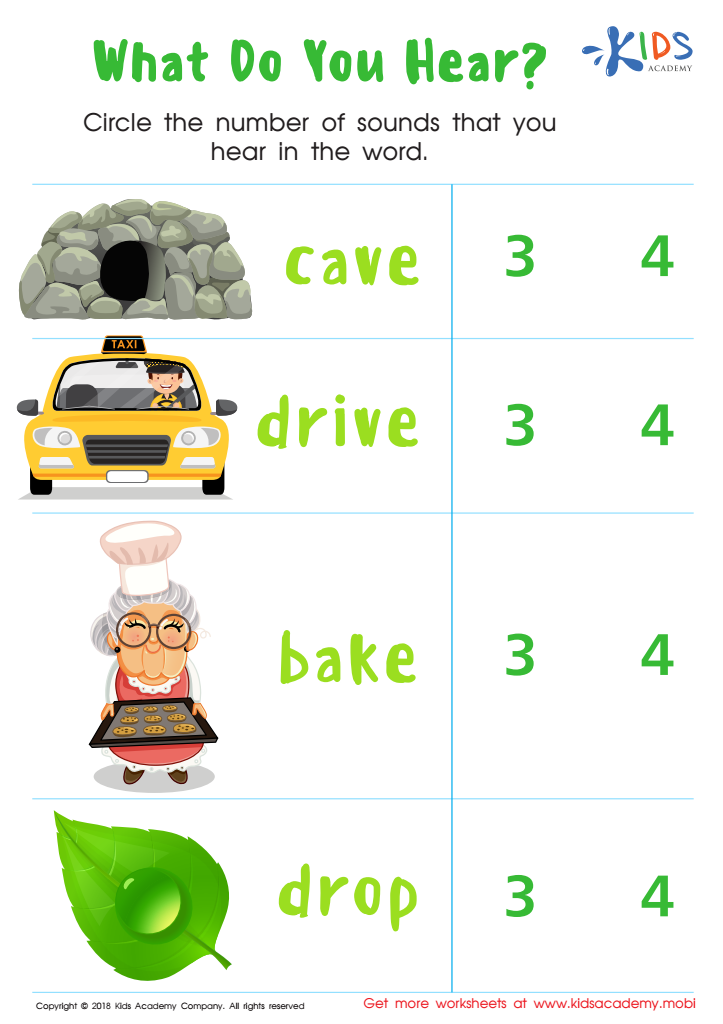
New readers can develop phonological awareness with this fun worksheet. They'll isolate sounds in words and count them, then circle the number of sounds heard. It'll help build their auditory discrimination and decoding skills, leading to more fluent reading. Without even knowing it, their reading skills are improving!
What Do You Hear? Worksheet
Worksheet
Letter f sounds worksheet

Letter F Sounds Worksheet

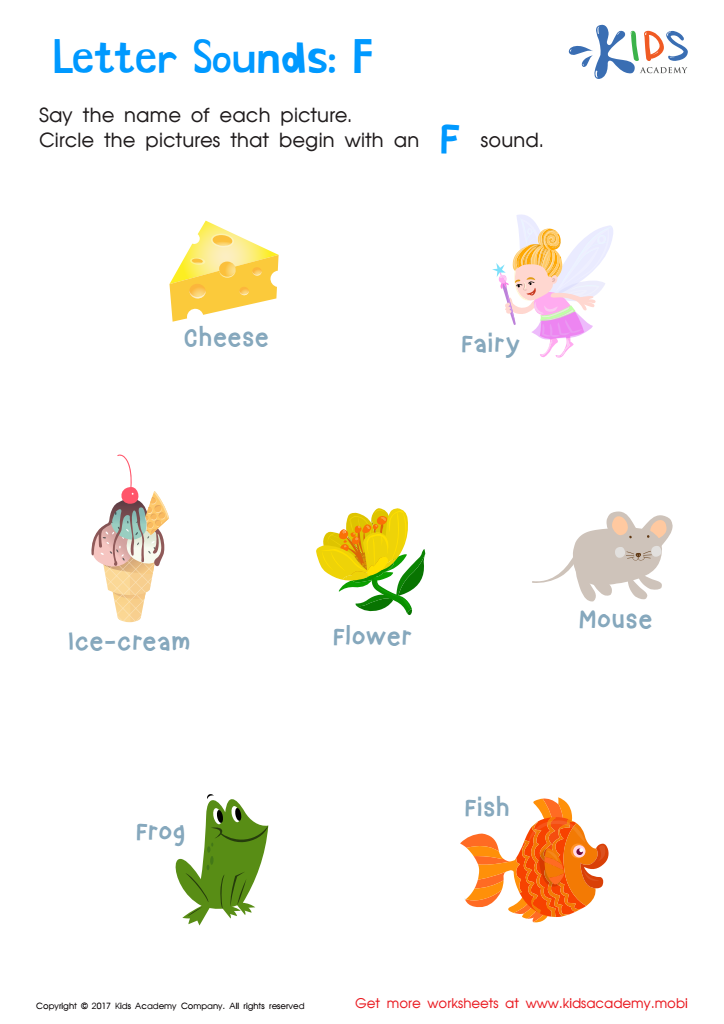
Kids will practice identifying 'f' words, tracing, and coloring the letter F for a great way to learn phonics. Help your child discover the wonders of the letter 'F' with this fun worksheet! Kids will practice identifying 'F' words, tracing and coloring the letter, and building early reading skills. Stimulate their learning and let them connect letter sounds to words they know. An enjoyable way to practice phonics!
Letter F Sounds Worksheet
Worksheet
Letter t sounds worksheet

Letter T Sounds Worksheet

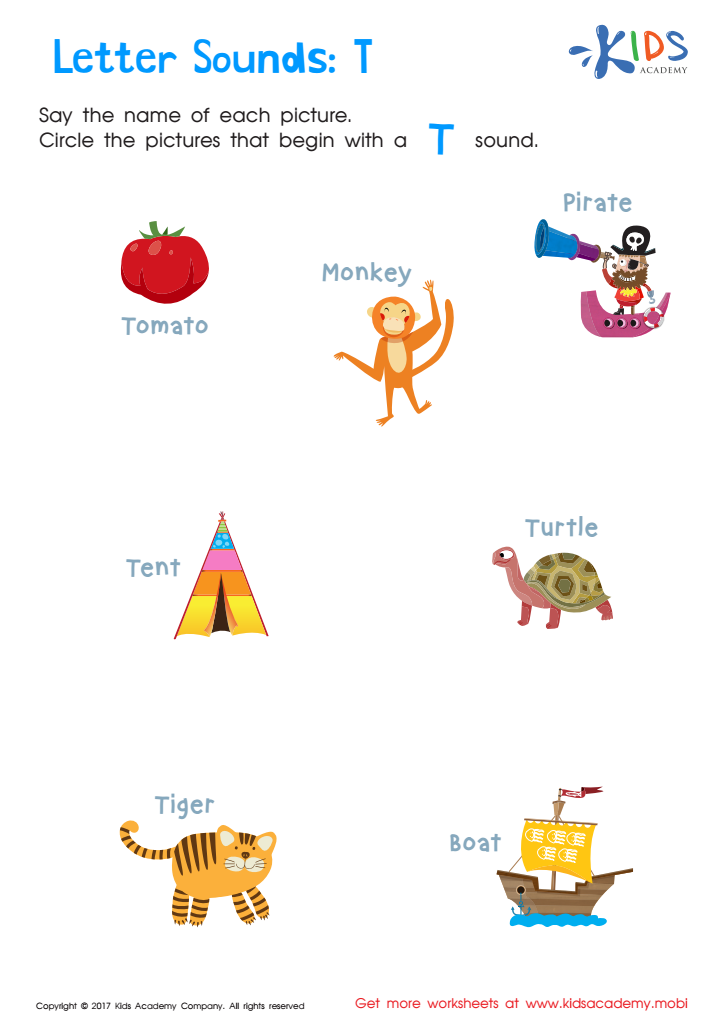
This worksheet is a fun way to help kids learn the t sound. It has familiar pictures and an easy-to-follow format, so kids can quickly recognize and learn the letter t.
Letter T Sounds Worksheet
Worksheet
3 Sounds Worksheet
3 Sounds Worksheet

3 Sounds Worksheet

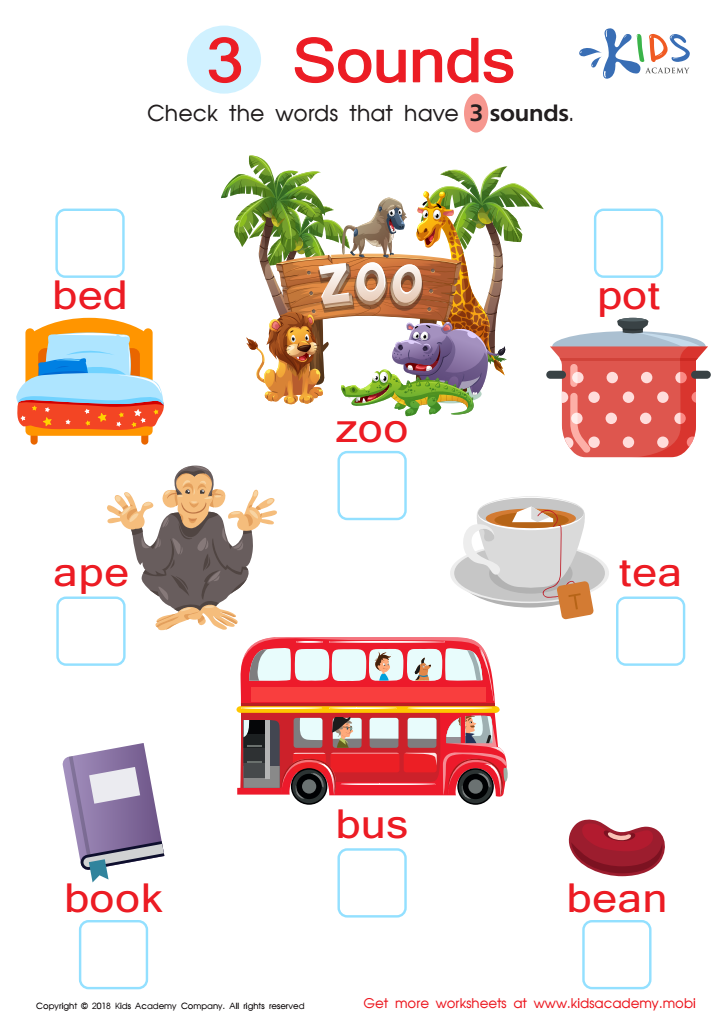
Kids will love learning with this free, colorful worksheet. It's full of familiar words they can name and sound out with three distinct sounds. This helps build decoding skills, plus they get to check off words they read. It's a fun way to teach children to identify and use sounds.
3 Sounds Worksheet
Worksheet
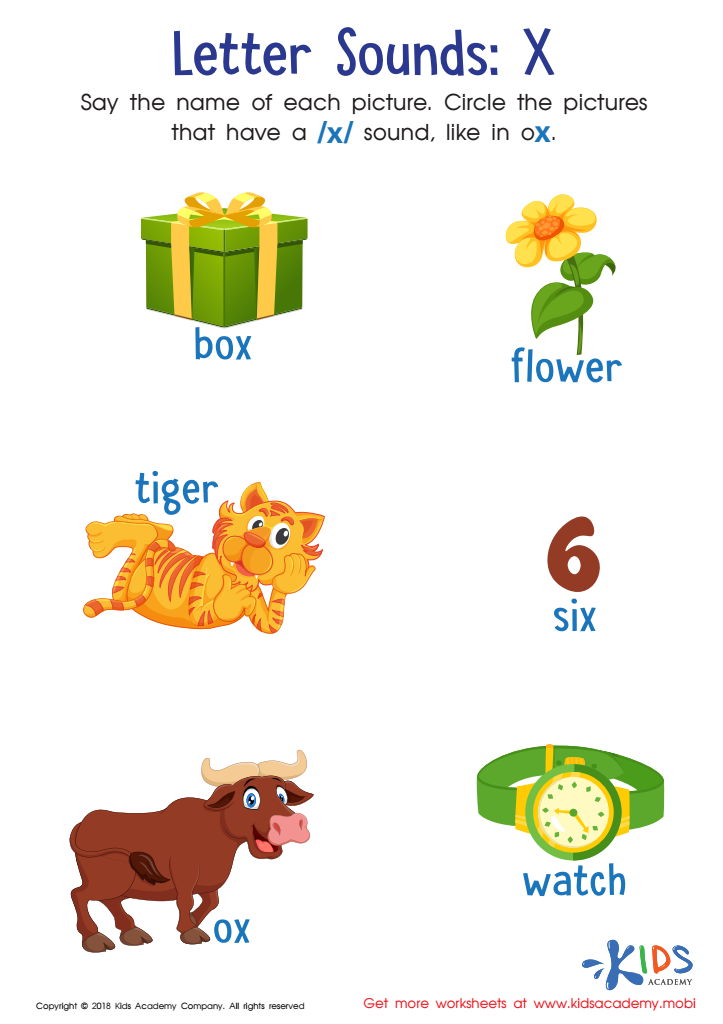
Letter X Sounds Worksheet
Letter X Sounds Worksheet

Help your early learner master the letter X sound with this fun, illustrated phonics worksheet. Have kids name the pictures, listening for the pronunciation of each. Have them circle only the pictures with the X sound, then double check by looking for the letter in the word below.
Letter X Sounds Worksheet
Worksheet
Finding the Sounds Worksheet

Finding the Sounds Worksheet

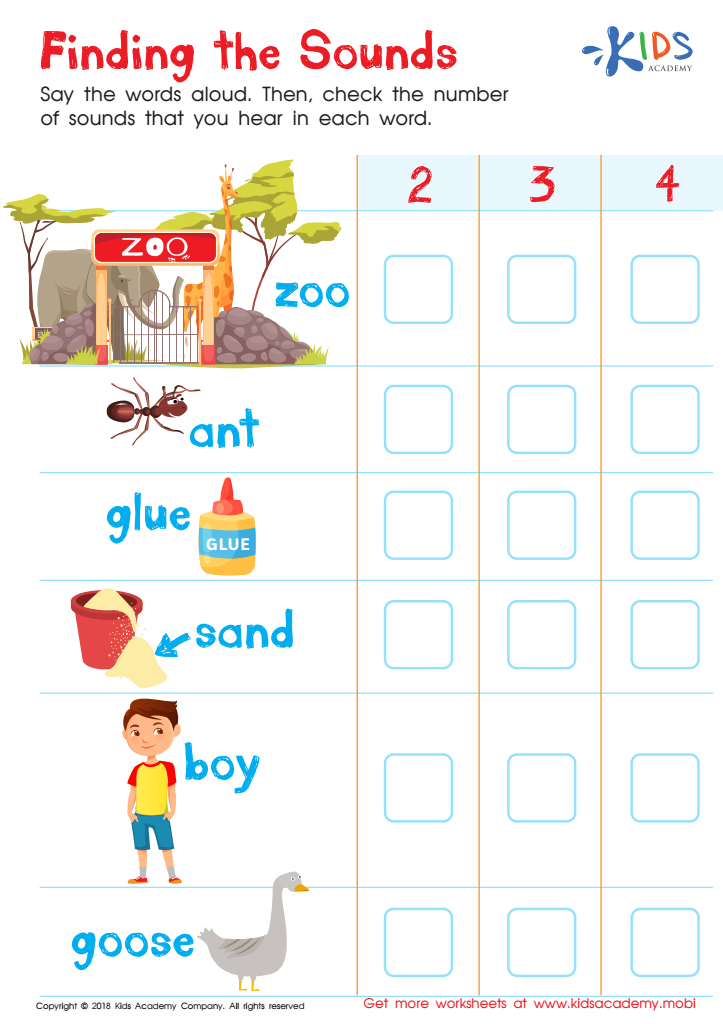
This free colorful worksheet assists children in learning words and breaking them down into sounds. It boosts auditory discrimination, phonological awareness and fine motor skills. Picture clues help them read confidently, and they can check the appropriate boxes to practice their reading skills.
Finding the Sounds Worksheet
Worksheet
Letter l and M Sounds Worksheet


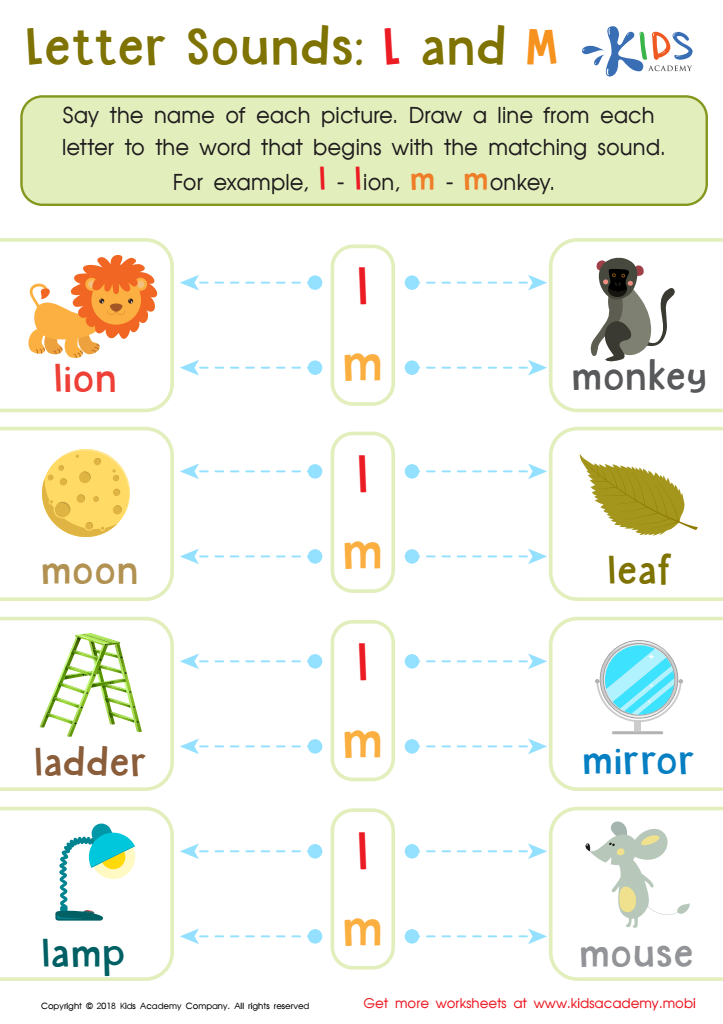
Letter l and M Sounds Worksheet

Our Kids Academy phonics practice pages give clear instructions and captivating pictures to pique children's interest. This fun worksheet helps kids identify a picture, then match its beginning sound. Listen and say each word - does it start with "L" or "M"? Trace the dotted line from the letter to the correct match and listen closely to the sound it makes.
Letter l and M Sounds Worksheet

Worksheet


Phonics skills, particularly letter sounds, are the foundation of early reading and literacy development for children ages 5-9. Understanding phonics allows children to connect letters and sounds, a critical step in decoding words and comprehending text. This early phase of literacy is pivotal because it sets the stage for future academic success and lifelong learning.

When children grasp letter sounds, they can begin to sound out words, enhancing their ability to read fluently. This fluency not only improves their reading comprehension but also boosts their confidence and enjoyment in reading. As they encounter new words, their growing phonics skills enable them to tackle these challenges more independently, fostering a sense of achievement.

Moreover, proficient phonics skills contribute significantly to better spelling, writing, and communication abilities. By recognizing patterns in word construction, children become adept at both reading and creating coherent text. This not only meets educational standards but also supports cognitive development and critical thinking.

For parents and teachers, investing time and effort in teaching phonics creates a strong educational foundation. It equips children with essential skills that transcend the classroom, shaping them into capable readers, effective communicators, and lifelong learners. The sooner these skills are cultivated, the sooner children can access a wealth of knowledge and opportunities.