Middle Sounds Worksheets for Ages 5-9
4 filtered results
-
From - To
Unlock the power of phonics with our Middle Sounds Worksheets designed for children ages 5-9. Our fun, engaging activities help kids grasp vowel sounds and improve reading skills at a critical developmental stage. Featuring colorful illustrations and a variety of exercises, these worksheets make learning enjoyable while reinforcing core language concepts. Ideal for use at home or in the classroom, our printable materials support young learners in recognizing and pronouncing middle sounds, fostering confidence and proficiency in early literacy. Partner with us at Kids Academy to give your child the educational advantage they deserve. Let's make learning fun and effective!
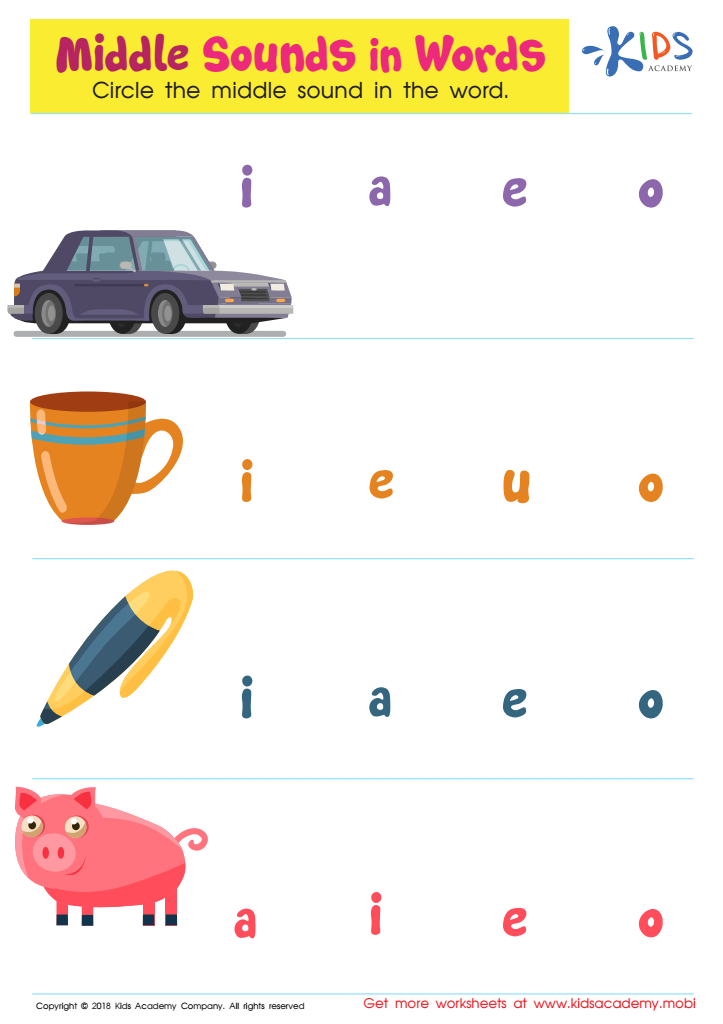
Middle Sounds in Words Worksheet
 Assign to My Students
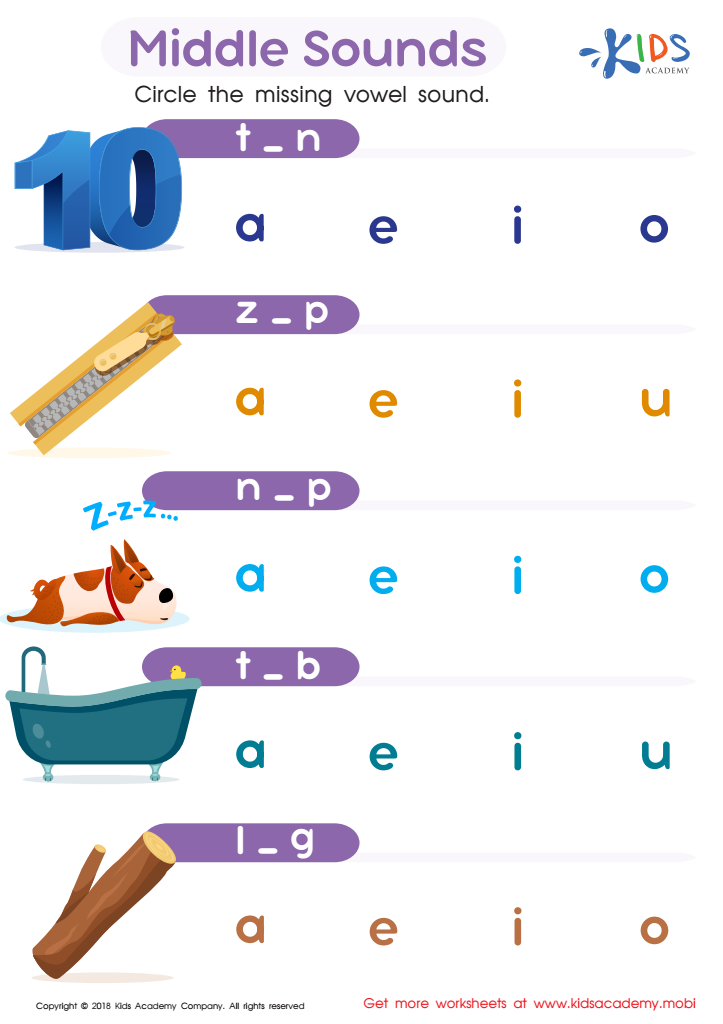
Middle Sounds Worksheet
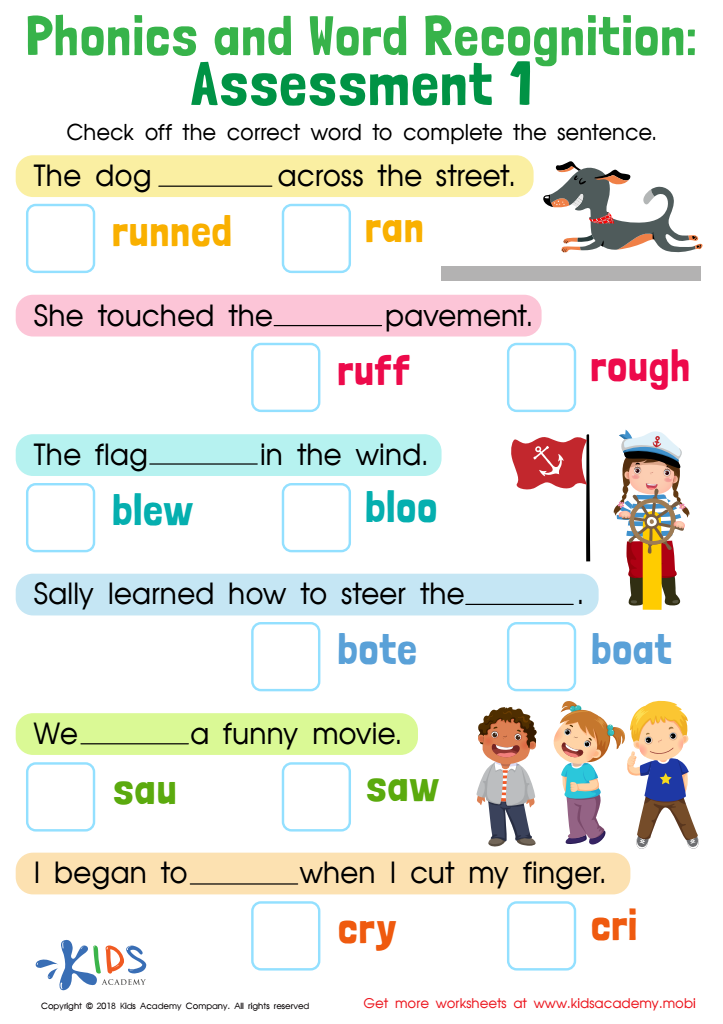
Phonics and Word Recognition: Assessment 1 Worksheet
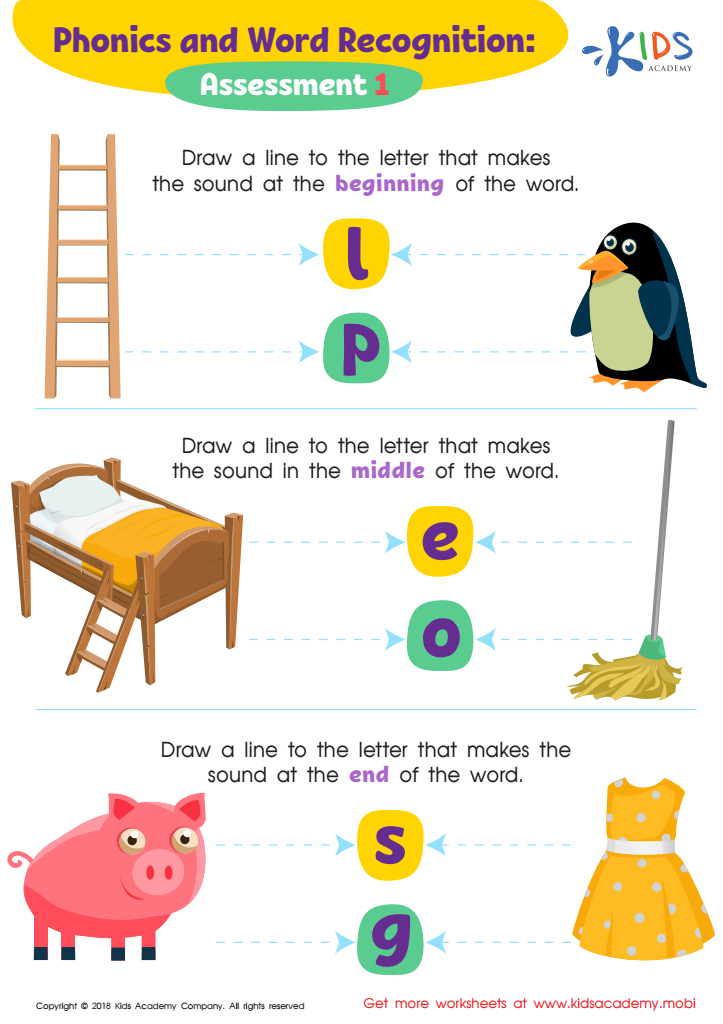
Phonics and Word Recognition: Assessment 1 ELA Worksheet





Middle sounds, or medial phonemes, are pivotal in the journey of early childhood literacy, particularly for children aged 5-9. These critical sounds occur within the heart of the word and play a substantial role in both phonological awareness and reading proficiency.
To begin with, understanding and mastering middle sounds impact a child's ability to decode new words. When children can correctly identify and pronounce the medial sounds, they are better equipped to blend phonemes together, making word recognition more seamless. For example, hearing and saying the vowel sound in "cat" or "map" help solidify the word's structure in a child’s mind.
Furthermore, proficiency with medial sounds aids in spelling and writing development. When children can isolate these sounds, they tend to write words more accurately. This phonemic awareness fosters confidence not just in reading aloud, but also in creating written texts, thus supporting overall literacy skill-building.
Additionally, middle sounds contribute to enriched vocabulary and comprehension. Knowing these sounds enables children to practice and understand subtle differences and comparisons among words (like “bit” vs. “bat”), which can enhance their listening skills and morphological knowledge.
Neglecting this aspect can lead to reading difficulties and slower language development. Thus, paying close attention to middle sounds during these formative years lays a foundational skill set crucial for a child's literacy journey.








