Unlock the joy of reading with our Letter-Sound Correlation Phonics Worksheets designed for ages 5-9. At Kids Academy, our engaging and educational worksheets help young learners master the essential skill of connecting letters with their corresponding sounds. Through colorful, interactive activities, kids will enjoy recognizing, practicing, and reinforcing their phonics knowledge. Perfectly suited for both classroom and home learning, these worksheets support fundamental literacy development and build a strong reading foundation. Empower your child's reading journey with resources that make learning both effective and fun. Visit Kids Academy to download your printable worksheets today!

Check out this FREE Trial Lesson on Phonics for age 5-9!

Rearrange Sounds to Make Words

Favorites
With answer key
Interactive
  • 5-9
  • Letter-sound correlation
  • Phonics
Beginning Sounds Assessment Printable

Beginning Sounds Assessment Printable

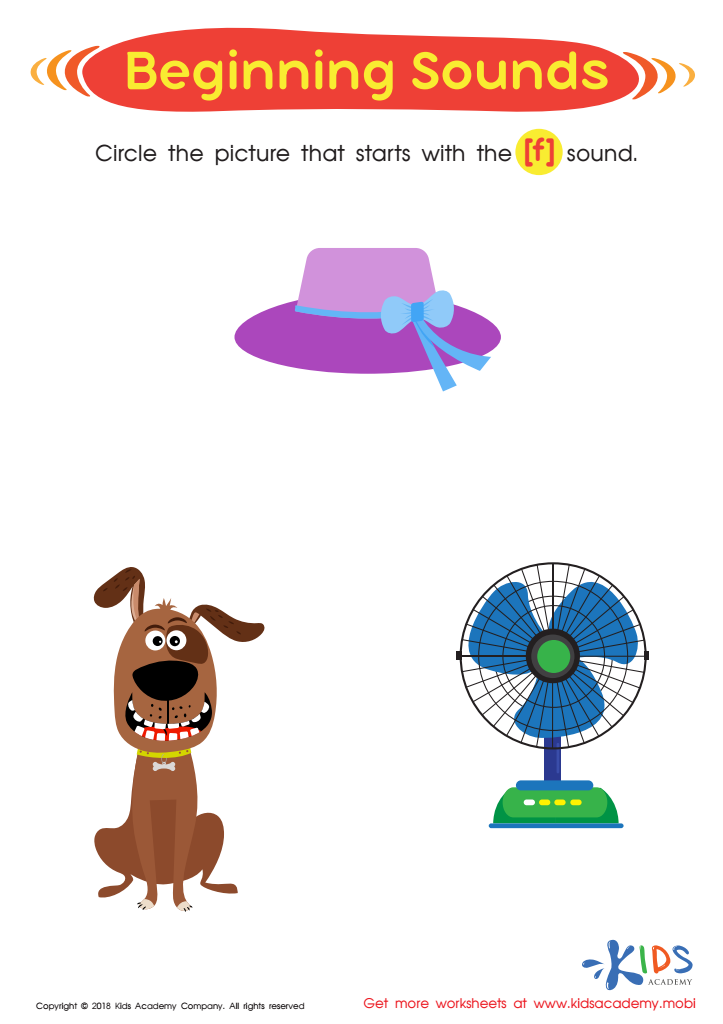
Test your child's knowledge of the alphabet. Ask them to recite the whole alphabet and the words for each letter. For example: A for apple, B for boy. Identify objects on this worksheet, then ask your child which one starts with the letter "f" and have them circle it.
Beginning Sounds Assessment Printable
Worksheet
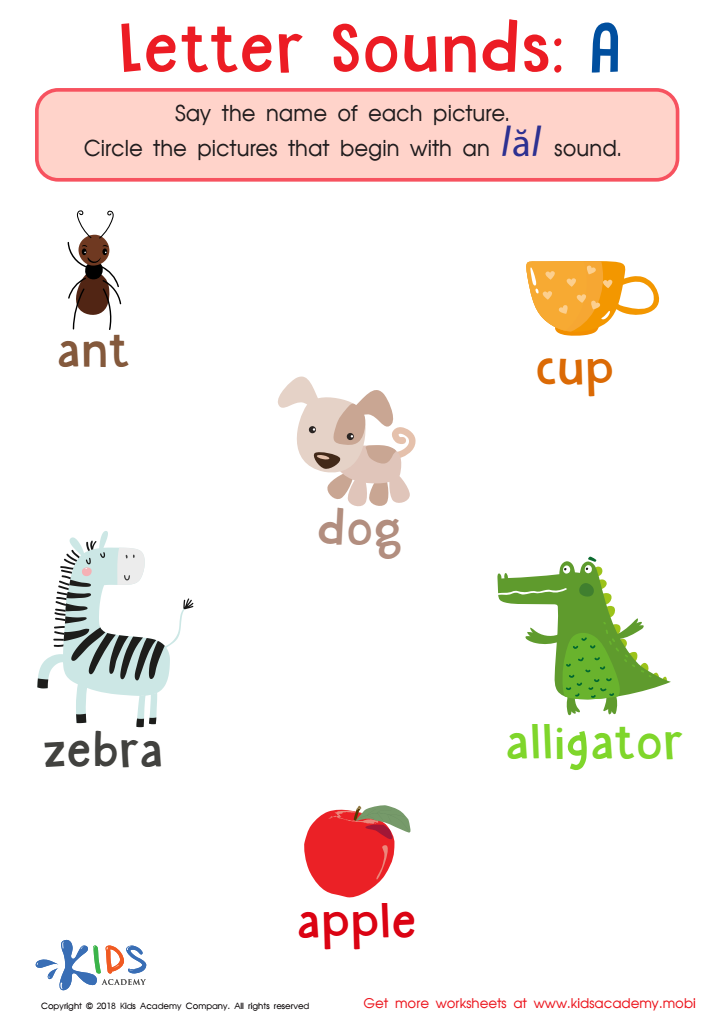
Letter A Sounds Worksheet

Letter A Sounds Worksheet

Encourage your new reader to practice the «ă» sound with this fun, free PDF worksheet. With the help of picture clues, they'll say the name of each word and trace circles around the items that start with «ă». This worksheet is an effective way to boost beginning sound skills while having fun!
Letter A Sounds Worksheet
Worksheet
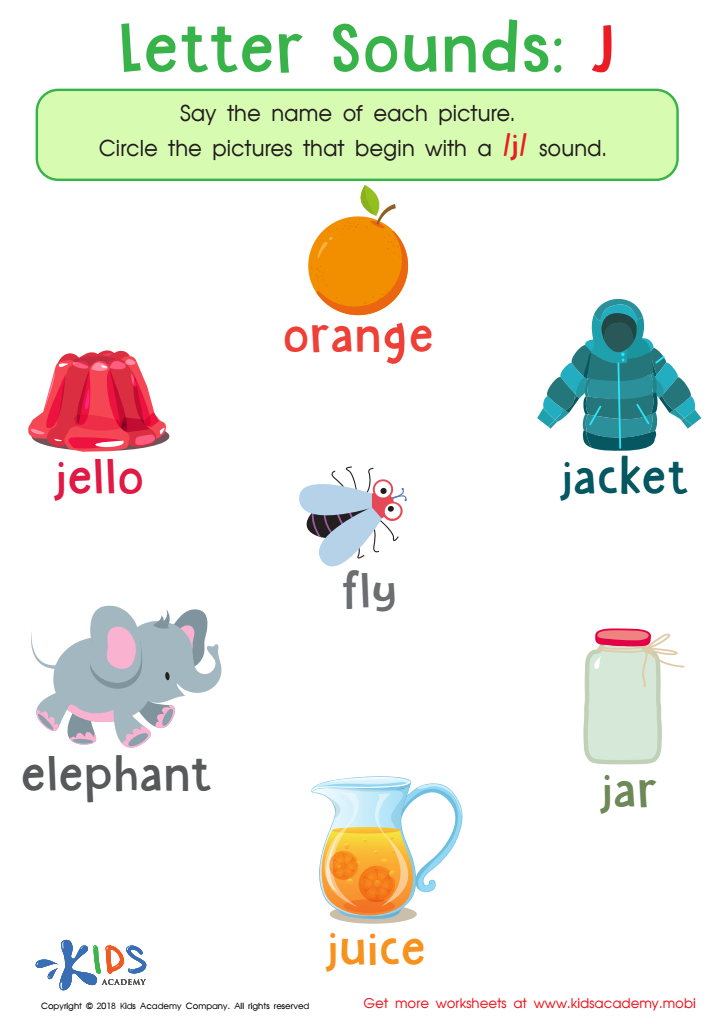
Letter Sounds: J Printable Worksheet

Letter Sounds: J Printable Worksheet

Preschoolers can learn to identify letter sounds by focusing on beginning sounds. This cute and colorful worksheet reviews the hard “j” sound. Kids can point it out by naming the words and circling only those starting with the “j” sound. Read the text out loud and listen closely!
Letter Sounds: J Printable Worksheet
Worksheet
Letter U Sounds Worksheet

Letter U Sounds Worksheet

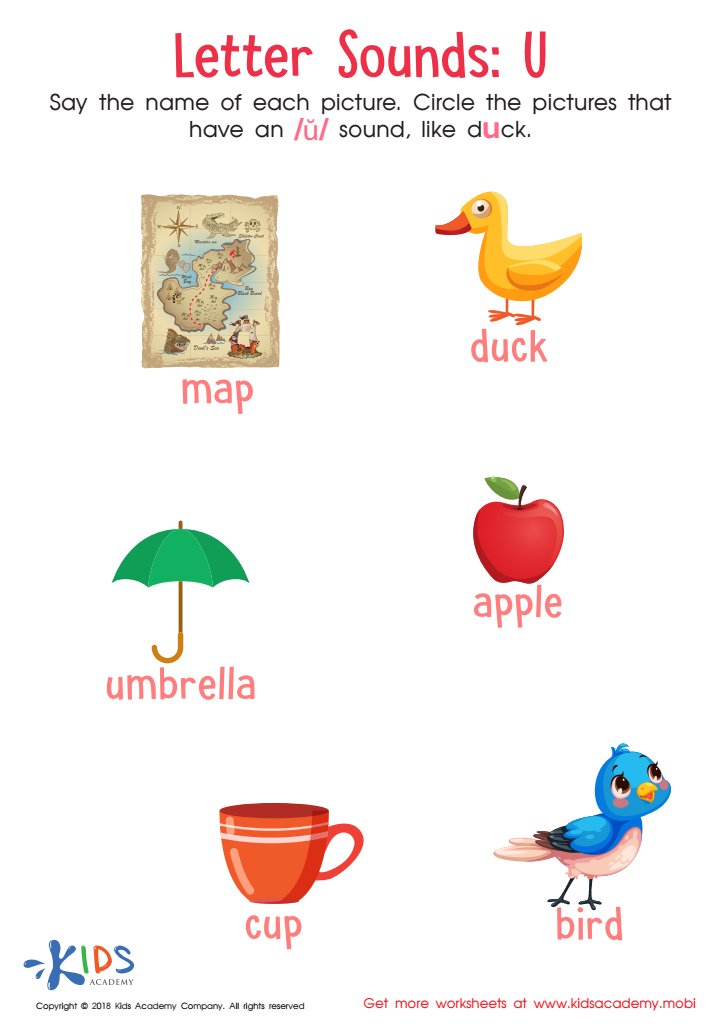
The letter U is special with multiple pronunciations. This worksheet helps kids identify the short «u» in words like duck and cup. Read the words aloud and listen closely to the sounds. Circle only words with the correct sound to complete the sheet. Kids will quickly know that words like "map" don't contain a U.
Letter U Sounds Worksheet
Worksheet
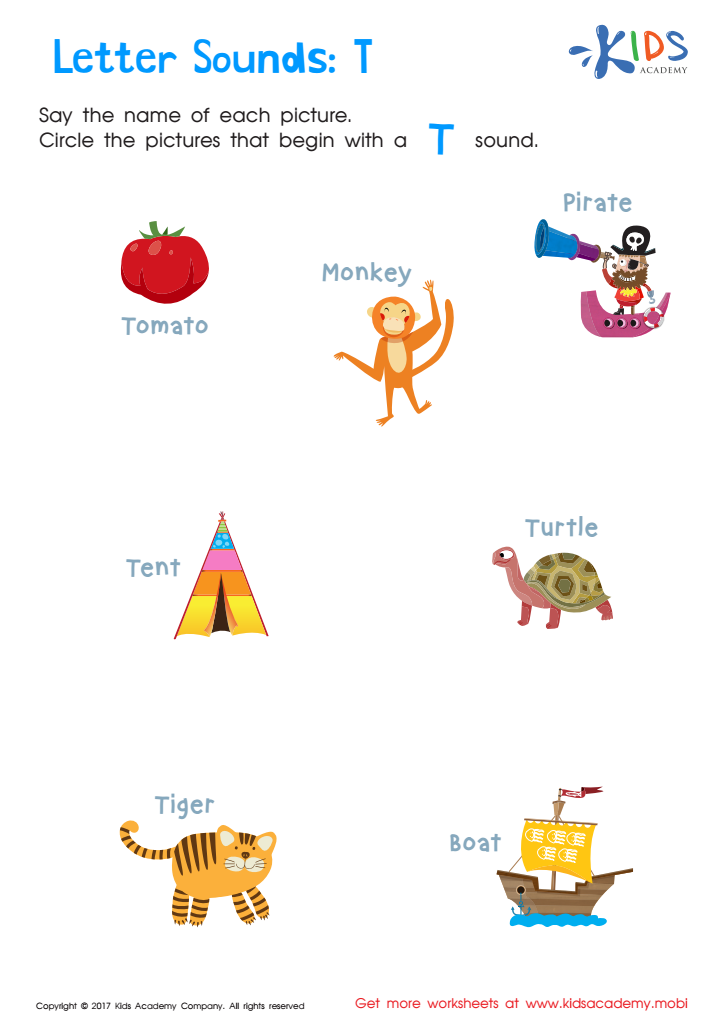
Letter t sounds worksheet

Letter T Sounds Worksheet

This worksheet is a fun way to help kids learn the t sound. It has familiar pictures and an easy-to-follow format, so kids can quickly recognize and learn the letter t.
Letter T Sounds Worksheet
Worksheet
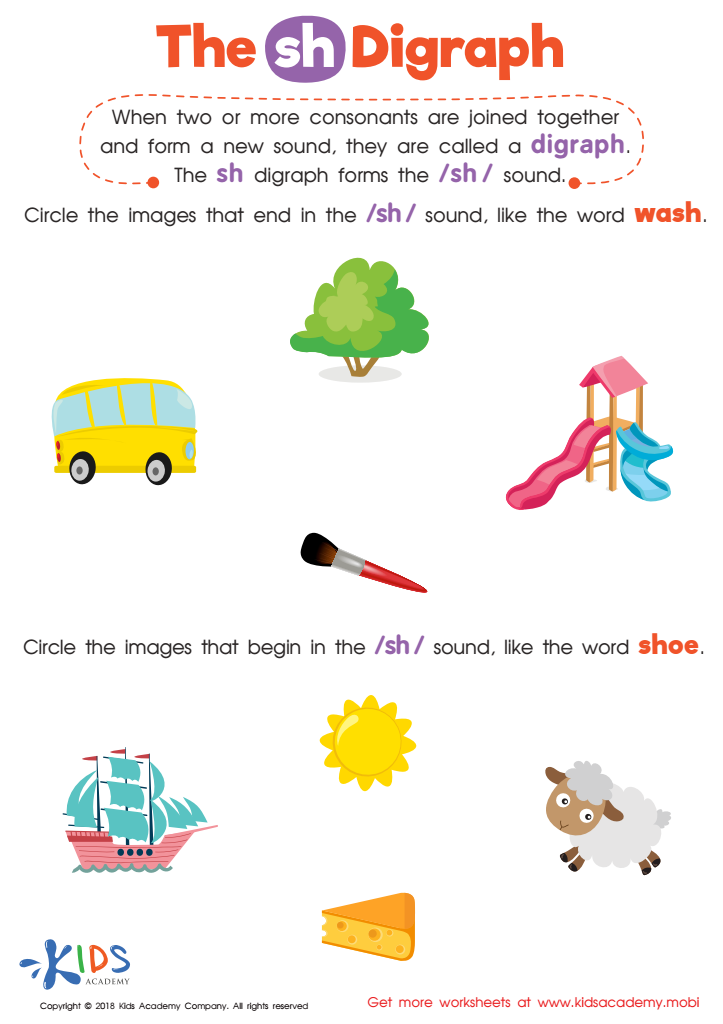
The SH Digraph Worksheet

The SH Digraph Worksheet

There are many phonetic sounds, each with its own unique sound. When two or more consonants are combined to create a new sound, it's called a digraph. Example: the sh digraph creates the /sh/ sound. Have kids look at the pictures and say the words aloud. Help them circle the images ending with /sh/, like 'wash'.
The SH Digraph Worksheet
Worksheet
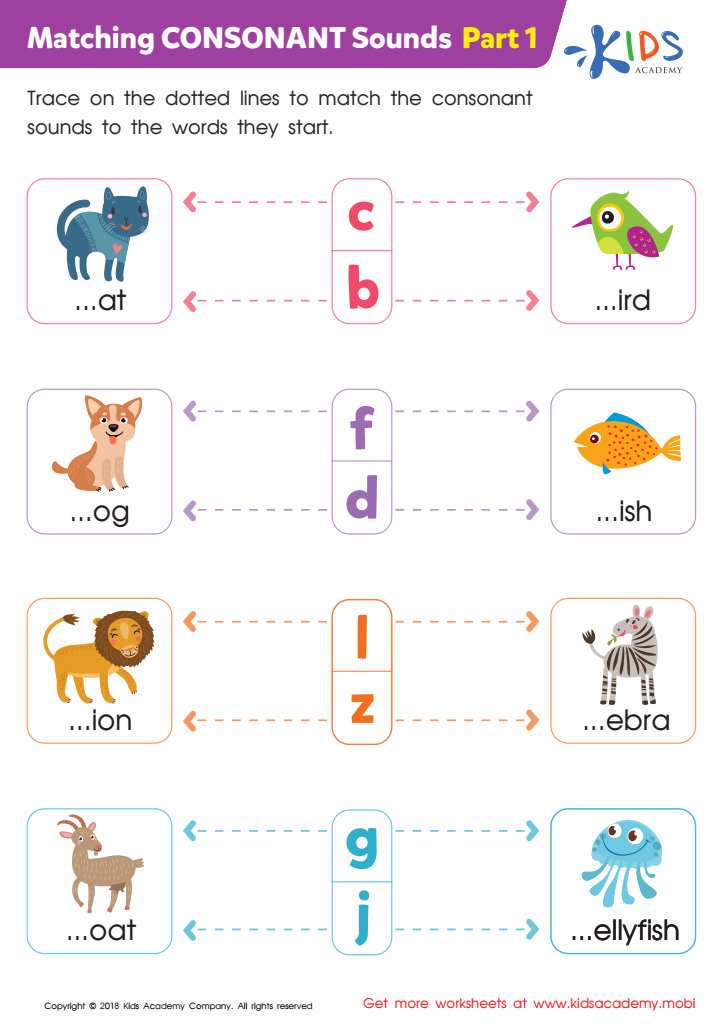
Matching Consonant Sounds - Part 1 Worksheet Preview

Matching Consonant Sounds: Part 1 Worksheet

Decide which letter matches each word and picture in this fun phonics worksheet. Slide your finger over each word, trying out each letter to check for matches. Once each pair is solved, trace the dotted lines with pencil to complete the printable. Who knew learning could be so enjoyable?
Matching Consonant Sounds: Part 1 Worksheet

Worksheet


Parents and teachers should care about letter-sound correlation (phonics) for children aged 5-9 because it lays the foundation for their reading and writing skills. Phonics is the understanding that letters represent sounds that form words, and teaching this correlation helps children decode words accurately and efficiently. When children grasp phonics, they can read new words by sounding them out, which greatly enhances their ability to read independently and with confidence.

Furthermore, knowing how sounds map to letters improves spelling and extends vocabulary. Consistent practice with phonics boosts a child’s ability to recognize patterns in words, making reading faster and more automatic.

Additionally, early mastery of phonics is closely tied to future academic success. Children who acquire these skills early are less likely to struggle with reading comprehension and are better prepared to handle more complex texts as they advance through school.

Parents and teachers who prioritize phonics are equipping children with essential tools for lifelong learning and literacy. Moreover, developing these skills within the optimal age range of 5-9 ensures that children establish strong reading fundamentals during a period of their development when they are most receptive to learning new language concepts. This paves the way for a lifetime of educational achievement and a love for reading.