
Sound differentiation Phonics Worksheets for Ages 5-9
4 filtered results
Difficulty Level
Grade
Age
-
From - To
Subject
Activity
Standards
Unlock the power of phonics with our Sound Differentiation Phonics Worksheets designed specifically for children aged 5-9. These engaging activities help young learners identify and differentiate various sounds, laying the groundwork for effective reading and writing skills. Each worksheet features colorful illustrations and interactive exercises that make learning fun and captivating. With a variety of tasks that focus on sound recognition, blending, and segmenting, children will build confidence in their phonics abilities. Perfect for classroom settings or at-home practice, our worksheets provide the tools needed for mastering the crucial foundational skills in literacy. Enhance your child's educational journey today!
Favorites
With answer key
Interactive
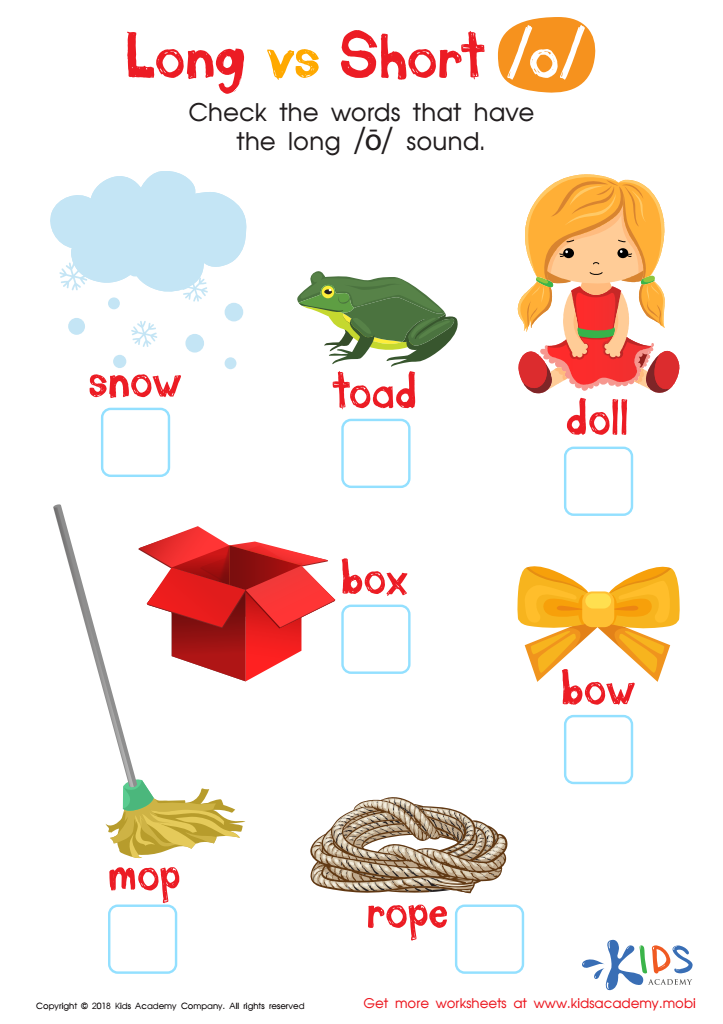
Long vs Short O Reading Worksheet
Help your child learn to identify the long and short «o» sound with this colourful worksheet. Guide them as they spot words with the long or short «o» sound. With practice, your child will find it easier to tell the difference between the two.
 Assign to My Students
Long vs Short O Reading Worksheet
Worksheet
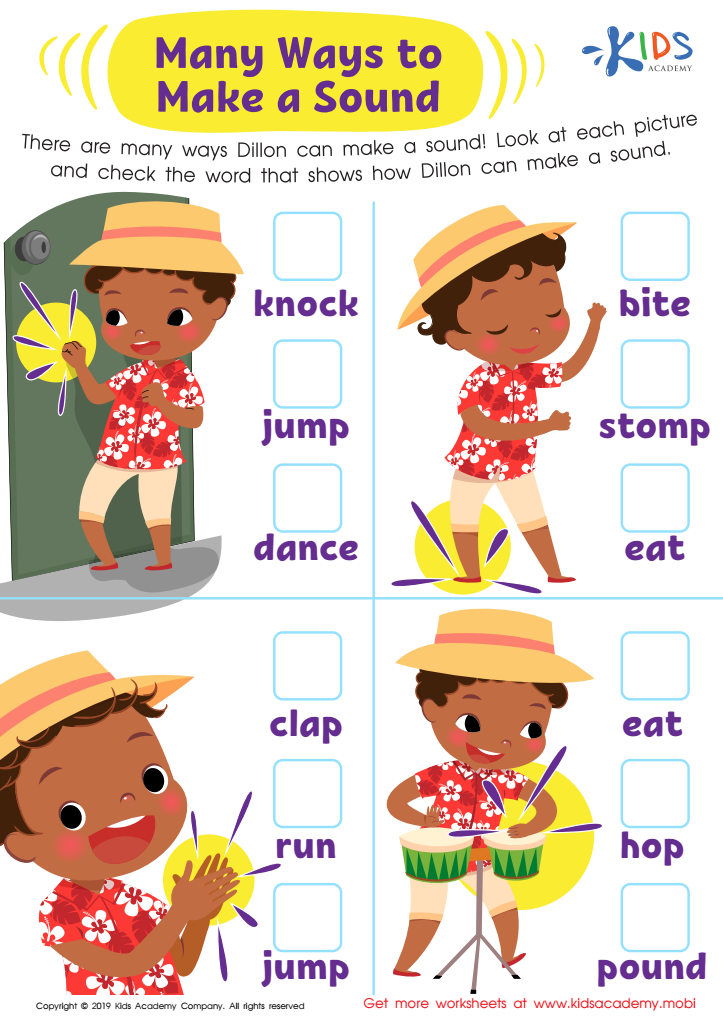
Many Ways to Make a Sound Worksheet
This interactive worksheet encourages creativity and imagination as kids use picture clues to match sound words. It helps them identify the sound methodology and build fine motor skills. Plus, with learning through play, they'll develop stronger vocabularies without even knowing it!
Many Ways to Make a Sound Worksheet
Worksheet
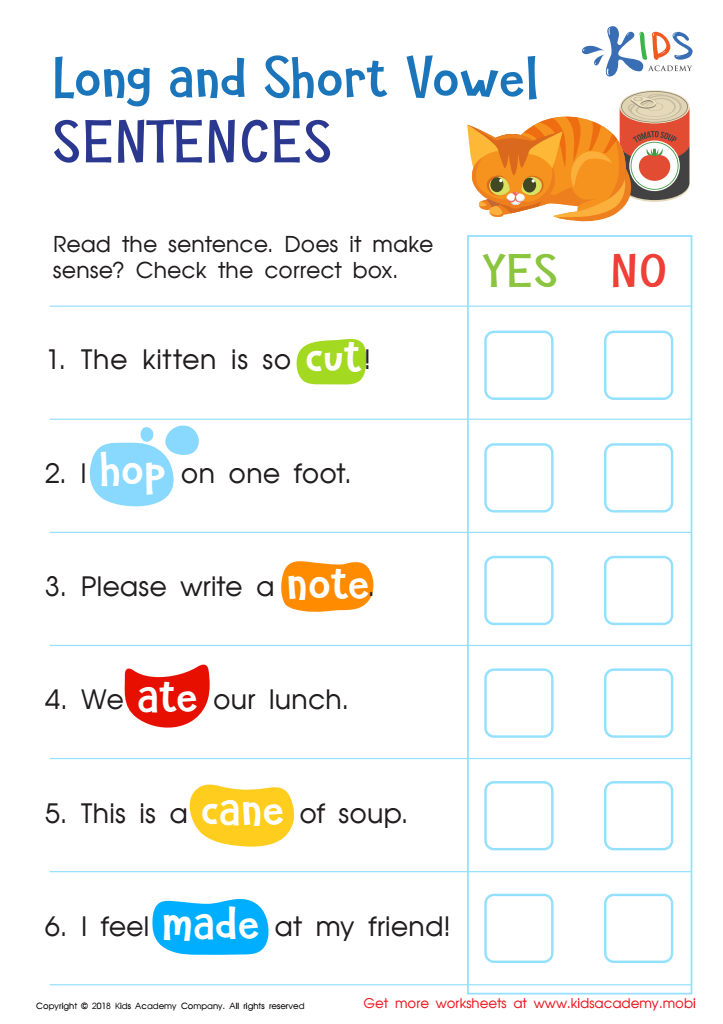
Long and Short Vowel Sentences: Assessment Worksheet
This printable worksheet helps kids practice differentiating between short and long vowel sounds. They'll use context clues to figure out which words make sense in simple sentences. A great way to build reading and writing skills!
Long and Short Vowel Sentences: Assessment Worksheet
Worksheet
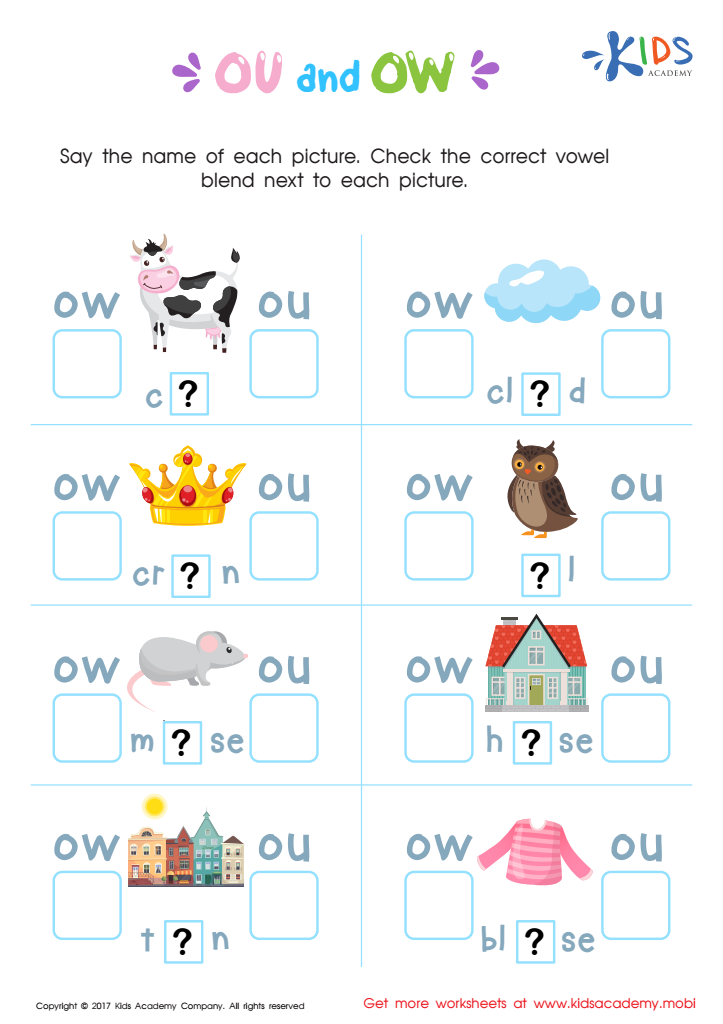
OU and OW Words Worksheet
Enhance your child's reading and spelling with this ou and ow words worksheet! Fun pictures and common words make mastering the diphthongs ou and ow easy and enjoyable.
OU and OW Words Worksheet
Worksheet
Join Kids Academy for Free
Who is primarily going to use this learning content?








Sound differentiation phonics is essential for children aged 5-9 as it lays the foundation for reading and writing skills. During this critical developmental stage, kids begin to understand the relationship between sounds (phonemes) and their corresponding letters (graphemes). This understanding promotes phonemic awareness, which is crucial for decoding words and improving reading fluency.
For parents and teachers, focusing on sound differentiation fosters better literacy outcomes. When children can distinguish among different sounds, they become more adept at sounding out unfamiliar words, enhancing their confidence in reading. Furthermore, cultivating these skills early can prevent potential reading difficulties or dyslexia later on.
Additionally, phonics instruction supports overall language development by expanding vocabulary and comprehension skills. Children learn to break down words into manageable parts, enabling them to grasp and analyze the meaning of texts more effectively. This enhances their engagement with literature and boosts their love for reading.
Incorporating sound differentiation phonics into a child’s learning journey empowers parents and teachers to nurture critical thinking and cognitive skills, setting children on the path to academic success and lifelong learning. Overall, investing time and resources in phonics instruction ultimately benefits a child's educational growth and confidence.







