Sound identification Phonics Worksheets for Ages 5-9
4 filtered results
-
From - To
Unlock the joy of reading with our Sound Identification Phonics Worksheets, specially designed for children aged 5-9. These engaging worksheets help young learners develop essential phonics skills by focusing on the sounds of letters and building their ability to identify and differentiate between them. Our resources feature fun activities that incorporate colorful illustrations and interactive exercises, making learning both effective and enjoyable. Great for classroom settings or at-home practice, these worksheets support early literacy development and foster a love for language. Start your child’s reading journey today by enhancing their phonemic awareness with our thoughtfully crafted phonics worksheets!
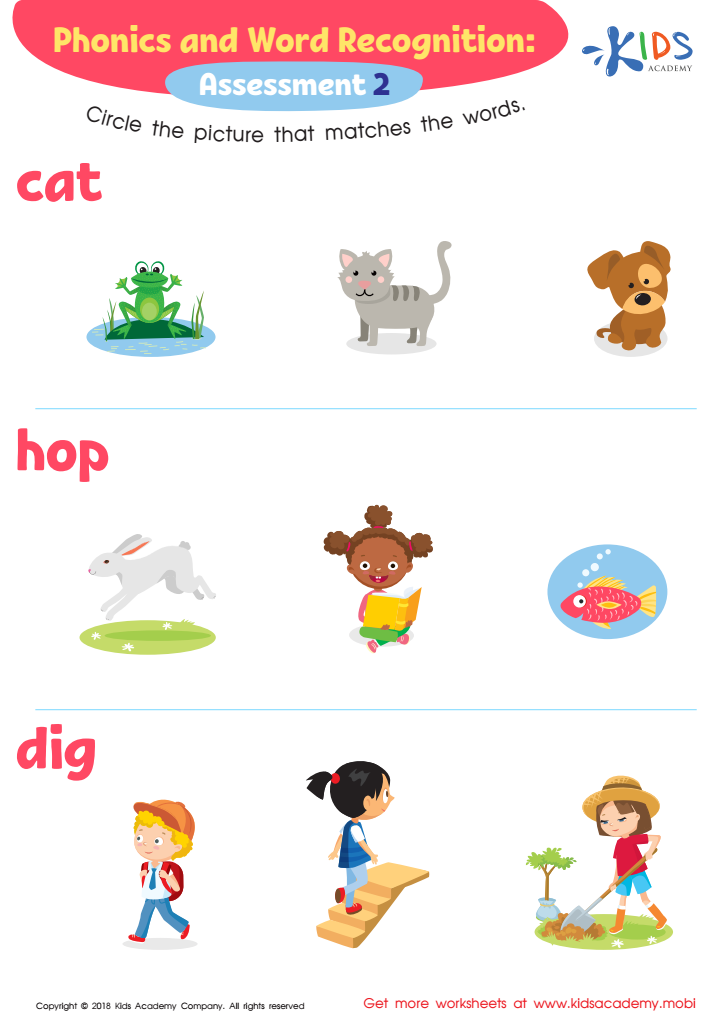
Phonological Awareness: Assessment 2 ELA Worksheet
 Assign to My Students
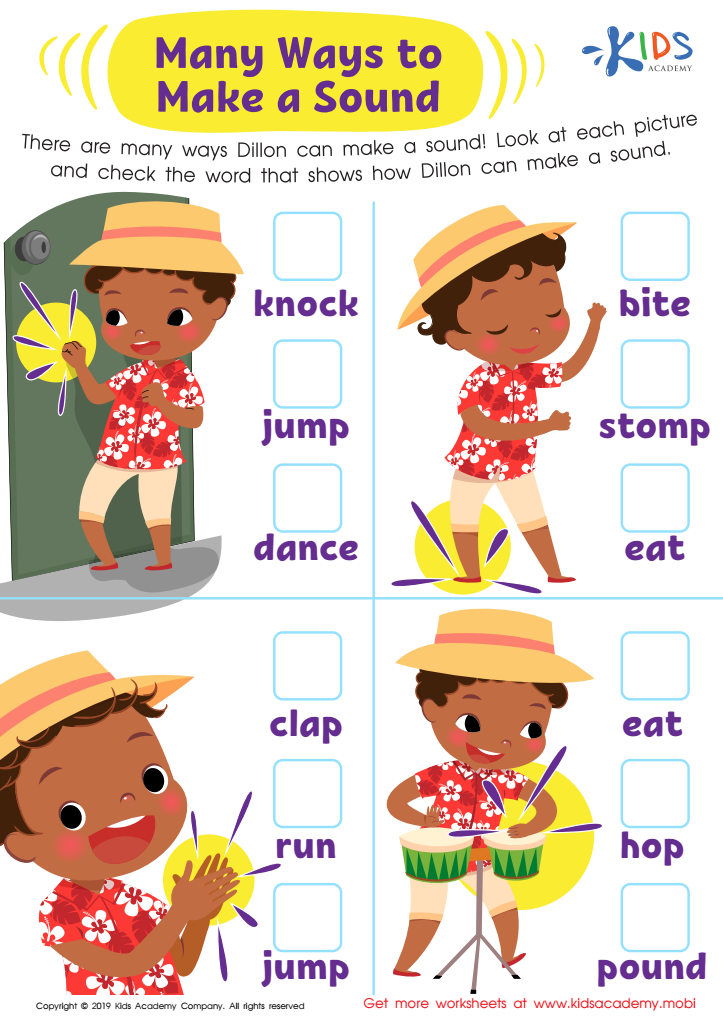
Many Ways to Make a Sound Worksheet
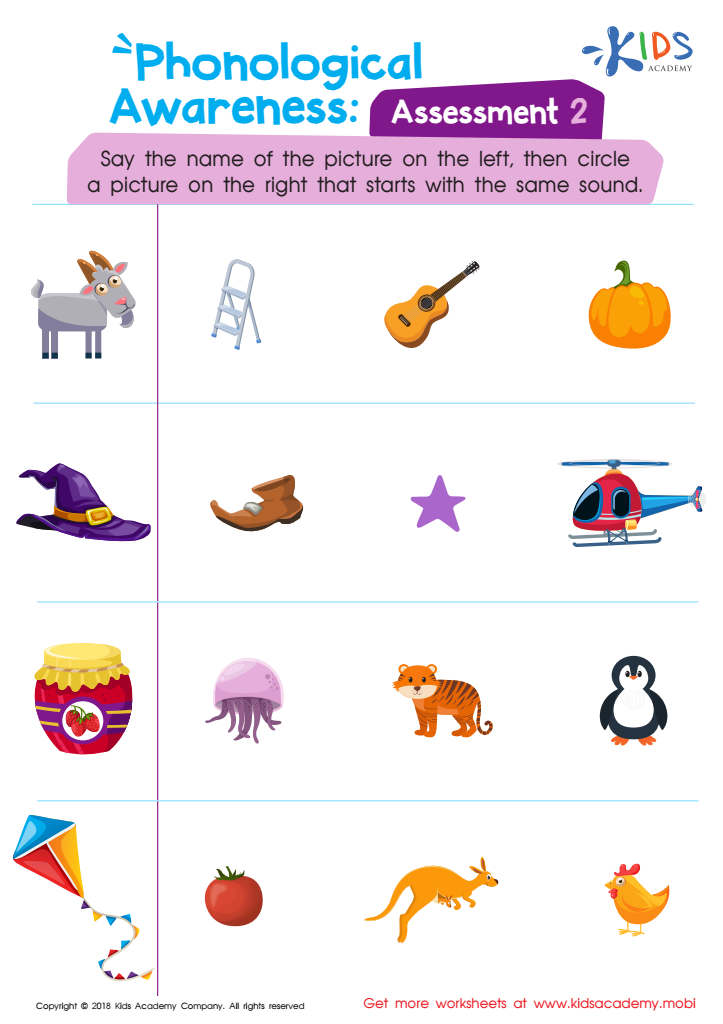
Phonological Awareness: Assessment 2 Worksheet
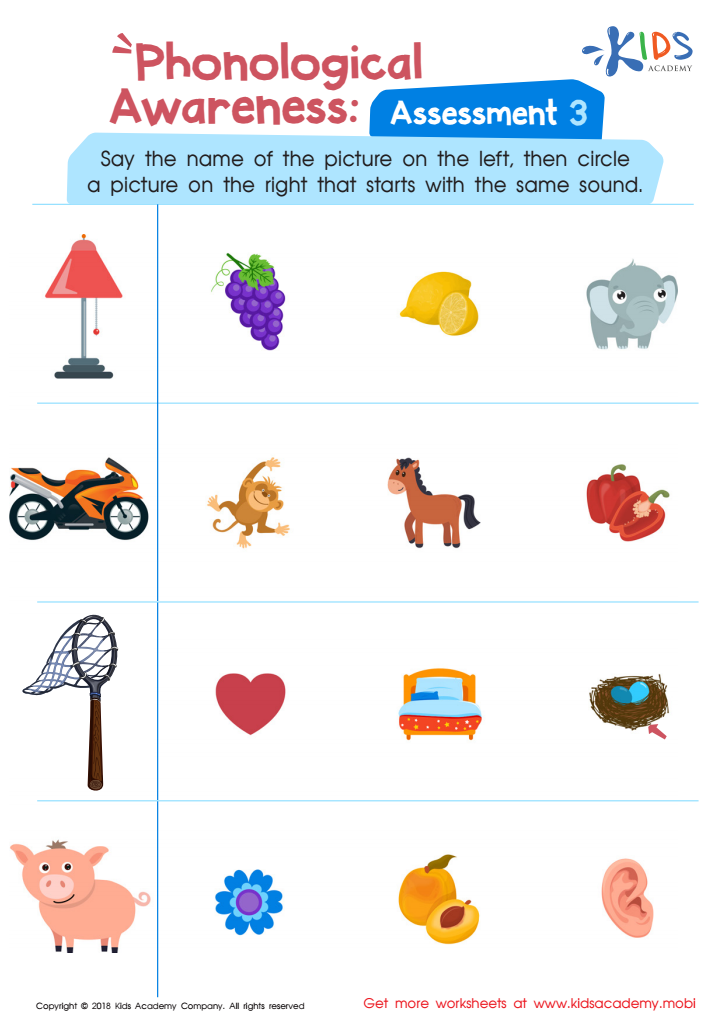
Phonological Awareness: Assessment 3 Worksheet








Sound identification and phonics are fundamental components of early literacy development for children aged 5-9. Understanding individual sounds, or phonemes, and how they combine to form words is crucial for reading and writing proficiency. By emphasizing sound identification, parents and teachers foster a child's ability to decode words, ultimately leading to better reading fluency.
Early phonics instruction equips children with the skills to recognize letter-sound relationships, enabling them to sound out unfamiliar words and develop a wider vocabulary. This, in turn, cultivates confidence in their reading abilities, encouraging a positive attitude towards learning.
In addition, strong phonics skills are linked to overall academic success, as reading is the foundation for all other subjects. Moreover, sound identification can enhance oral communication skills, aiding in both speech clarity and active participation in discussions.
Furthermore, early intervention in phonics can help identify and address learning difficulties, such as dyslexia, early on. This proactive approach allows for tailored support strategies, which can lead to improved outcomes.
Involving parents in the phonics learning process strengthens the connection between home and school, promoting a collaborative environment that nurtures a child's love for reading and lifelong learning.







