Sound-letter correlation Phonics Worksheets for Ages 5-9
3 filtered results
-
From - To
Discover our Sound-Letter Correlation Phonics Worksheets designed for kids aged 5-9. These engaging resources help early readers connect sounds with letters, fostering essential literacy skills. Each worksheet offers fun, interactive activities aimed at boosting phonemic awareness and comprehension. Enhance your child's reading fluency with visual and auditory matching exercises that simplify the learning process. Perfect for both classroom use and homeschooling, these worksheets provide a solid foundation for reading success. Start your child's literacy journey today with our expertly crafted phonics resources! Visit Kids Academy for more educational printables.
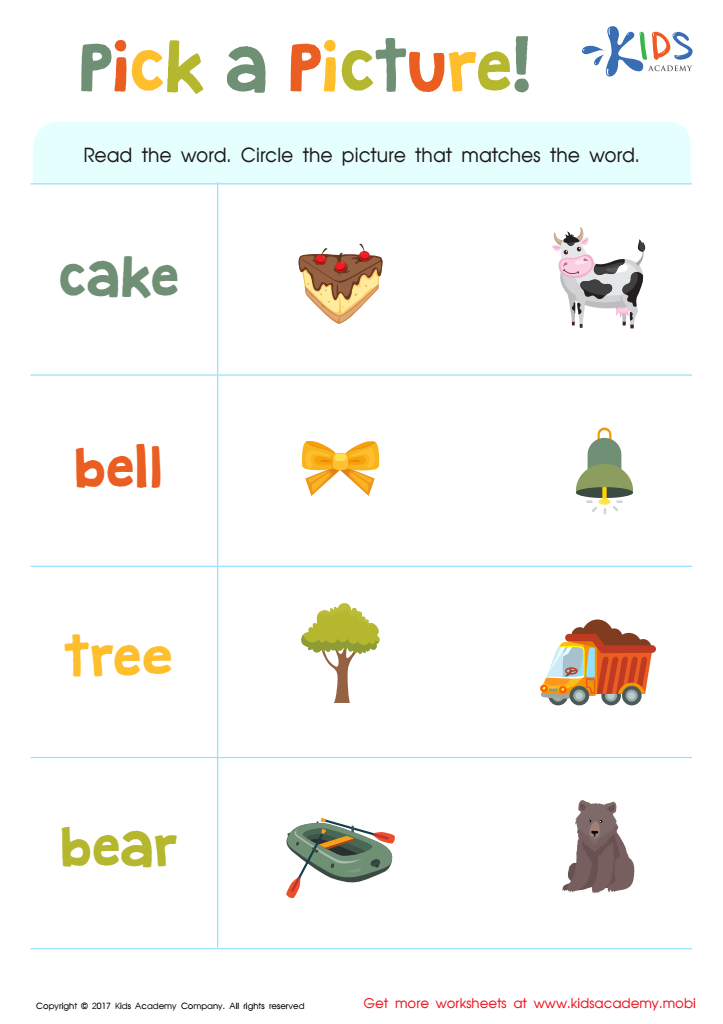
Pick a Picture Word Recognition Worksheet
 Assign to My Students
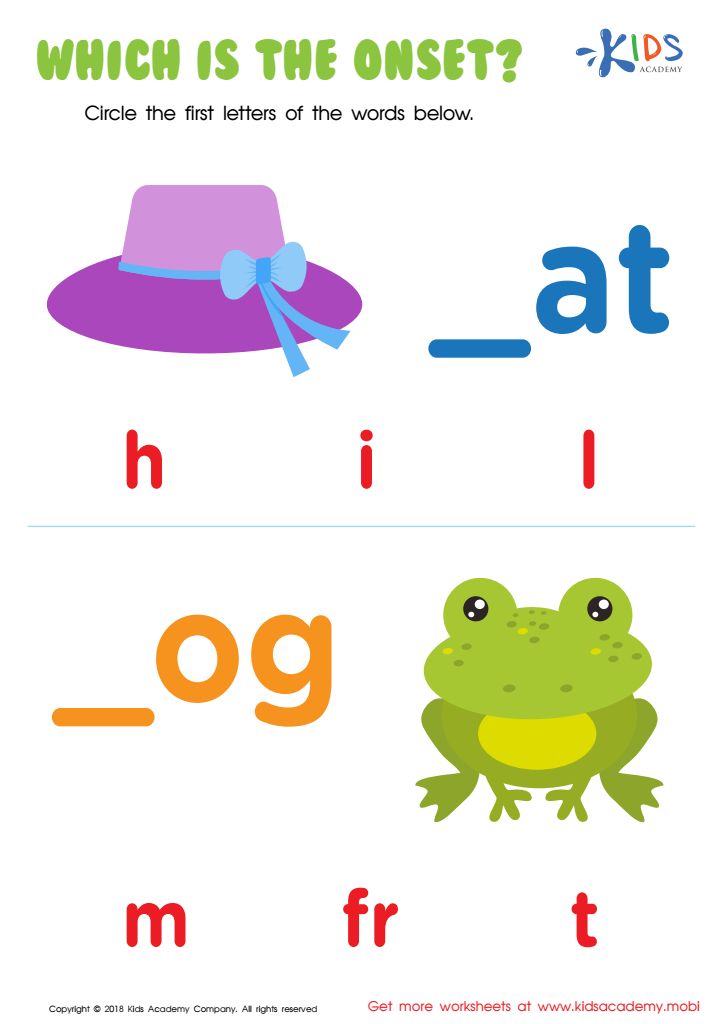
Which Is the Onset? Worksheet
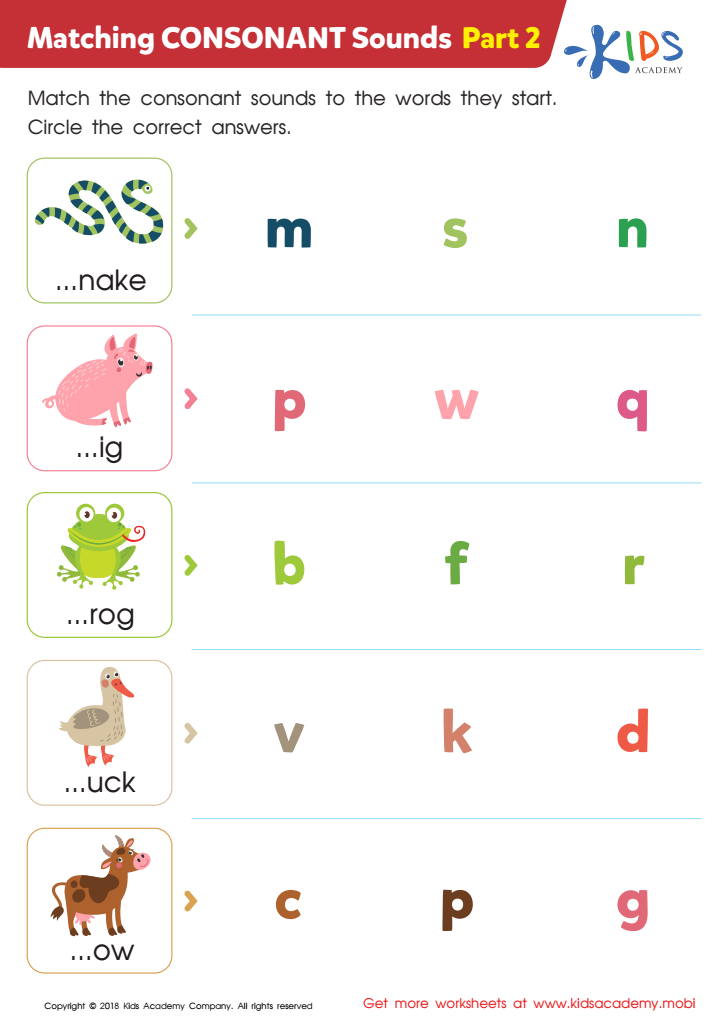
Matching Consonant Sounds: Part 2 Worksheet








Understanding the relationship between sounds and letters—known as phonics—is crucial for children aged 5-9, as it lays the foundation for reading and writing. At this young age, children's brains are especially receptive to learning language skills, and grasping sound-letter correlations enables them to decode words efficiently. By knowing that specific letters and letter combinations represent particular sounds, children can read new words they've never encountered before, boosting their confidence and love for learning.
Phonics instruction contributes to better literacy skills, which are essential for academic success across all subjects. Without strong phonics skills, children may struggle with reading fluency and comprehension, hindering their overall educational progress. Engaging in phonics activities, like phonemic awareness games and fun reading exercises, makes learning to read an enjoyable process, fostering a positive attitude toward education.
Parents and teachers play a vital role in this journey. By emphasizing phonics, they ensure children build a sturdy linguistic foundation. This crucial early intervention helps prevent future reading difficulties and sets the stage for a lifelong capacity to explore and understand texts of increasing complexity. Investing time and effort into phonics instruction is, therefore, a pivotal step in nurturing literate, confident, and curious learners.







