
Vocabulary enhancement Tracing Letters Worksheets for Ages 5-9
3 filtered results
Difficulty Level
Grade
Age
-
From - To
Subject
Activity
Standards
Boost your child’s vocabulary and handwriting skills with our "Vocabulary Enhancement Tracing Letters Worksheets" designed for ages 5-9. These engaging worksheets focus on tracing letters while introducing essential vocabulary words. Each printable sheet features visually appealing illustrations that capture children’s interest, ensuring a fun learning experience. As they trace each letter and connect with new words, kids will improve their writing and comprehension skills simultaneously. Perfect for parents and educators looking to support early literacy development, our worksheets are a valuable resource to enhance vocabulary and letter formation. Start your child's journey toward literacy success today!
Favorites
With answer key
Interactive
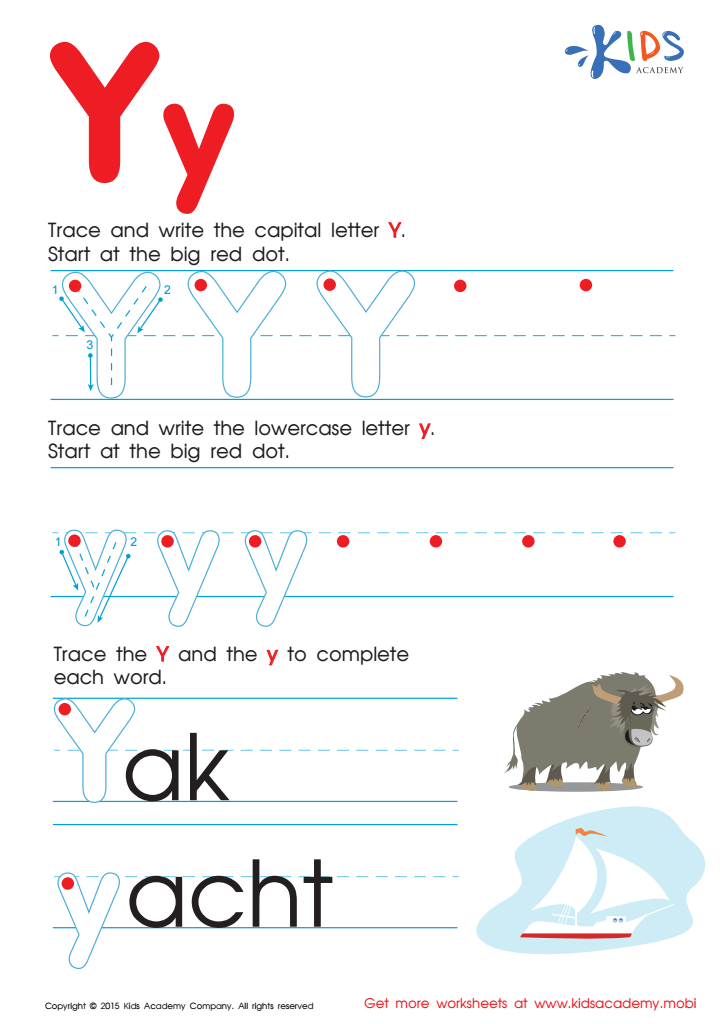
Letter Y Tracing Page
Trace the capital letter "Y" on the red dot, then trace and write the lowercase letter. Complete the words to help the Yak walk and the yacht swim. More worksheets at Kids Academy.
 Assign to My Students
Letter Y Tracing Page
Worksheet
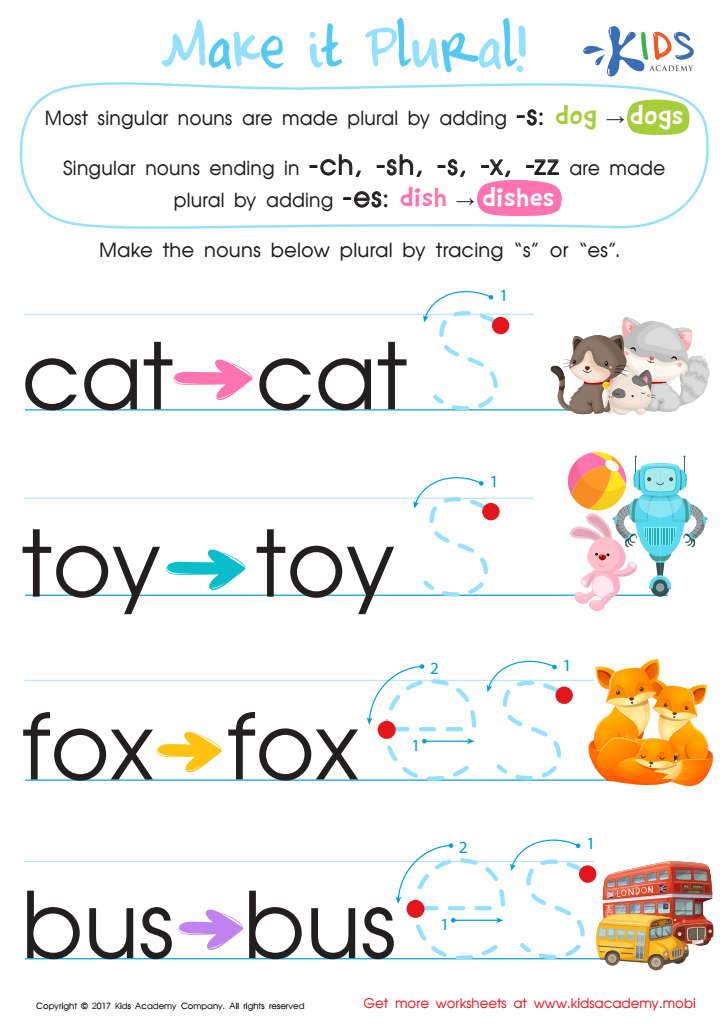
Make it Plural Worksheet
Changing words from singular to plural can be tricky as there are many word endings with special rules. Most words just need an -s, while endings like -ch, -sh, -s, -x or -zz need -es. This worksheet helps kids read words and trace the correct ending for each, making it easier to master these rules!
Make it Plural Worksheet
Worksheet
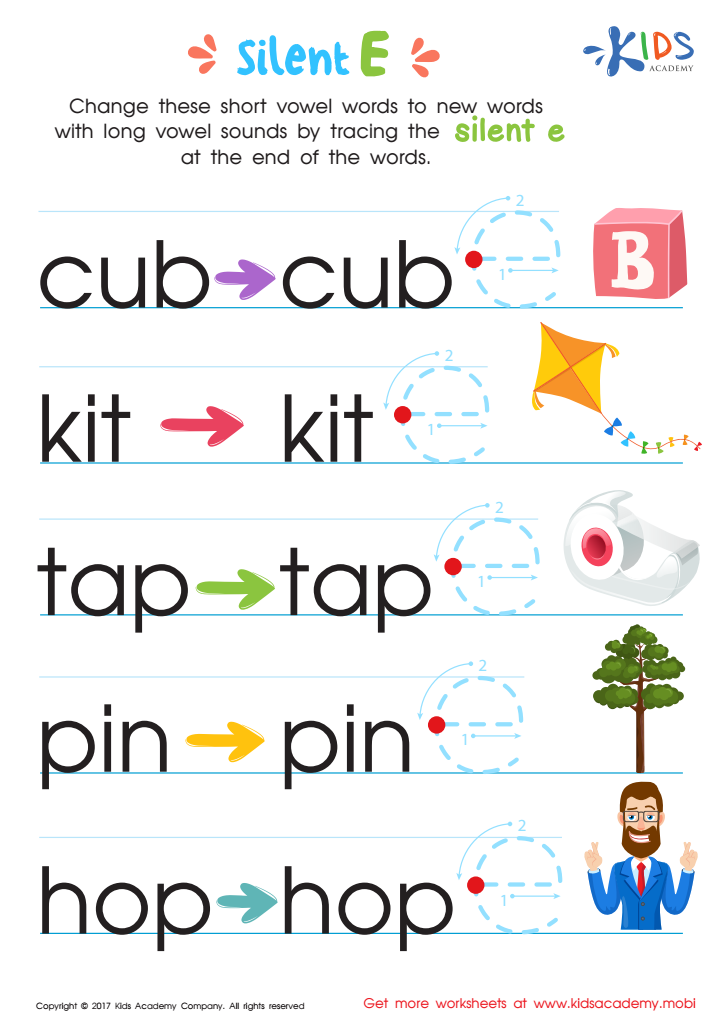
Silent E Words Worksheet
The letter e is amazing - it changes words without making a sound! Boost spelling and phonics with this Silent e worksheet from Kids Academy - fun and colorful!
Silent E Words Worksheet
Worksheet
Join Kids Academy for Free
Who is primarily going to use this learning content?







Vocabulary enhancement through tracing letters is crucial for children aged 5-9 because this foundational skill supports comprehensive literacy development. First, as children trace letters, they practice not only motor skills but also connect letters with their sounds and, eventually, their meanings. This process fortifies their understanding of how words are constructed, which enhances their reading and writing capabilities.
Moreover, a rich vocabulary is directly linked to academic success. When children are equipped with a broader range of words, they can express themselves more clearly and understand more complex texts. Early exposure to varied vocabulary enriches their communication skills and empowers them to engage in discussions with peers and adults effectively.
Parents and teachers should also recognize that vocabulary development contributes to children's confidence in their abilities. By facilitating activities that involve tracing letters and introducing new words, they create a positive learning environment that encourages exploration and curiosity.
In addition, strong vocabulary skills benefit children beyond academics, enhancing social interactions and emotional expression. The skills learned through vocabulary enrichment activities lay the groundwork for lifelong learning, making it essential for educators and caregivers to prioritize these experiences. Fostering rich vocabulary early means opening doors for endless possibilities in knowledge and communication.








