Lowercase identification Upper & Lowercase Letters Worksheets for Ages 5-9
5 filtered results
-
From - To
Enhance your child’s literacy skills with our engaging Lowercase Identification Worksheets, specially designed for ages 5-9. These interactive activities help young learners master the recognition of lowercase letters and differentiate them from uppercase letters through fun exercises. Each worksheet encourages critical thinking and fine motor skills, making learning enjoyable and effective. Ideal for preschool and early elementary students, our resources support various learning styles and progress at your child's pace. Parents and educators will find these worksheets perfect for in-class or at-home practice, providing a solid foundation in alphabet recognition essential for early reading success. Start your child's learning journey today!
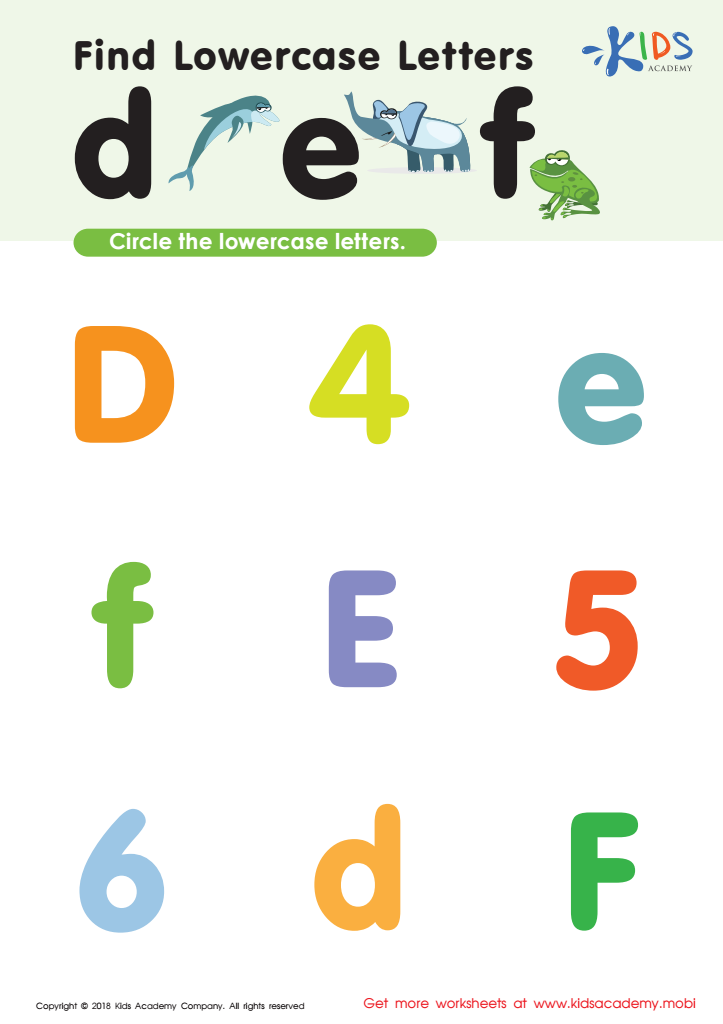
Find Lowercase Letters d e f Worksheet
 Assign to My Students

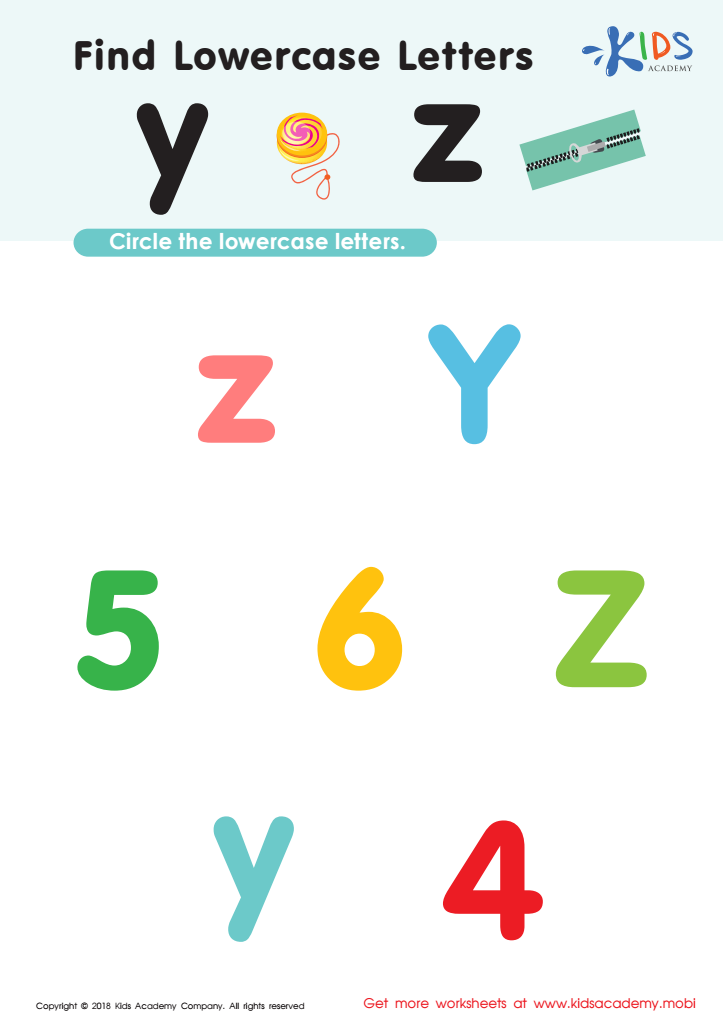
Find Lowercase Letters y z Worksheet
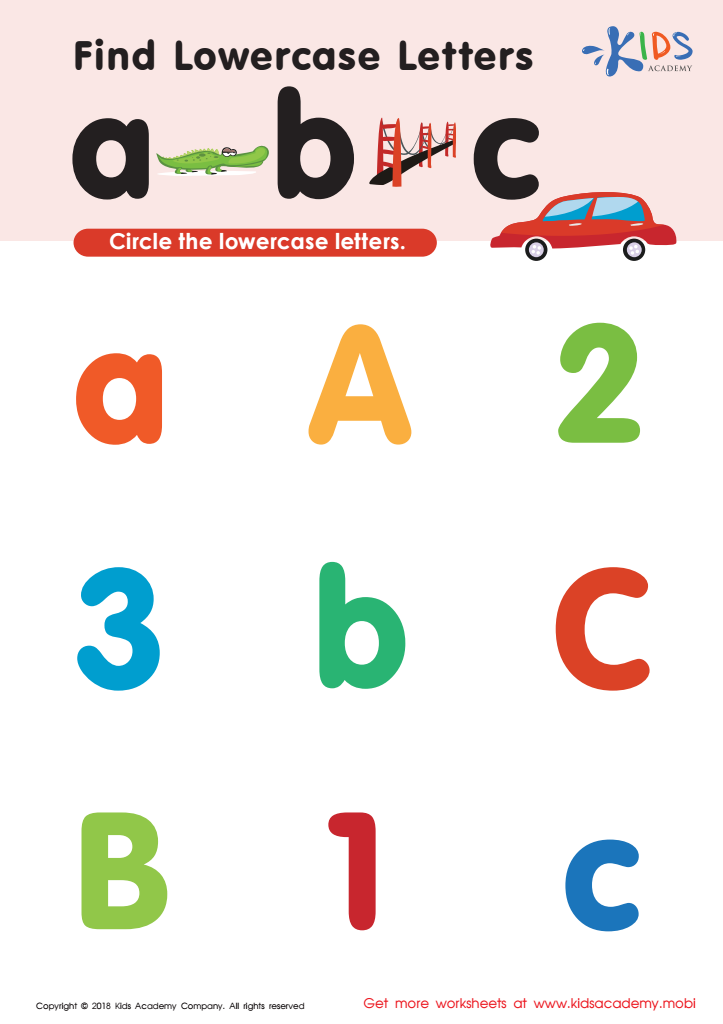
Find lowercase letters a b c Worksheet
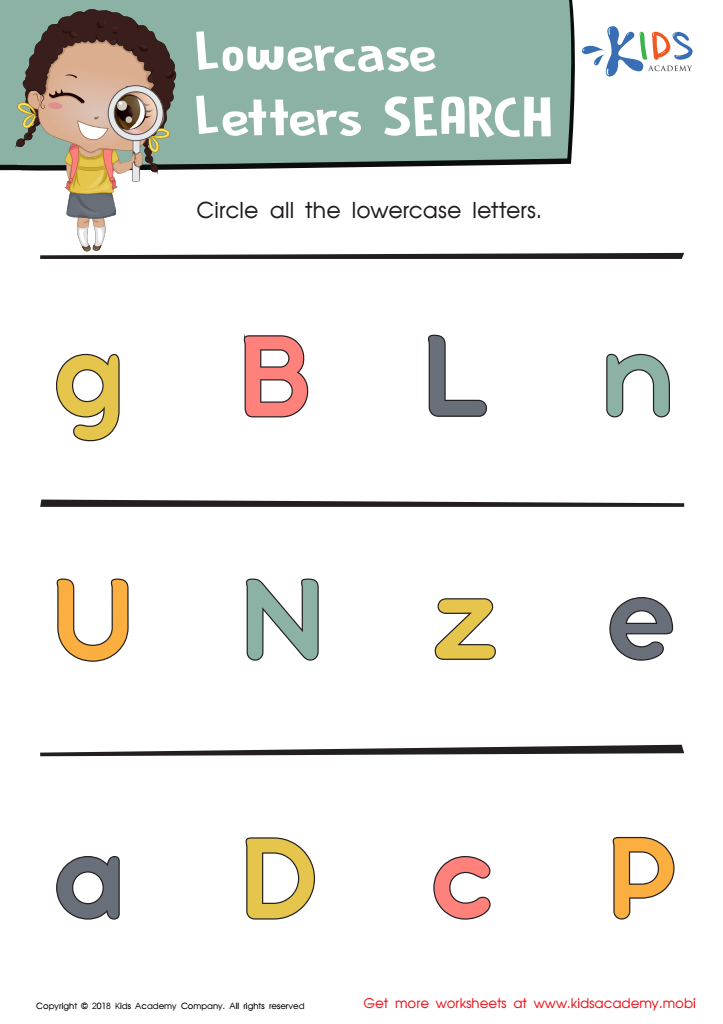
Lowercase Letters Search: Assessment Worksheet
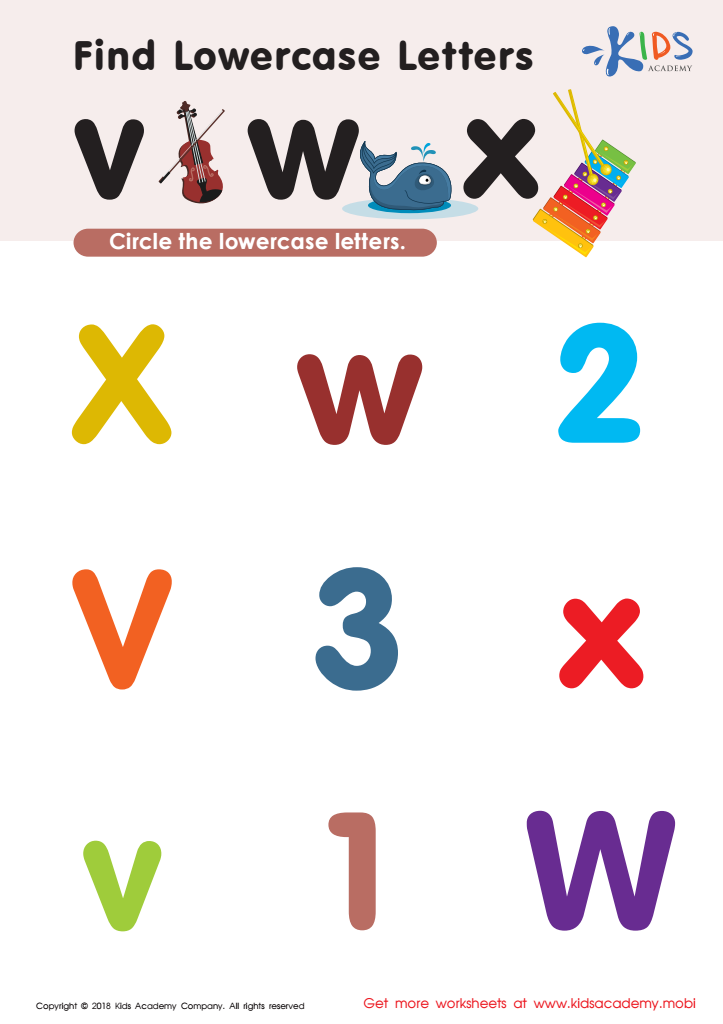
Find Lowercase Letters v w x Worksheet






Identifying lowercase and uppercase letters is crucial for children aged 5 to 9 as it forms the foundation for early literacy skills. At this age, children are beginning to explore reading and writing, and recognizing the difference between letter cases is essential for decoding words. Understanding that uppercase letters typically signify the beginning of sentences or proper nouns helps develop punctuation awareness, ensuring that children comprehend text structure.
Additionally, mastering letter identification fosters confidence in young learners as they engage in reading activities, enhancing their motivation to explore books. Children who can differentiate between uppercase and lowercase letters are more likely to encounter success in their reading and writing tasks, leading to improved overall academic performance.
Furthermore, lowercase letters make up the majority of text encountered in daily life, from signs to children's books. Emphasizing lowercase recognition allows children to relate better to the written language they encounter, making reading more accessible and enjoyable.
In summary, by prioritizing lowercase and uppercase letter identification, parents and teachers significantly contribute to children's literacy development—equipping them with essential skills that serve as building blocks for their future education. This knowledge ultimately cultivates a lifelong love for reading and learning.







