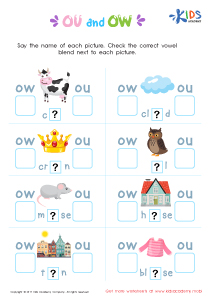
Vowel Diphthongs Worksheets for Ages 5-9 - Page 2
27 filtered results
-
From - To
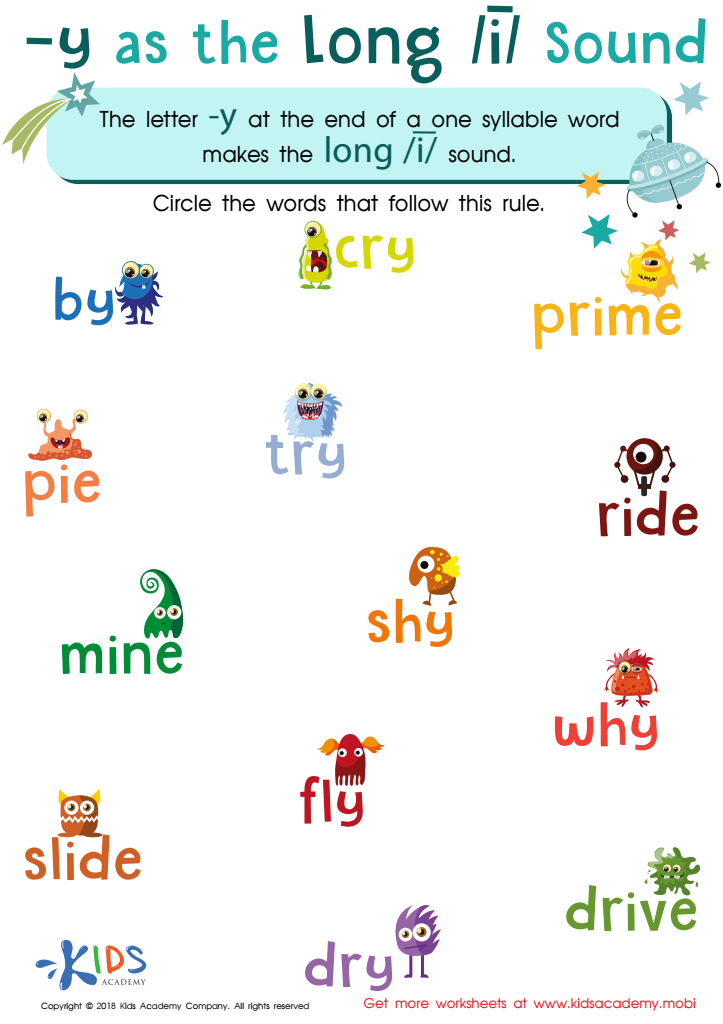
Reading: Y as Long I Worksheet
 Assign to My Students
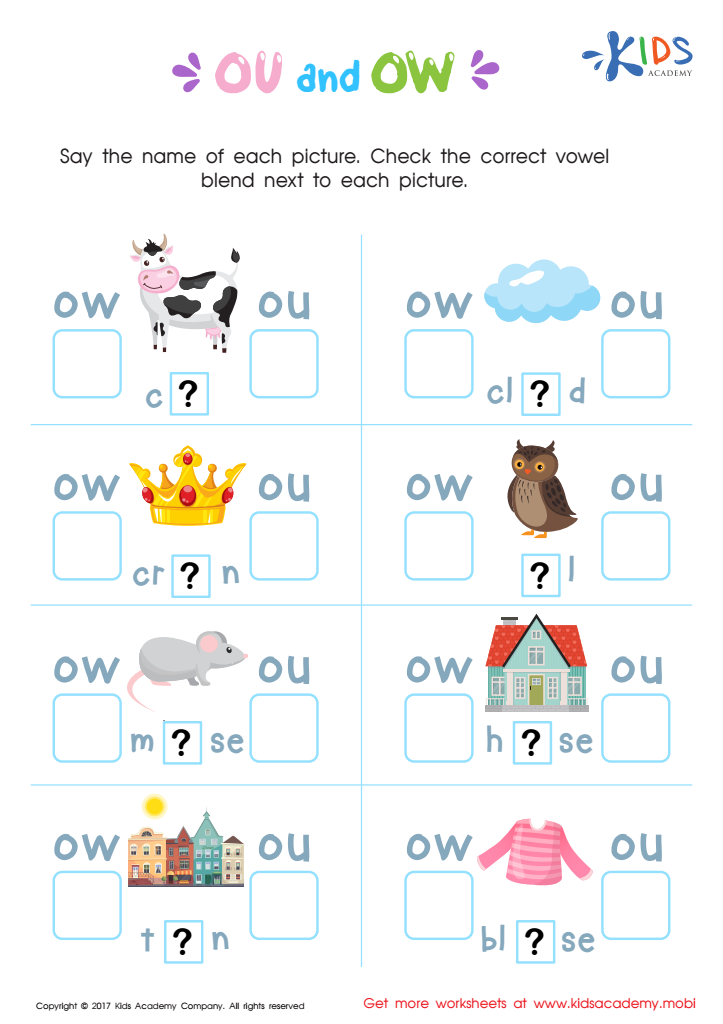
OU and OW Words Worksheet
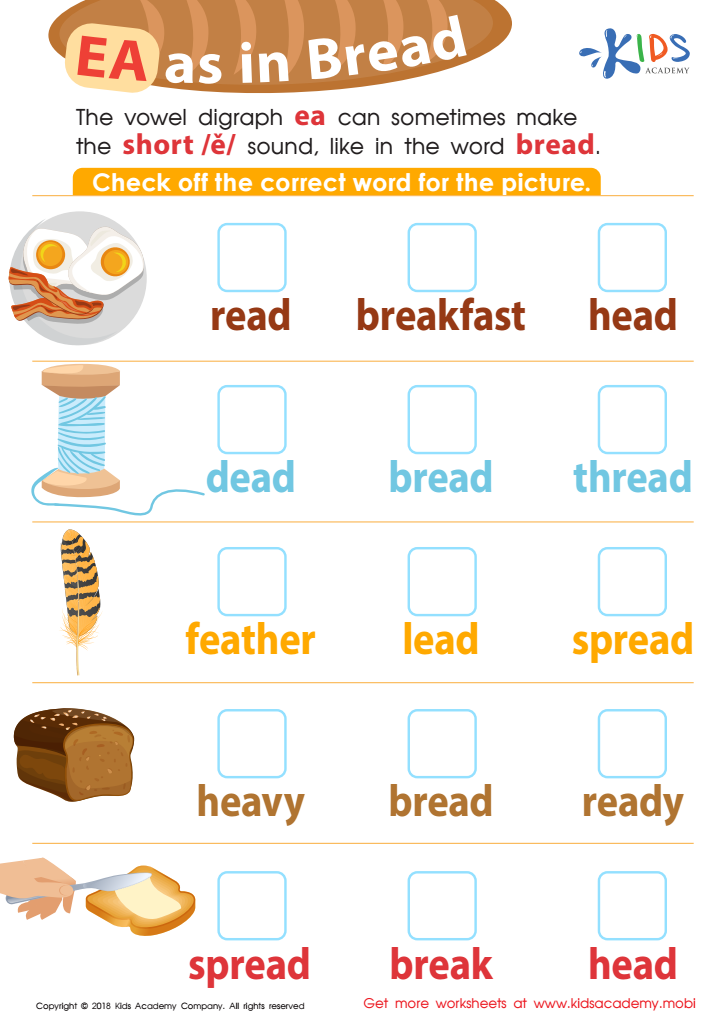
Reading: EA as in Bread Worksheet


Vowel diphthongs are essential components of language that merge two vowel sounds into a single syllable, making them crucial for early literacy development in children aged 5-9. Understanding diphthongs enhances a child's phonemic awareness, which is the ability to recognize and manipulate sounds in spoken words. By mastering diphthongs, children improve their reading and pronunciation skills, allowing them to approach more complex texts with confidence.
For parents and teachers, emphasizing diphthongs fosters better language comprehension in young learners. This understanding not only aids in decoding new words during reading but also boosts spelling abilities. As children encounter a wider array of vocabulary, their overall language development accelerates, promoting effective communication skills.
Moreover, a solid grasp of diphthongs supports academic success beyond the literacy curriculum. As children engage in discussions and collaborative activities, clear pronunciation and effective articulation become increasingly important. Investing time in teaching vowel diphthongs thus enriches children's linguistic capabilities and lays a foundation for lifelong learning. Ultimately, parents and teachers should prioritize vowel diphthongs to ensure young learners develop the skills they need to excel both academically and socially.