Vowels Worksheets for Ages 5-9 - Page 5
98 filtered results
-
From - To
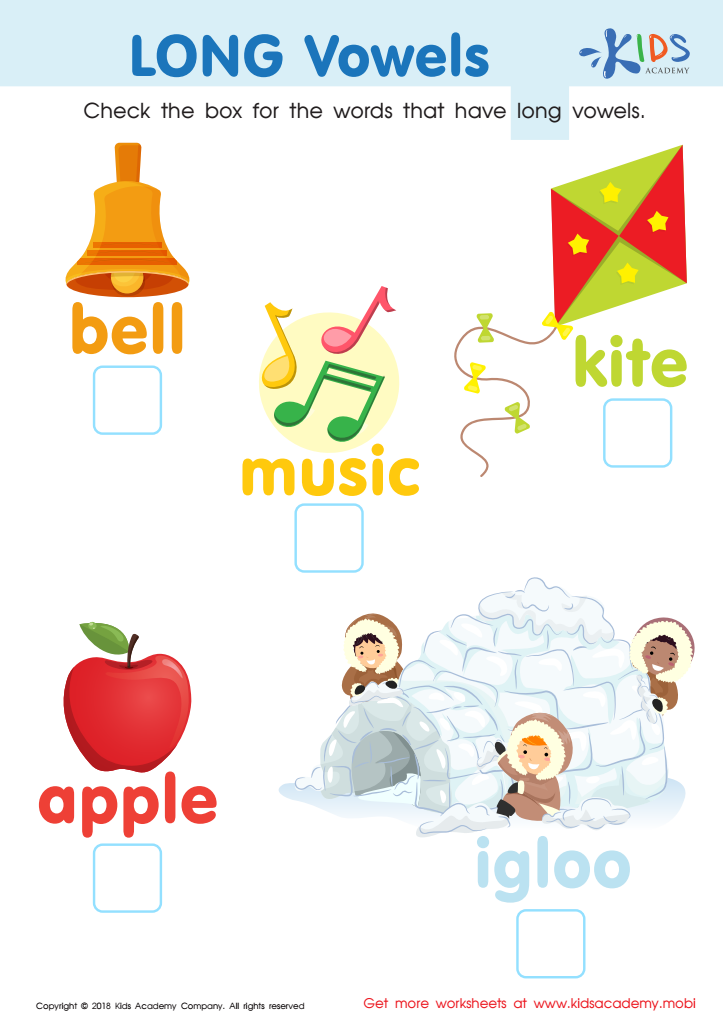
long vowels Worksheet
 Assign to My Students
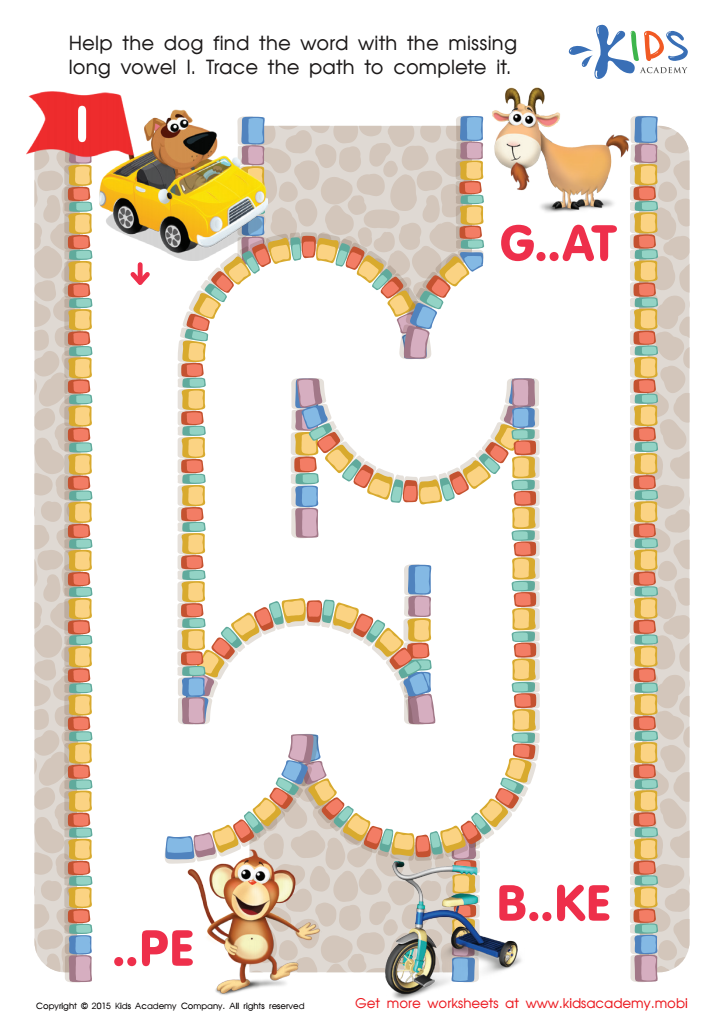
Long Vowel Sound I Worksheet





Understanding vowels is crucial for children aged 5-9 as it lays the foundation for reading and writing skills. Vowels—A, E, I, O, U, and sometimes Y—are fundamental components of English words and directly influence phonemic awareness. By mastering vowels, children can decode words and develop their literacy skills more effectively.
When parents and teachers prioritize vowels, they enhance children's abilities to read fluently, improving comprehension as they progress through more complex texts. Vowel awareness also supports spelling, as many English words depend on vowel structures. For example, short versus long vowels can change a word’s meaning (e.g., "hat" vs. "hate").
Moreover, learning about vowels engages students in phonics activities, promoting critical thinking through sound recognition and manipulation. It can also increase confidence, as mastery of this aspect of language fosters a sense of achievement in young learners.
Additionally, by understanding the importance of vowels, parents and teachers can create targeted learning experiences—like interactive games, songs, or stories—that make vowel learning fun and engaging. Ultimately, a solid grasp of vowels not only builds essential literacy skills but also ignites a lifelong love of reading in young children.







