Alphabetical order practice Worksheets for Ages 5-9
3 filtered results
-
From - To
Enhance your child’s literacy skills with our engaging Alphabetical Order Practice Worksheets, designed specifically for ages 5-9. These worksheets foster essential skills in sorting and organizing words, helping young learners recognize the ABCs in a fun and interactive way. Each printable worksheet features colorful illustrations and diverse activities that encourage kids to practice arranging words in alphabetical order while enjoying the learning process. Suitable for both classroom and home use, our resources promote early literacy development and boost confidence in reading and writing. Explore our collection today to help your child master alphabetical order with ease and joy!
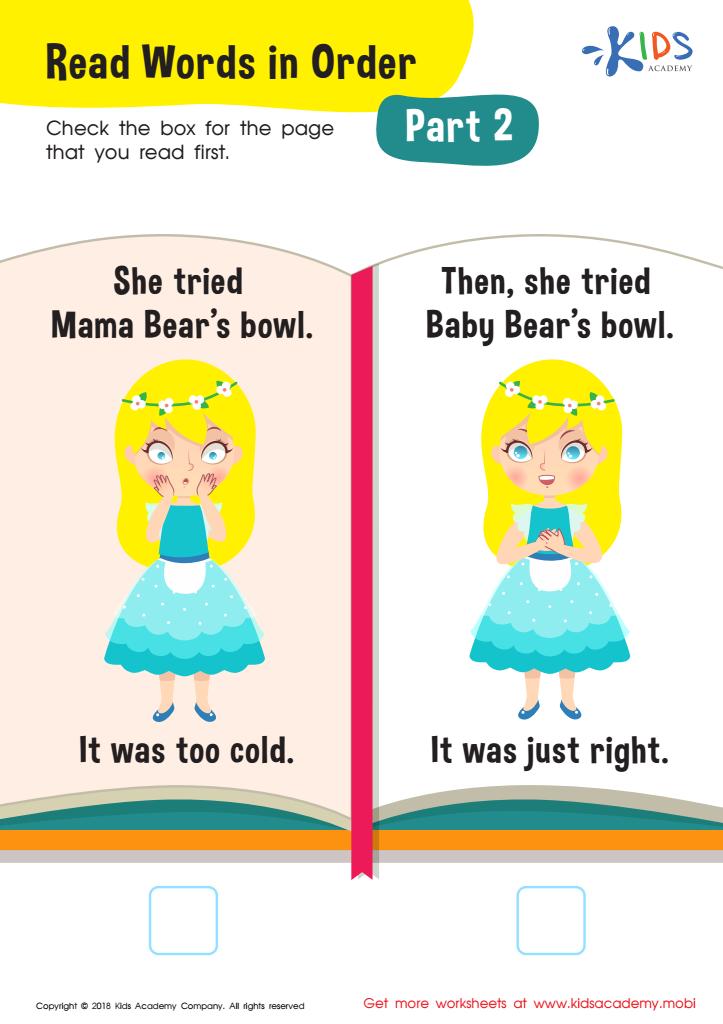
Read Words Order Part 2 Worksheet
 Assign to My Students







Alphabetical order practice is vital for children aged 5-9 as it builds foundational skills that enhance literacy and organizational abilities. Understanding the alphabet and its sequential arrangement gives children the tools to locate information quickly, whether in books, dictionaries, or digital platforms. This skill is particularly valuable as they embark on their educational journey, enabling them to become more independent learners.
Moreover, practicing alphabetical order reinforces phonemic awareness, which is crucial for reading development. By recognizing letter sounds and their sequence, children improve their spelling and vocabulary, enriching their overall language skills. Engaging in alphabetical order activities can also make learning fun and interactive. Games, alphabet puzzles, and matching activities encourage participation and enjoyment, making mastering these concepts easier.
Furthermore, this practice fosters critical thinking. As children learn to categorize and sort words, they develop logical reasoning that applies to other areas of their education, from math to science projects. Ultimately, when parents or teachers prioritize alphabetical order practice, they are equipping children with essential tools for academic success and promoting a love for learning that can last a lifetime.








