Contextual comprehension Worksheets for Ages 5-9
3 filtered results
-
From - To
Unlock the power of reading with our engaging Contextual Comprehension Worksheets for ages 5-9! Designed to enhance children’s understanding of key concepts, these worksheets focus on contextual clues to improve reading skills and promote critical thinking. Perfect for young learners, our resources feature colorful illustrations and age-appropriate texts that captivate students’ attention. From extracting meaning to answering questions based on context, these worksheets foster a love of reading while helping kids build confidence in comprehension. Ideal for home or classroom use, our worksheets make learning fun and interactive. Explore our exciting collection today and watch your child's comprehension skills flourish!
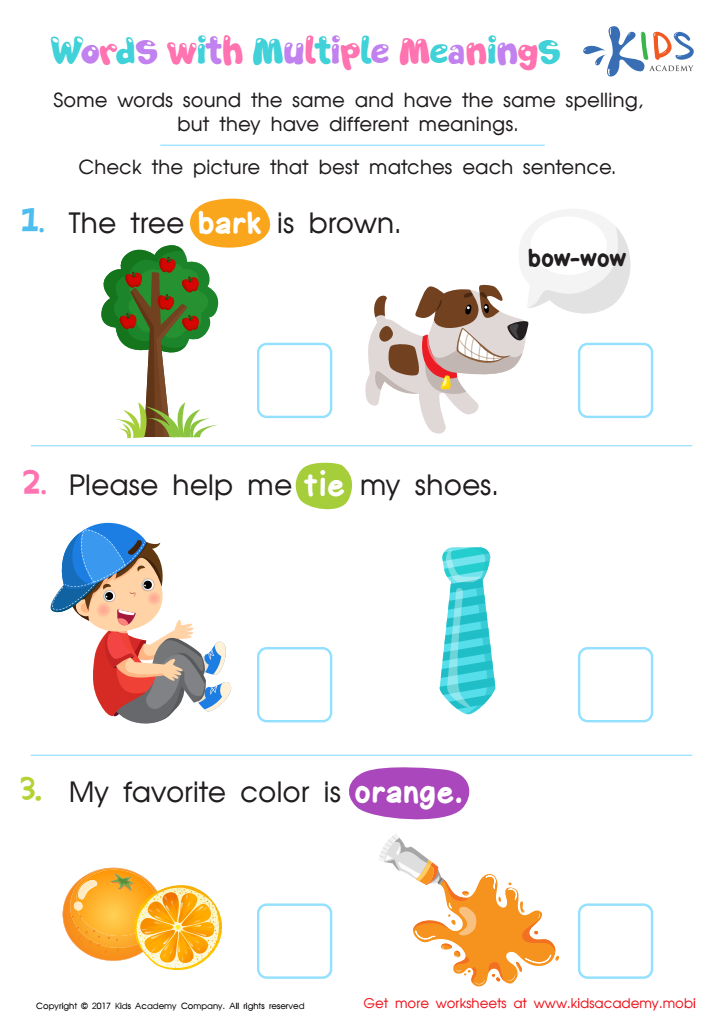
Words with Multiple Meanings Worksheet
 Assign to My Students
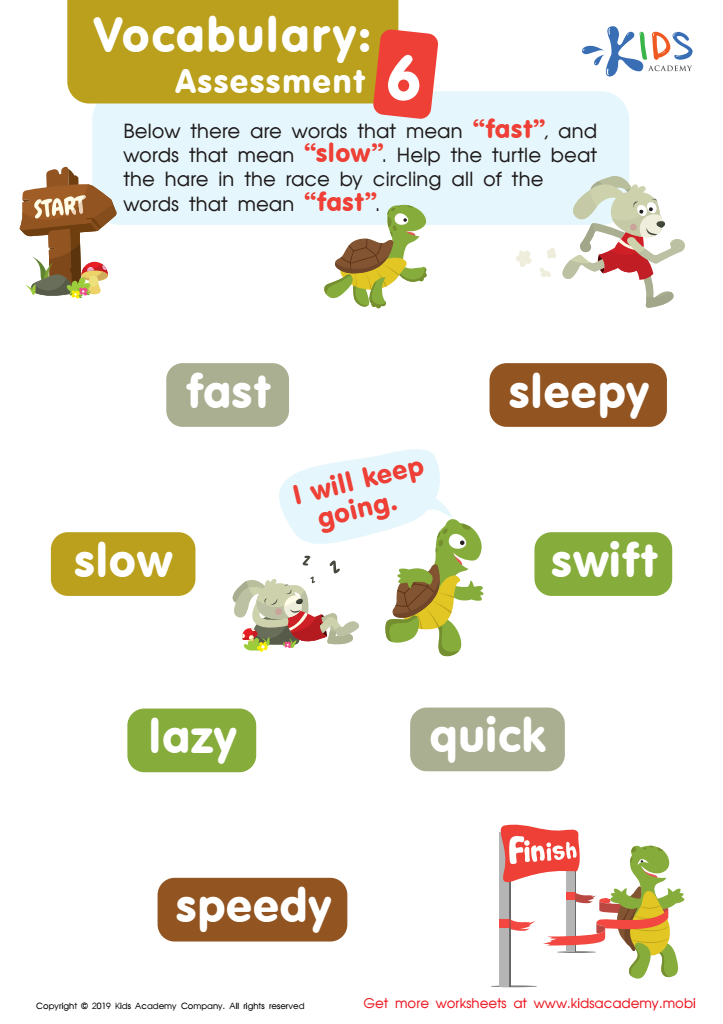
Vocabulary: Assessment 6 Worksheet
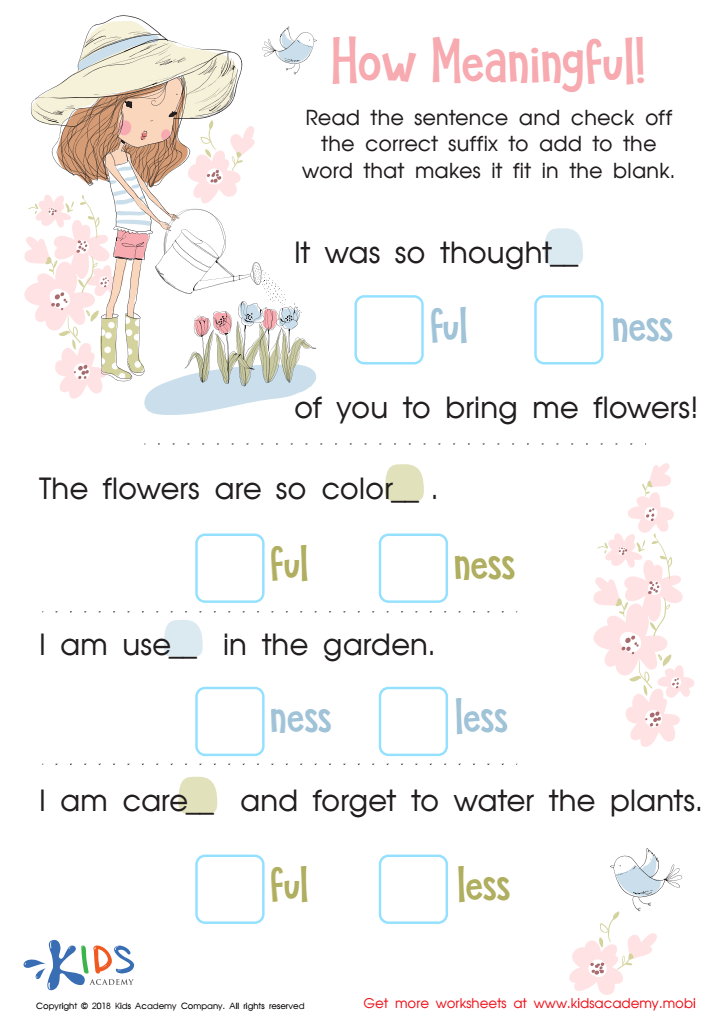
How Meaningful! Worksheet








Contextual comprehension plays a vital role in the development of literacy skills for children aged 5-9. This foundational stage of learning is not only about recognizing words but truly understanding the meaning behind them. Contextual comprehension helps children grasp how context influences understanding, allowing them to become more adept readers and effective communicators.
When parents and teachers emphasize contextual comprehension, they empower children to make connections between texts and their real-life experiences. This deepens understanding, engages students emotionally, and enhances retention. For instance, understanding a story’s context—like the time period, setting, or emotional backdrop—influences how a child interprets characters' motivations and feelings.
Moreover, the ability to contextualize information plays a critical role in building critical thinking and problem-solving skills. As children encounter new topics or texts, recognizing the context enables them to draw implications and synthesize information across disciplines. This cognitive development not only fosters a love for reading but cultivates curiosity and a desire to learn.
Ultimately, prioritizing contextual comprehension cultivates confident, competent learners equipped to navigate both academic challenges and their everyday lives, making it essential for parents and teachers to focus on this critical skill during these formative years.








