
Developing numeracy skills Worksheets for Ages 5-9
3 filtered results
Difficulty Level
Grade
Age
-
From - To
Subject
Activity
Standards
Discover our engaging, expertly designed worksheets aimed at developing numeracy skills in children aged 5-9. These printable resources cover essential math concepts such as counting, addition, subtraction, multiplication, and division. Created by education professionals, each worksheet focuses on building foundational skills while encouraging critical thinking and problem-solving. Colorful illustrations and interactive exercises make learning fun and motivating. Perfect for use both in the classroom and at home, these worksheets cater to different learning styles and help boost confidence in young learners. Explore our collection to support your child's journey towards numeracy excellence.
Favorites
With answer key
Interactive
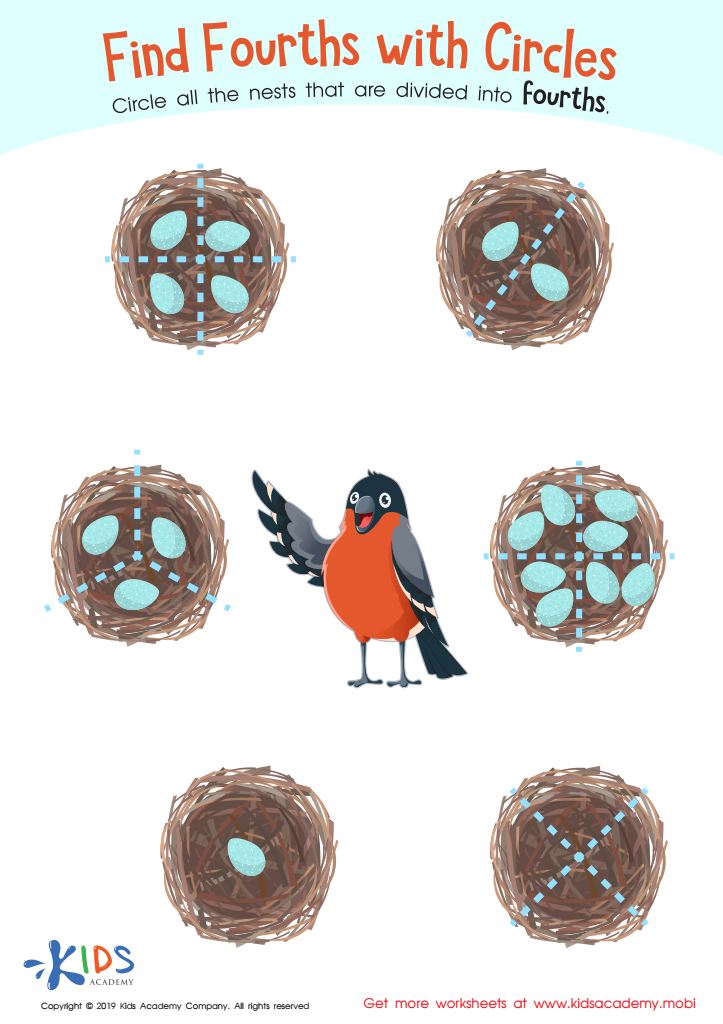
Find Fourths Circles Worksheet
Finding fractions with this Find Fourths with Circles worksheet can be fun! Your child will see a picture of circles divided into different fractions and circle the nests divided into fourths. With the help of their cheery bird friend, they can look for nests with four equal parts and be successful in finding the correct nest.
 Assign to My Students
Find Fourths Circles Worksheet
Worksheet
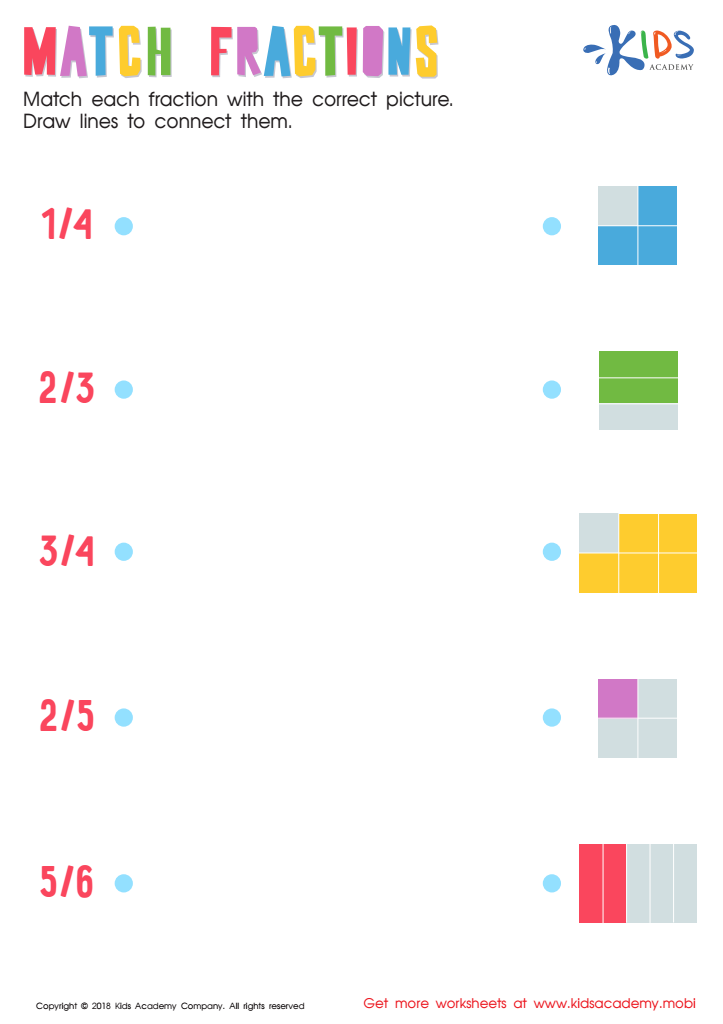
Match Fractions Worksheet
Have your child match fractions to images with this worksheet. There are five fractions on the left and five pictures on the right. Ask them to draw lines to connect each fraction to the right image. It's a great way to learn while having fun!
Match Fractions Worksheet
Worksheet
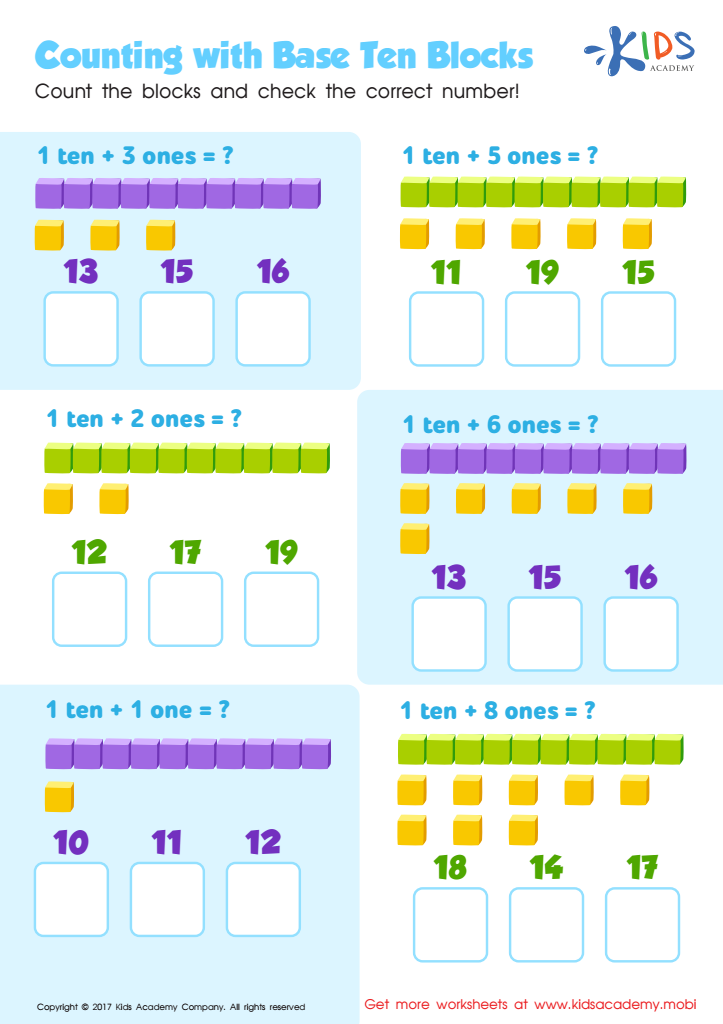
Counting with Base Ten Blocks Worksheet
Math has different levels and gets harder as your child progresses. Don't be surprised when they bring home an algebra worksheet! In this one, they will add 1 tens to varying numbers and fill in the total. This builds their understanding of base tens.
Counting with Base Ten Blocks Worksheet
Worksheet
Join Kids Academy for Free
Who is primarily going to use this learning content?








Developing numeracy skills in children aged 5-9 is vital for several reasons. At this age, children’s brains are particularly receptive to learning fundamental concepts that form the foundation for more advanced mathematical reasoning. Strong numeracy skills not only aid in academic success across subjects but also enhance logical thinking, problem-solving abilities, and critical reasoning. These skills go beyond the classroom; children use math every day, whether telling time, handling money, or cooking.
Early numeracy development leads to greater self-confidence in children when faced with mathematical tasks. This confidence can reduce anxiety and negative attitudes towards math as they grow older. Importantly, early numeracy is linked to improved literacy as both skills can reinforce each other and strengthen cognitive development.
Furthermore, numerate individuals tend to have better job prospects in the future, as many career fields require basic to advanced mathematical skills. Early intervention sets the foundation for lifelong learning and success in a rapidly evolving, data-centric world.
By prioritizing numeracy skills at this crucial life stage, parents and teachers cultivate capable, adaptable, and confident individuals. Investing in numeracy education boosts overall learning progression, ensuring children have the necessary skills to navigate their educational and future career paths.








