Develops counting skills Worksheets for Ages 5-9
3 filtered results
-
From - To
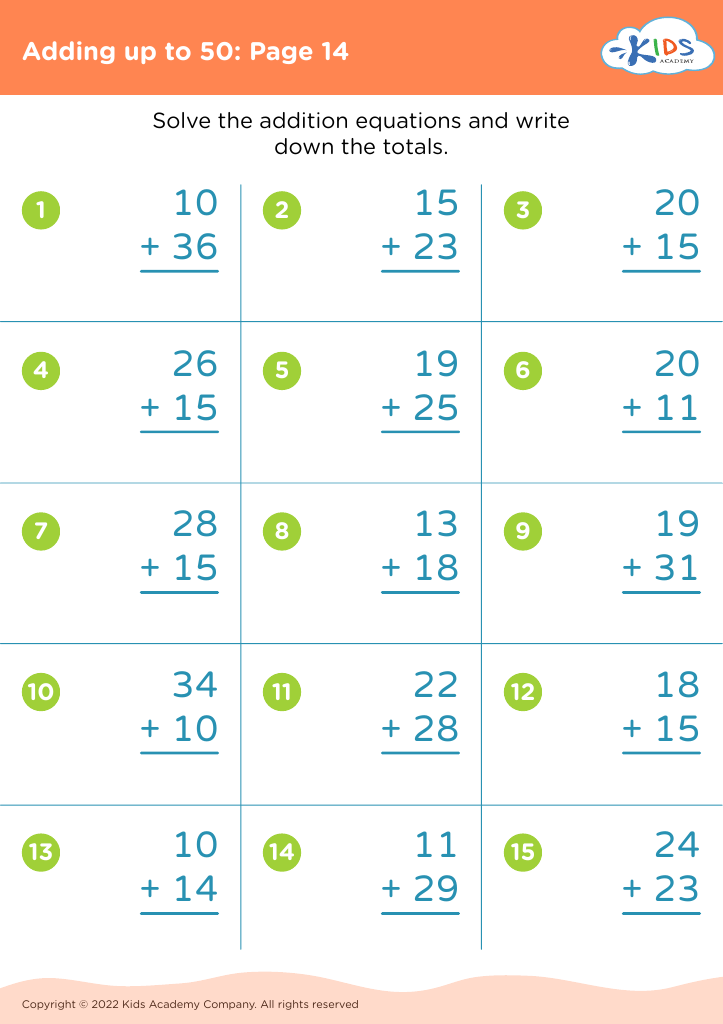
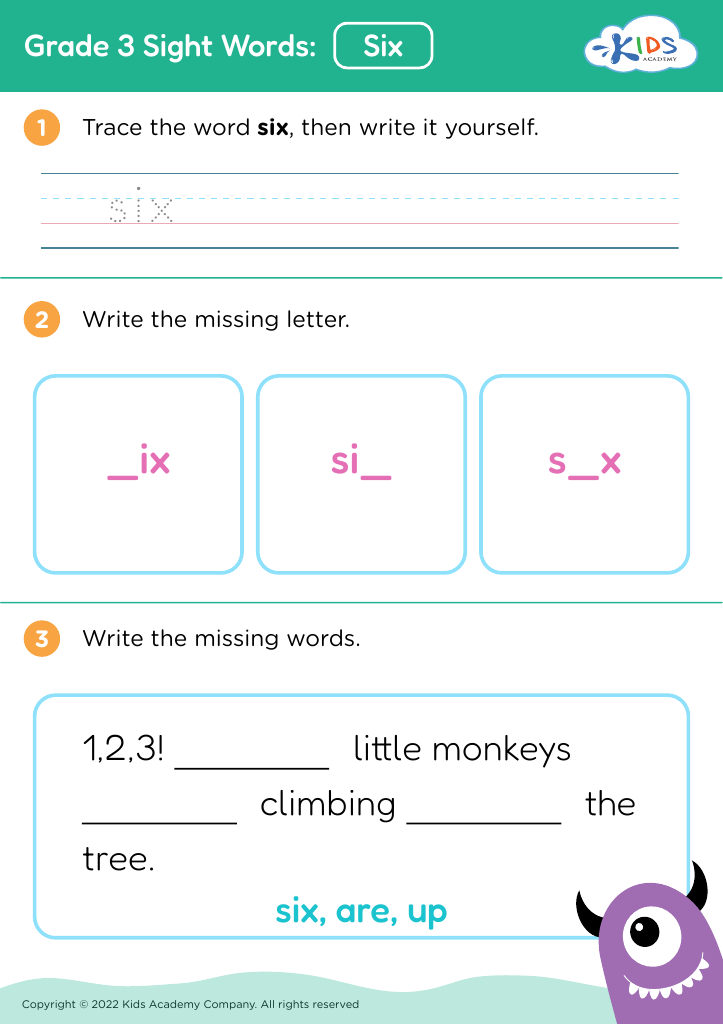
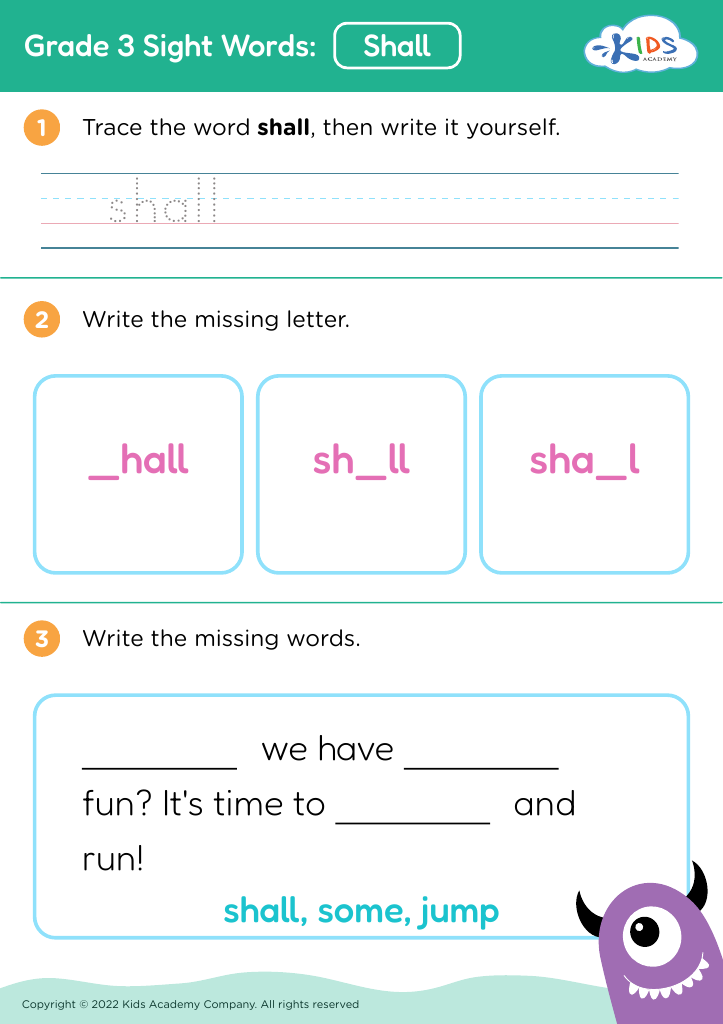
Discover our engaging "Develops Counting Skills Worksheets" tailored for children ages 5-9. These expertly crafted printable worksheets from Kids Academy help young learners build solid counting skills through fun and interactive activities. Featuring bright, colorful designs and a variety of exercises, our worksheets cover fundamental concepts like number recognition, basic arithmetic, and skip counting. Ideal for use at home or in the classroom, these resources aim to boost confidence and mastery in early math. Help your child develop a strong mathematical foundation while having fun with our delightful counting worksheets!


.jpg)



Parents and teachers should emphasize the development of counting skills for children ages 5-9 because these skills form the backbone of early mathematical understanding and cognitive development. Counting is more than just reciting numbers; it involves recognizing quantities, understanding number sequence, and grasping the concept of one-to-one correspondence. As children learn to count, they build a foundation for more complex arithmetic operations, such as addition, subtraction, and even multiplication and division.
Strong counting skills support problem-solving and logical reasoning abilities. These skills foster an intuitive understanding of number patterns and relationships, which are crucial for success in higher-level math. Furthermore, mastering counting early on boosts children's confidence and enthusiasm for learning, encouraging a lifelong interest in mathematics.
Counting is also intertwined with other areas of development. It contributes to language skills as children learn number names and sequencing words. It enhances fine motor skills as children point to objects or write numbers. In social contexts, counting can be part of games and collaborative activities, promoting social interaction and teamwork.
By prioritizing counting skills, parents and teachers lay a strong educational foundation, ensuring that children are well-prepared for future academic challenges and everyday tasks that require numerical competence. This investment in early mathematical skills can yield long-term benefits, setting children on a path toward academic success and critical thinking.








