Directional understanding Worksheets for Ages 5-9
6 filtered results
-
From - To
Enhance your child's spatial awareness with our Directional Understanding Worksheets designed for ages 5-9. These engaging printables focus on developing essential directional skills such as left, right, up, and down. Tailored to boost cognitive skills, our activities transform learning into a fun and interactive experience. Each worksheet is crafted to suit various learning levels, ensuring kids build confidence while mastering directions. From simple path following exercises to complex puzzles, these resources are perfect for classroom and home use. Give your child a head start in developing critical thinking and navigation skills with our expertly designed worksheets.
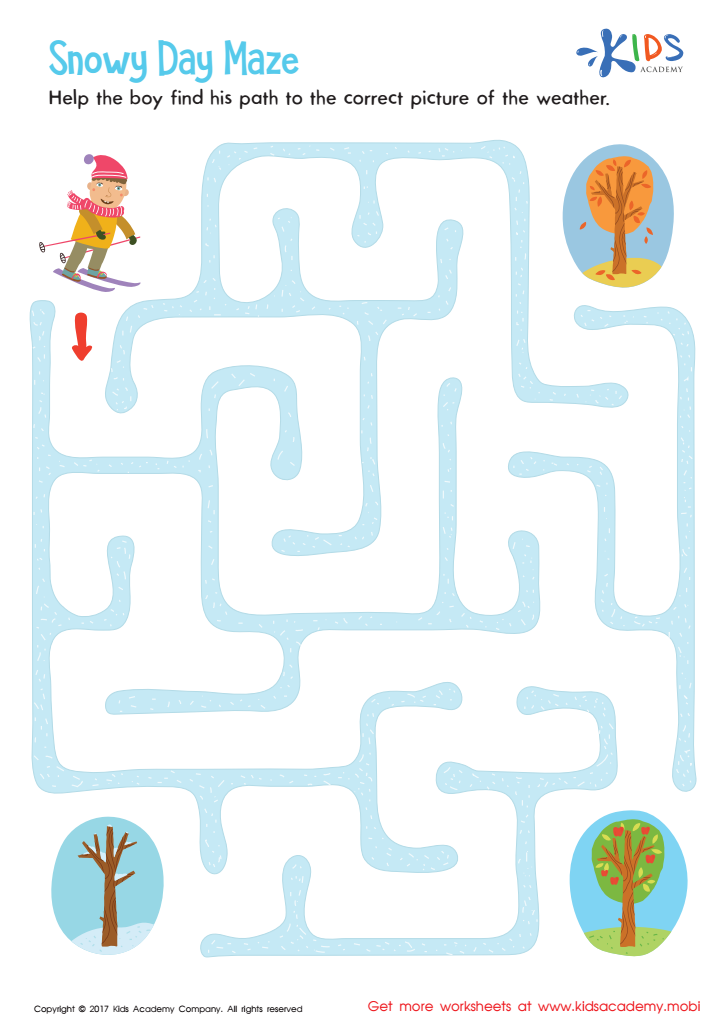
 Assign to My Students
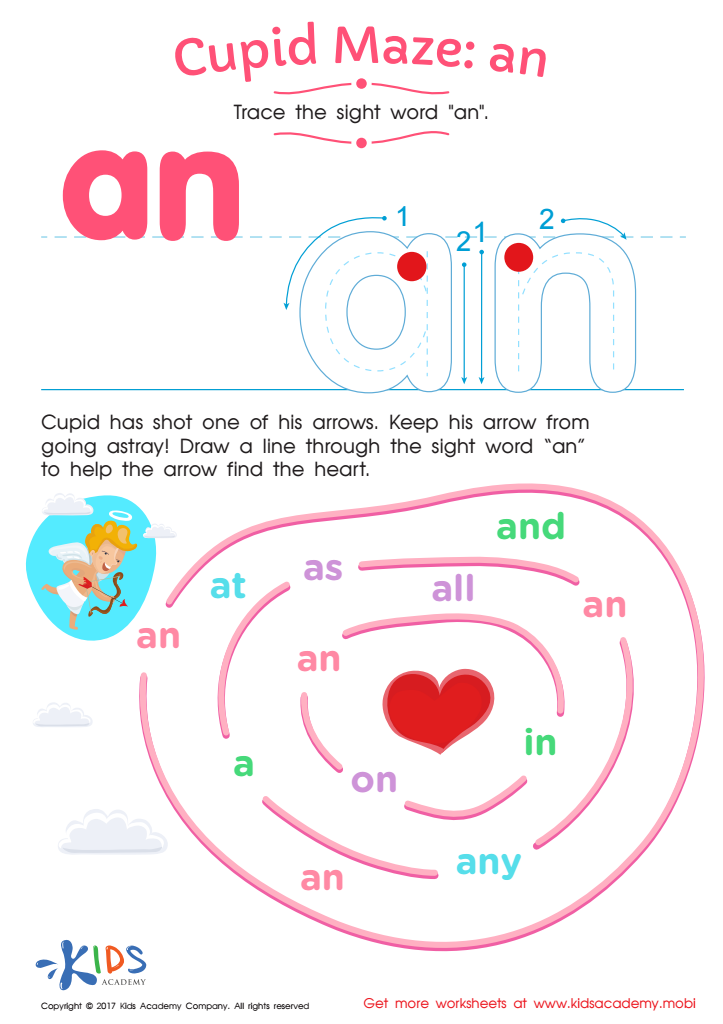
Cupid Maze: An Printable
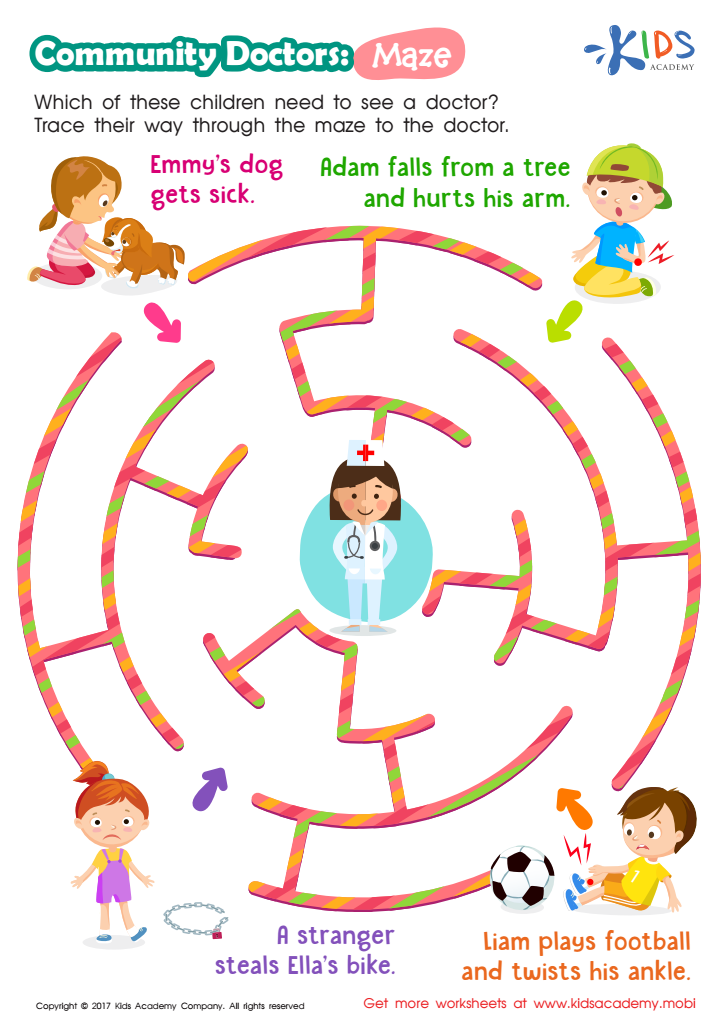
Community Doctors: Maze Printable
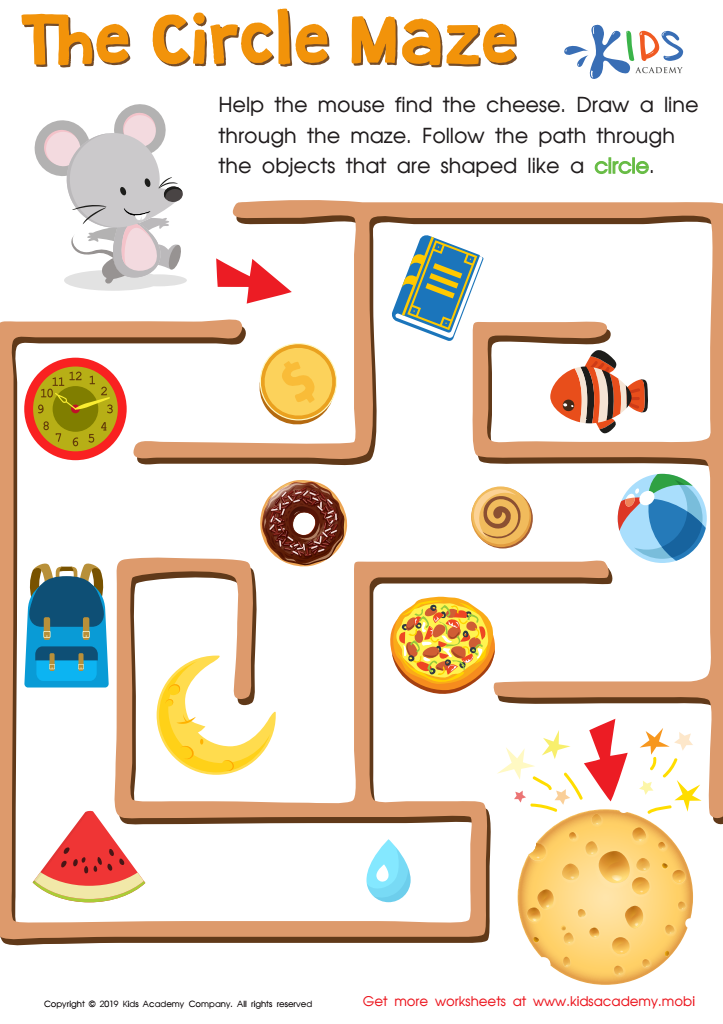
The Circle Maze Worksheet
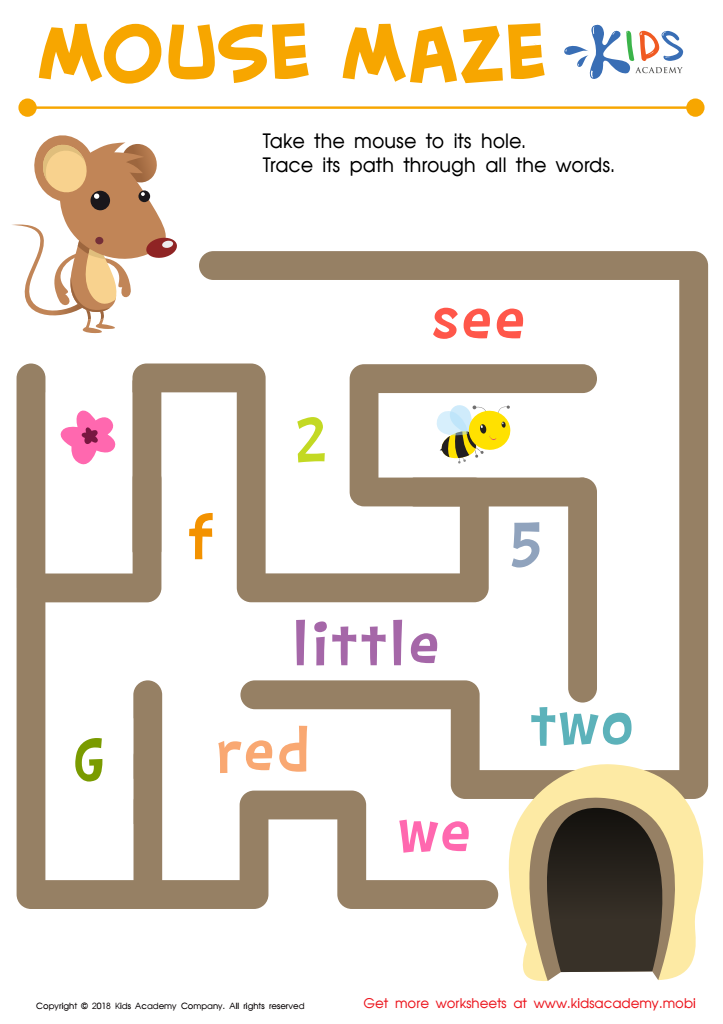
Find Words Mouse Maze Worksheet
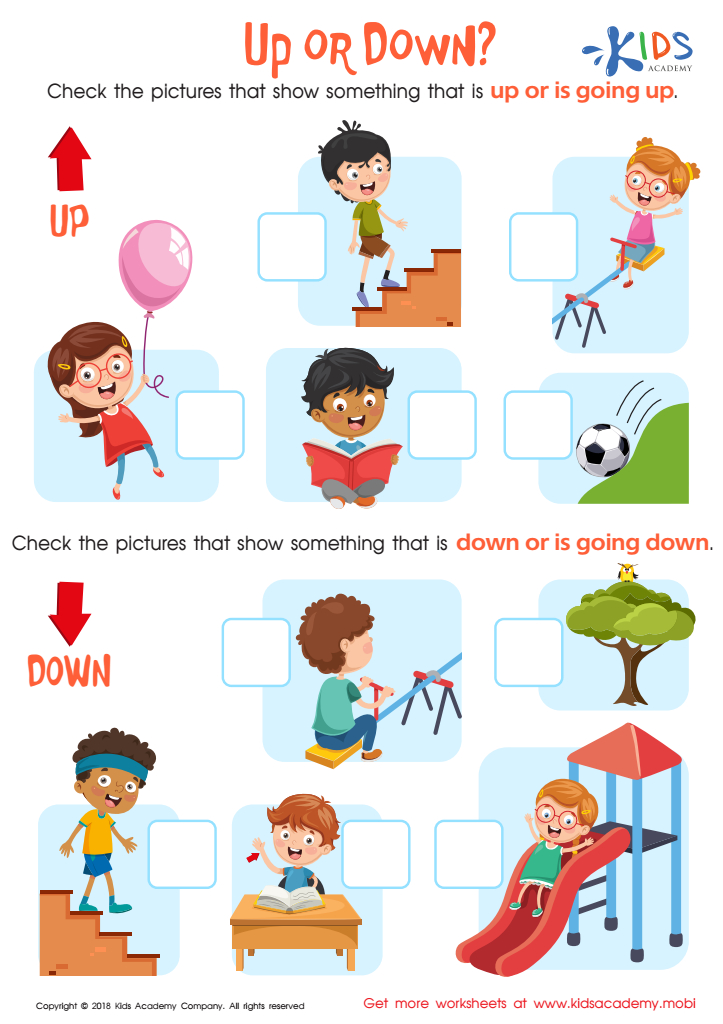
Up or Down Worksheet







Directional understanding—grasping concepts like left, right, up, down, and spatial awareness—is crucial for children aged 5-9 for several reasons. First, it forms the foundation for essential life skills. Knowing directions helps kids navigate their environment safely, whether crossing the street, following a map, or simply locating items.
Second, proper directional understanding underpins academic success, particularly in subjects like reading and mathematics. For reading, children need to track text from left to right and top to bottom. In math, they must understand spatial relationships to grasp geometry and comprehend word problems involving movement and positioning.
Third, directional awareness enhances physical coordination and motor skills. This is vital for everyday activities like tying shoes, as well as for play and sports, where understanding game rules and positioning are made easier.
Finally, a confident sense of direction supports social and emotional development. Being adept at directions enables kids to follow instructions accurately, thereby fostering independence and boosting self-esteem.
Teachers and parents, consequently, play vital roles in nurturing this skill. Through games, exercises and everyday incidents, they can reinforce direction-oriented learning. Simple practices like using directional language (left/right), treasure hunts, classroom setups, and interactive apps can make learning fun and effective. Investing time in developing these skills opens doors to a smoother, more successful early childhood experience.








