
Event ordering Worksheets for Ages 5-9
3 filtered results
Difficulty Level
Grade
Age
-
From - To
Subject
Activity
Standards
Discover our engaging Event Ordering Worksheets designed for children aged 5-9! These interactive activities help young learners develop sequential thinking skills as they practice organizing events in logical order. Perfect for enhancing comprehension and storytelling abilities, our worksheets feature vibrant illustrations and age-appropriate scenarios that capture children's interest. Whether used in the classroom or at home, these resources provide a fun way for kids to improve critical cognitive skills while exploring their creativity. Start fostering essential learning foundations today with our easy-to-use Event Ordering Worksheets, tailored to make learning an enjoyable and exciting journey for your little ones!
Favorites
With answer key
Interactive
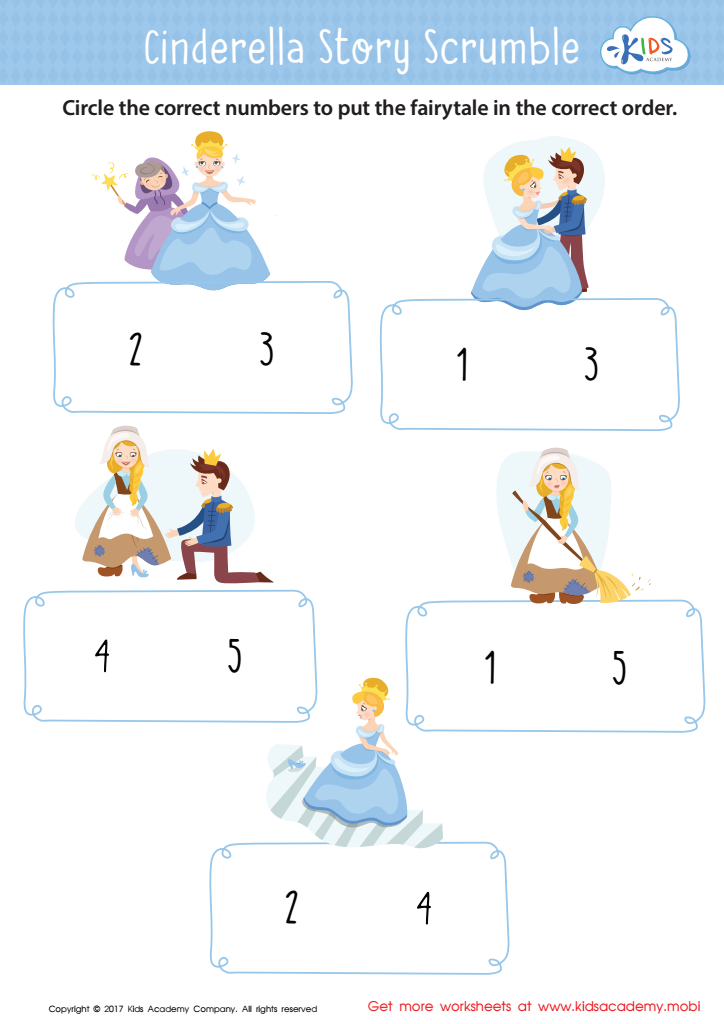
Cinderella Story Sequencing Worksheet
This worksheet helps strengthen reading comprehension skills by getting your child to remember key moments from the Cinderella story. They'll be asked to place pictures in the right order to tell the story.
 Assign to My Students
Cinderella Story Sequencing Worksheet
Worksheet
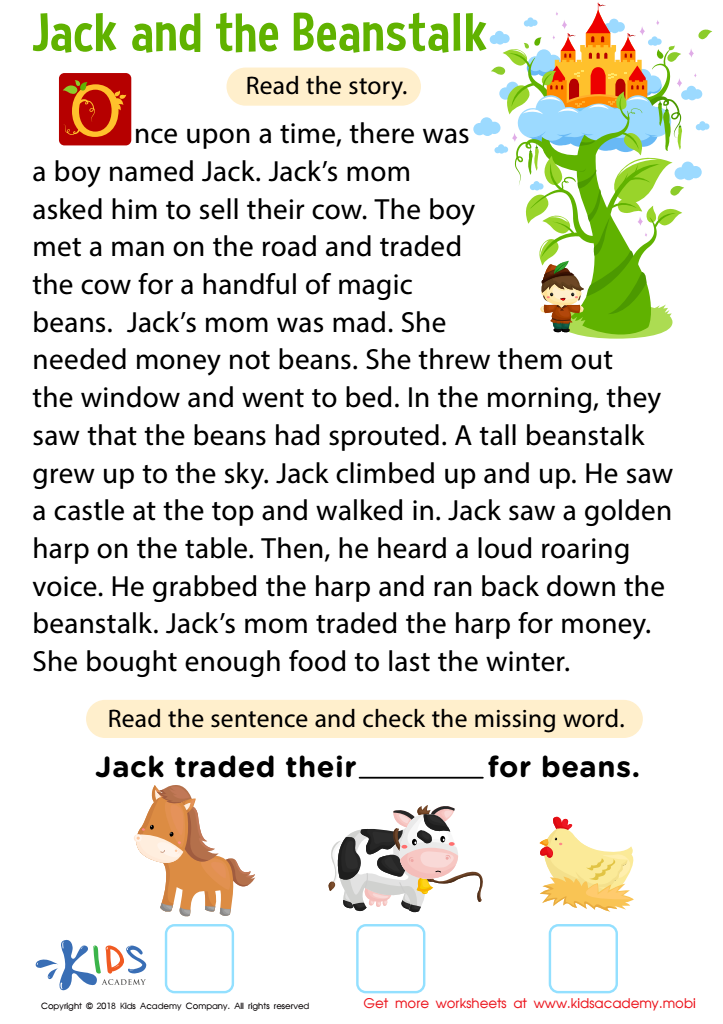
Jack and Beanstalk Worksheet
Story time can be a fun and educational experience for your kids. Read them the classic Jack and the Beanstalk - and even read it twice to help them pay attention. Afterwards, help them fill in the blank on the worksheet to expand their vocabulary and learn more from the story.
Jack and Beanstalk Worksheet
Worksheet
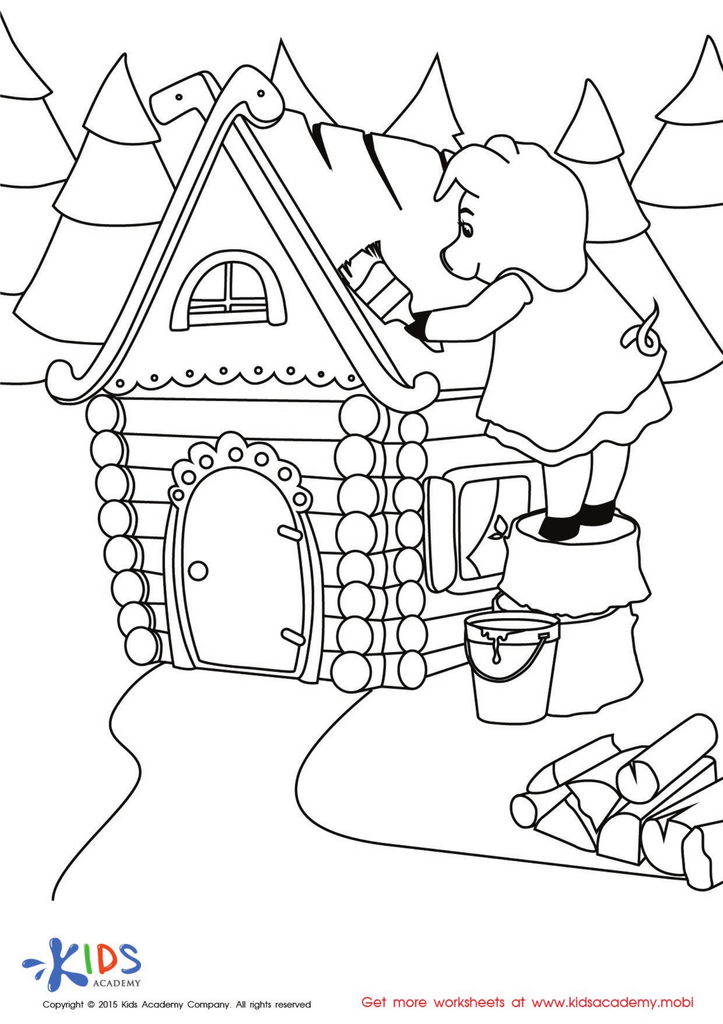
The Three Little Pigs Worksheet
Print out this fun coloring page and unleash your creativity! It features a cute little pig painting her new sticks house. What color will you choose? Work those fine motor muscles and enjoy the picture come to life! See what happens next to the three little pigs.
The Three Little Pigs Worksheet
Worksheet
Join Kids Academy for Free
Who is primarily going to use this learning content?







Event ordering is a crucial skill for children ages 5-9 as it lays the foundation for their cognitive development and literacy. When kids learn to sequence events, they enhance their understanding of cause and effect, helping them to make sense of the world around them. By organizing events in sequential order, children develop critical thinking skills, enabling them to analyze situations and draw logical conclusions. This ability also improves their storytelling skills, allowing them to better express themselves and comprehend narratives, both in written and spoken forms.
For parents and teachers, fostering event ordering skills can significantly improve a child’s academic success. It assists in reading comprehension, as students who can identify the sequence of events in a story are more likely to grasp its main ideas and themes. Additionally, event ordering promotes organizational skills, which are essential for upcoming academic challenges, such as writing essays or solving math problems.
By prioritizing event ordering in everyday activities—whether through storytelling, games, or practical life examples—parents and teachers create enriching learning environments that boost children's development. Ultimately, these skills equip children with the tools they need for future success in both academic and social contexts.








