
Geographic Understanding Worksheets for Ages 5-9
3 filtered results
Difficulty Level
Grade
Age
-
From - To
Subject
Activity
Standards
Discover our engaging Geographic Understanding Worksheets designed specifically for children aged 5-9. These worksheets provide young learners with a fun introduction to maps, directions, and the world around them. Through interactive activities, kids will explore continents, identify landmarks, and develop essential map-reading skills. Our resources are perfect for enhancing classroom learning or enriching home education. Each worksheet aims to foster critical thinking and spatial awareness, making geography understandable and enjoyable for early learners. Unlock your child’s curiosity about the world with our comprehensive and vibrant worksheets that cater to their developmental needs and encourage a love for learning.
Favorites
With answer key
Interactive
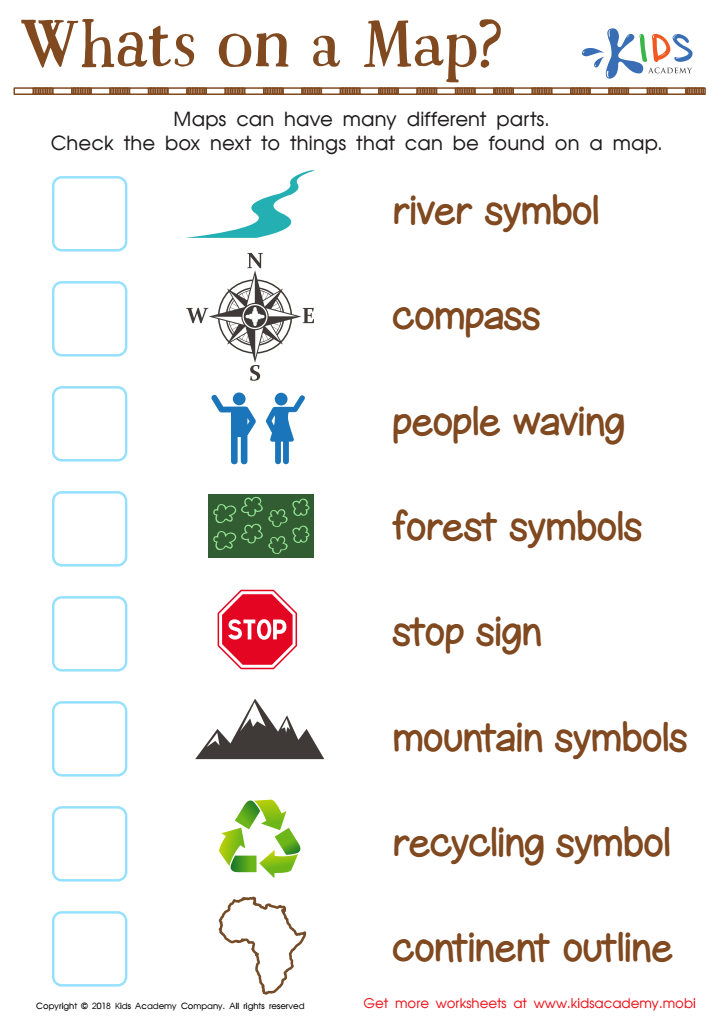
Whats on a Map? Worksheet
Kids often lack map-reading experience due to our digital age, but these skills are essential. This free worksheet reinforces what they'll find on a map and the symbols used to represent them, helping them build reasoning, thinking and problem-solving skills.
 Assign to My Students
Whats on a Map? Worksheet
Worksheet
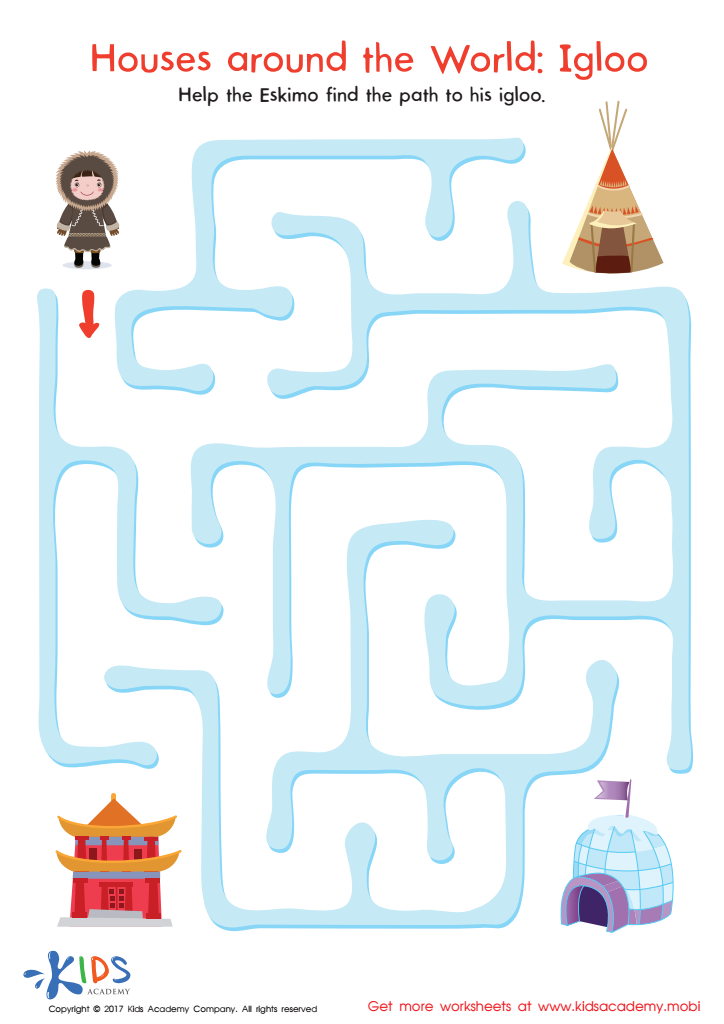
Houses Around the World: Igloo Printable
Print out the igloo maze worksheet and help the Eskimo find his way home. Along the way, you’ll discuss different types of houses. A perfect way to practice thinking skills!
Houses Around the World: Igloo Printable
Worksheet
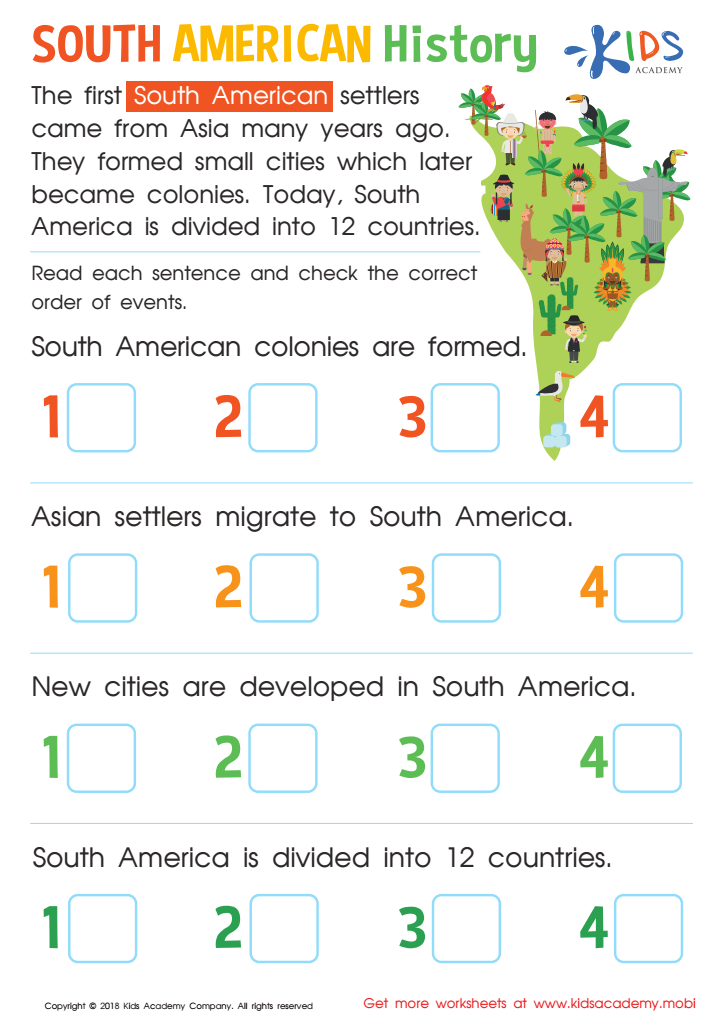
South American History Worksheet
Kids can brush up on South American history with this free worksheet! They'll discover how the first inhabitants arrived from Asia and how this led to the growth of cities and colonies. Comprehension questions will help them sequence and understand the events of South American history.
South American History Worksheet
Worksheet
Join Kids Academy for Free
Who is primarily going to use this learning content?







Geographic understanding is crucial for children aged 5-9 as it lays the foundation for their connection to the world. At this developmental stage, children are naturally curious about their surroundings, and engaging them with geography cultivates this curiosity. Understanding geography helps kids recognize and appreciate the diversity of places, cultures, and environments, encouraging empathy and global awareness.
Moreover, geographic skills support critical thinking by teaching children how to analyze maps, understand spatial relationships, and comprehend the impacts of human activity on the earth. Such skills are essential for their future, as they empower young learners to navigate and engage with the changing world around them, fostering informed citizens capable of making meaningful contributions.
Incorporating geography into early education helps children develop a sense of place and belonging. It allows them to understand where they live, what makes their community unique, and how it relates to the broader world. Ultimately, by emphasizing geographic understanding, parents and teachers equip children with essential tools for lifelong learning, responsible citizenship, and an appreciation for planetary stewardship, ensuring they grow up as informed and compassionate individuals aware of their role in a complex global landscape.








