Learning addition Worksheets for Ages 5-9
7 filtered results
-
From - To
Discover our "Learning Addition Worksheets for Ages 5-9" designed to make math fun and engaging! Perfect for young minds in the early stages of numeracy development, these printable worksheets are filled with colorful and stimulating exercises that simplify the learning process. Children will master basic addition skills through diverse activities involving pictures, number lines, and word problems. Ideal for classroom use, homeschooling, or extra practice, our worksheets ensure a solid mathematical foundation while keeping kids motivated and excited to learn. Join us on this enjoyable math adventure and watch your child’s confidence and skills soar!
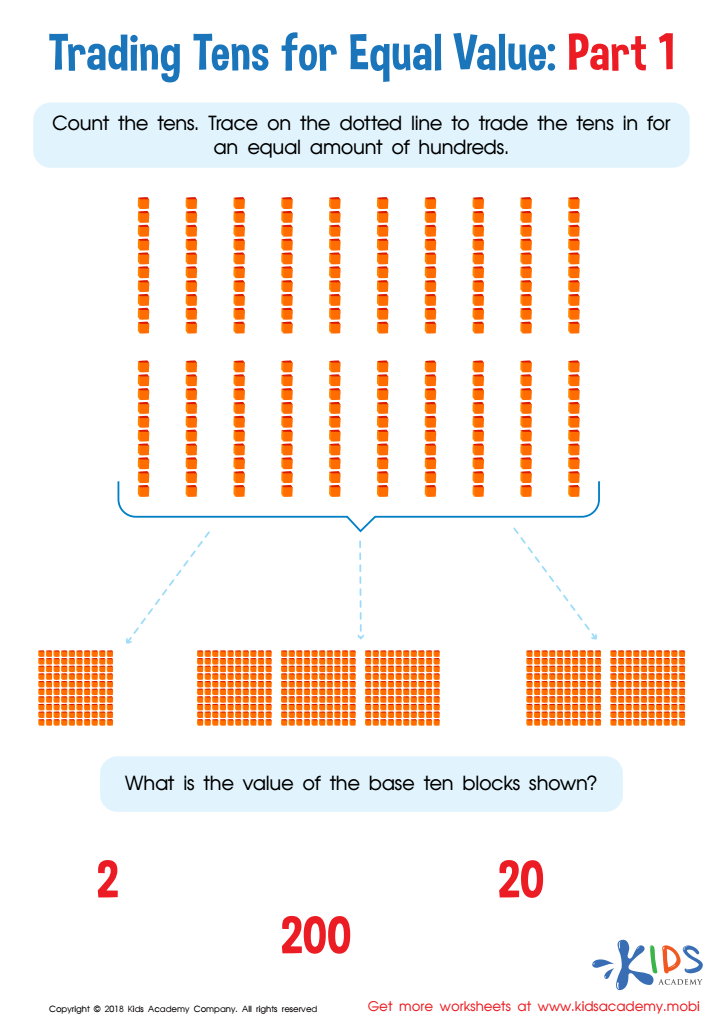
Trading Tens for Equal Value Worksheet: Part 1
 Assign to My Students
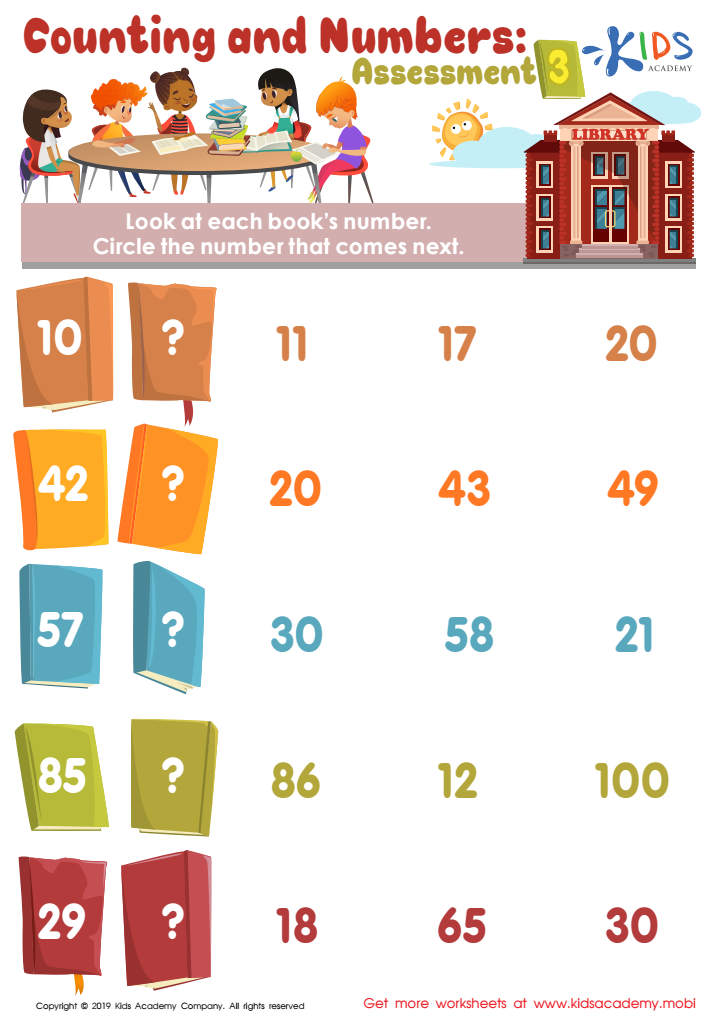
Counting and Numbers: Assessment Worksheet
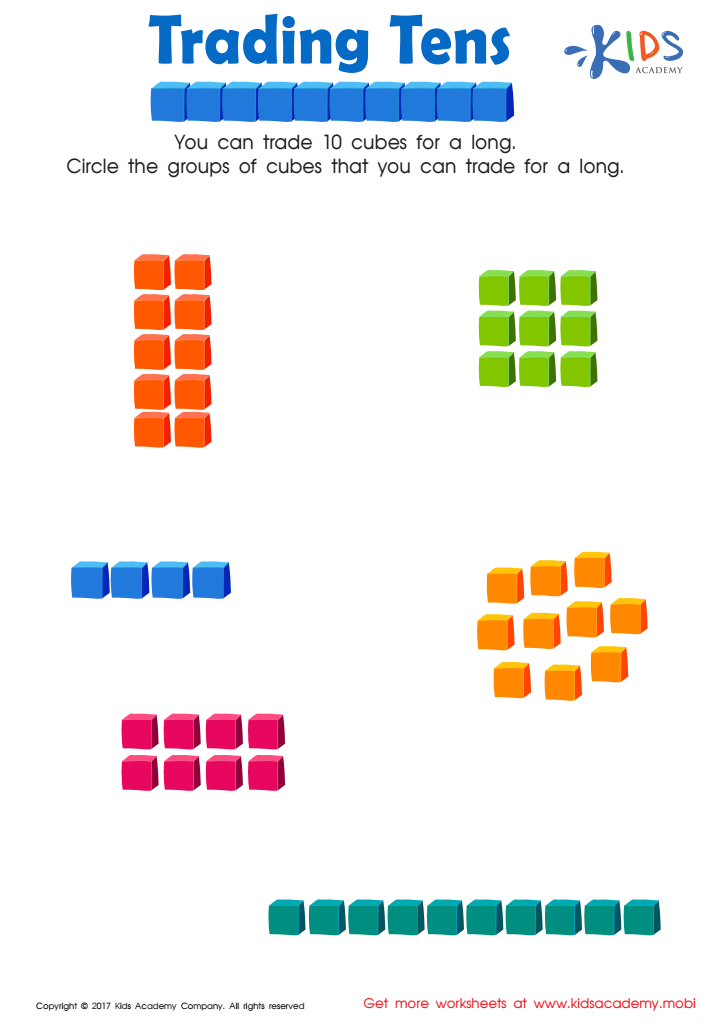
Trading Tens Worksheet
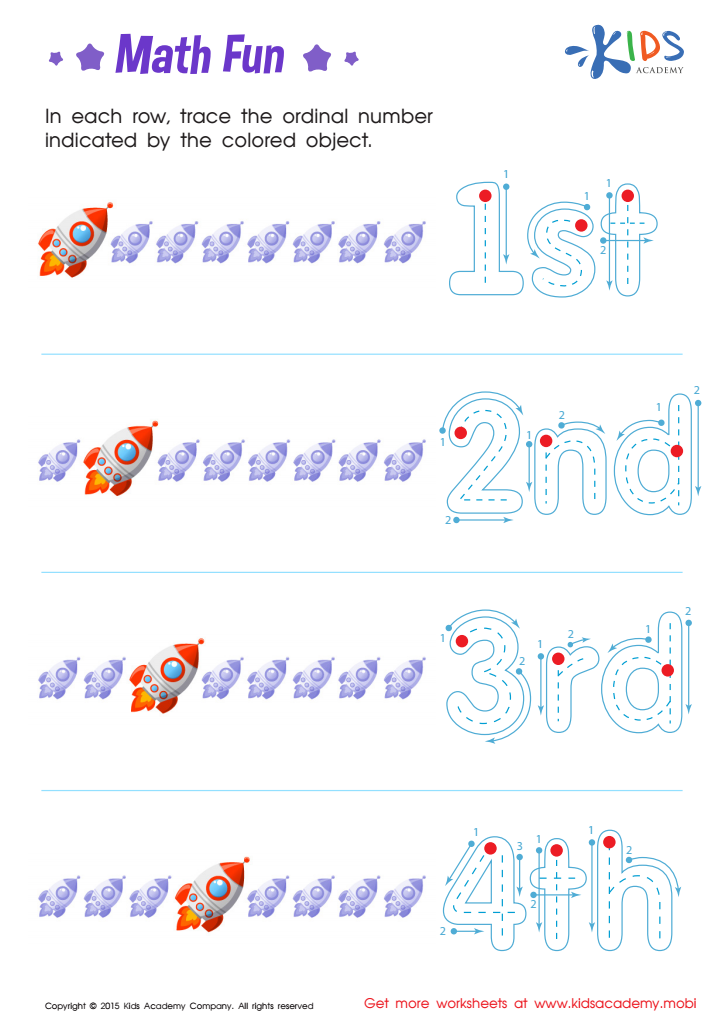
Ordinal Numbers: Math Fun Worksheet








Developing proficiency in addition between the ages of 5-9 is crucial for children's overall academic success and cognitive development. Understanding basic addition lays a foundation for all subsequent math skills, enabling children to progress to more complex math concepts such as subtraction, multiplication, and division with confidence. Early competence in arithmetic helps to foster a positive attitude towards math, reducing math anxiety and increasing a child's likelihood of enjoying and succeeding in math-related subjects.
Strong addition skills also enhance logical thinking and problem-solving abilities. When children practice addition, they learn to recognize patterns, make connections, and think critically, skills that are valuable across all areas of education and life. Incorporating addition into daily activities, such as counting objects, playing number games, or figuring out simple word problems, can make learning math fun and engaging.
Furthermore, proficiency in addition equips children with practical skills they will use throughout their lives, such as managing money, understanding time, and navigating numerical data. By prioritizing the teaching of addition during these formative years, parents and teachers provide children with the tools they need to approach both academic and real-world problems with competence and confidence.








