
Learning scientific vocabulary Worksheets for Ages 5-9
3 filtered results
Difficulty Level
Grade
Age
-
From - To
Subject
Activity
Standards
Introduce young minds to the fascinating world of science with our engaging scientific vocabulary worksheets, designed especially for children ages 5-9. Our carefully crafted worksheets make learning new terms both fun and educational, helping kids build a solid scientific foundation. Each activity offers vibrant illustrations and age-appropriate challenges to enhance comprehension and retention. Ideal for both classroom and home use, these printables support early learning skills and nurture a love for science. Explore and expand your child's vocabulary, boosting their confidence and knowledge, one worksheet at a time with Kids Academy!
Favorites
With answer key
Interactive
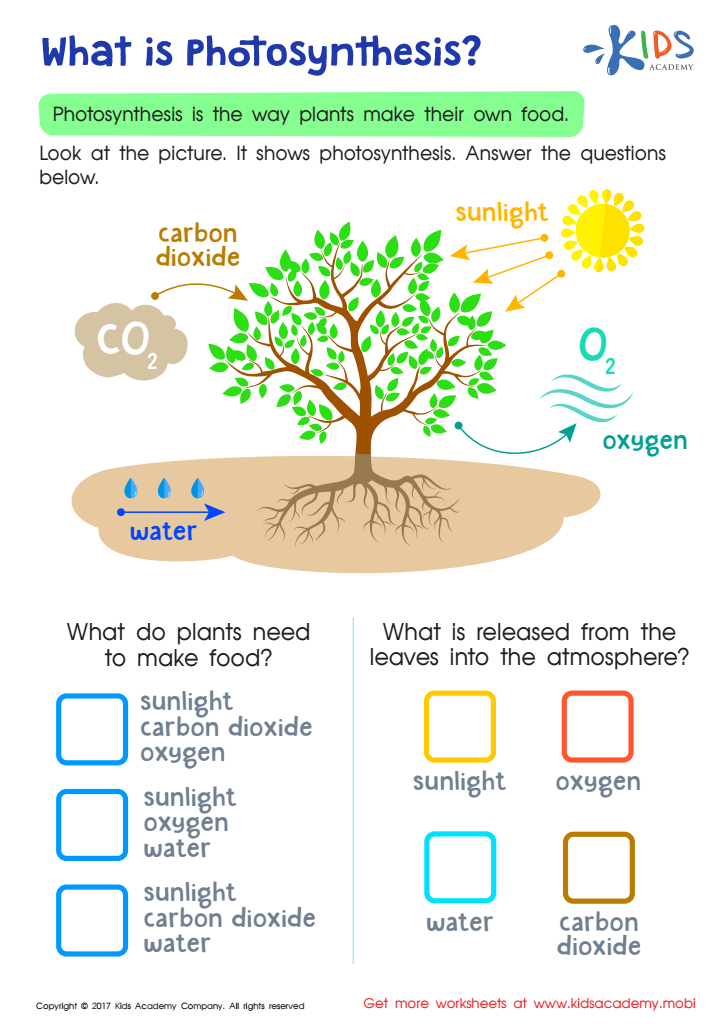
What is Photosynthesis Printable
Plants need to eat too; they make their own food from the air. Introduce them to photosynthesis with this fun worksheet!
 Assign to My Students
What is Photosynthesis Printable
Worksheet
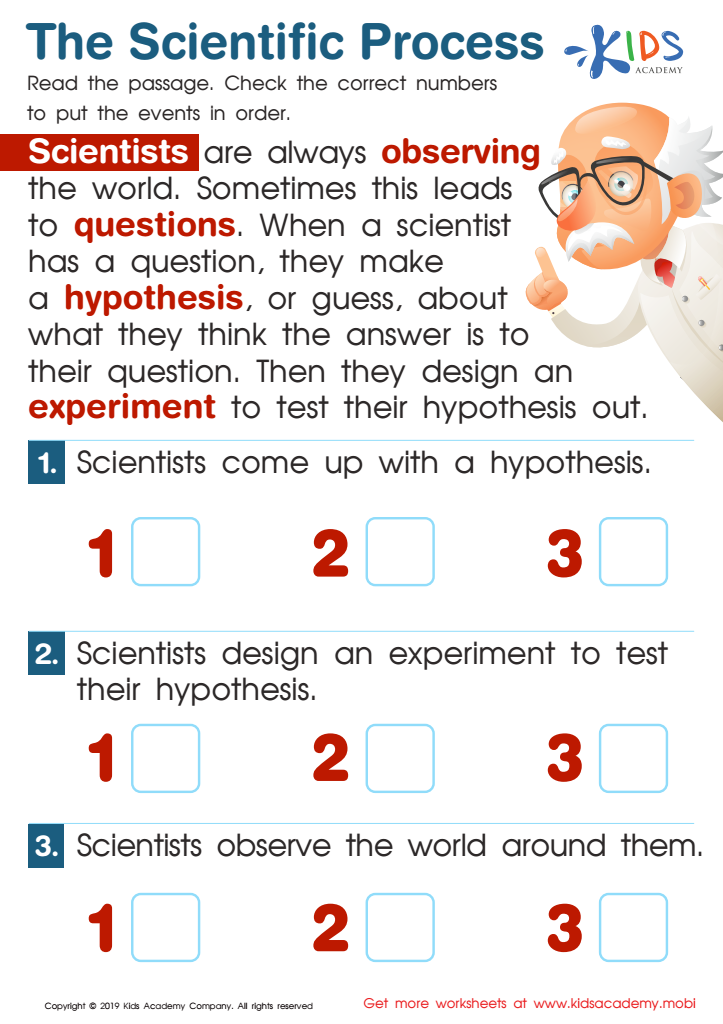
The Scientific Process Worksheet
Help your kids read the passage, then ask them to explain what they've learnt. Ask the questions and help put the events in order. Through this worksheet, your kids will learn more about science and practice reading skills. It's a fun way to explore science! (80 words)
The Scientific Process Worksheet
Worksheet
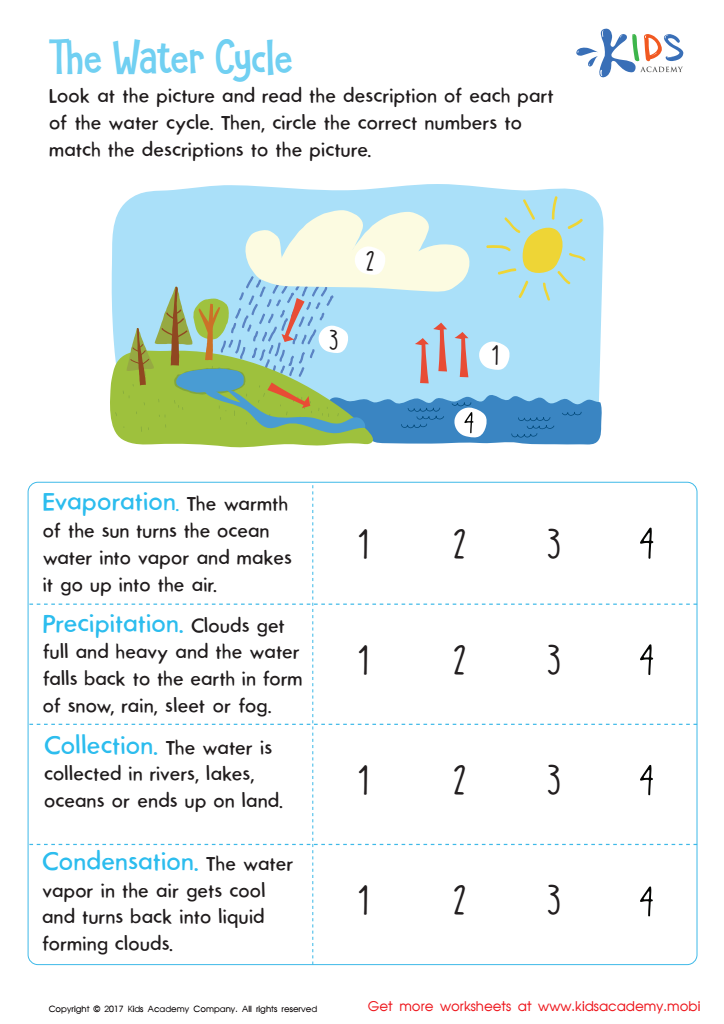
The Water Cycle Worksheet
Kids love science because it sparks their curiosity, so use this worksheet to introduce them to earth science and build a strong foundation for future learning.
The Water Cycle Worksheet
Worksheet
Learning Skills
Join Kids Academy for Free
Who is primarily going to use this learning content?






.jpg)
Learning scientific vocabulary at ages 5-9 is significant for several reasons, vital for parents and teachers to understand. Firstly, introducing scientific terms early ingrains foundational knowledge critical for future learning. When young learners are familiar with words like "photosynthesis," "evaporation," or "habitat," they are better prepared to grasp complex concepts later. This vocabulary also sparks curiosity; words like "star" or "dinosaur" can evoke a sense of wonder about the world, encouraging exploration and a love for learning.
Secondly, scientific vocabulary development aids in improving general language skills. Learning new words helps expand a child's vocabulary, enhancing their reading and comprehension abilities. Understanding and using specific terms correctly also foster precise communication, an essential skill in all subjects and life situations.
Moreover, early exposure to scientific language promotes critical thinking. It challenges children to categorize, compare, and evaluate different phenomena, strengthening cognitive pathways used for problem-solving.
Additionally, mastering scientific vocabulary builds confidence. Children can contribute to conversations, ask meaningful questions, and feel a sense of achievement in understanding complex topics. This empowerment boosts their overall academic self-esteem.
In summary, early scientific vocabulary education is fundamental in developing a child's knowledge base, language skills, critical thinking, and confidence, setting them up for future academic and personal success.








