Predicting outcomes Worksheets for Ages 5-9
3 filtered results
-
From - To
Enhance your child's critical thinking with our Predicting Outcomes Worksheets for ages 5-9! Specially designed to hone young learners' abilities to anticipate and infer, these engaging activities simplify complex concepts through fun and relatable scenarios. As they predict the outcomes of various stories or events, kids sharpen their comprehension skills and build cognitive abilities that are essential for academic success. Perfect for classroom use or at home, these worksheets provide a blend of excitement and education, making learning an adventure. Foster your child's analytical prowess and prepare them for future learning challenges with these thoughtfully crafted Predicting Outcomes Worksheets.
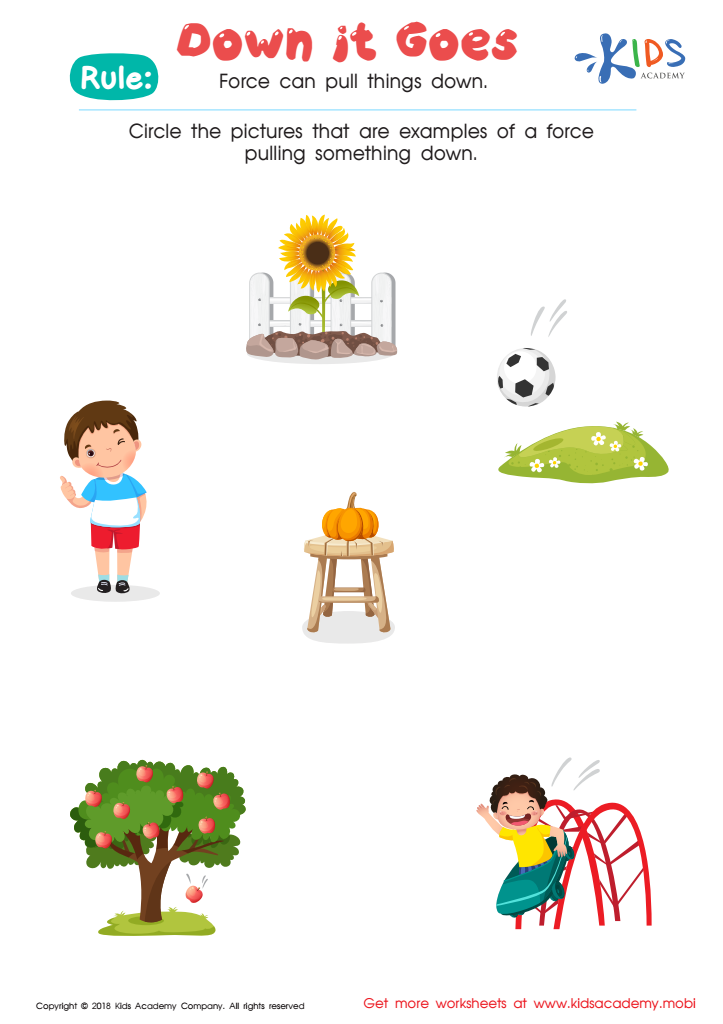
Down it Goes Worksheet
 Assign to My Students
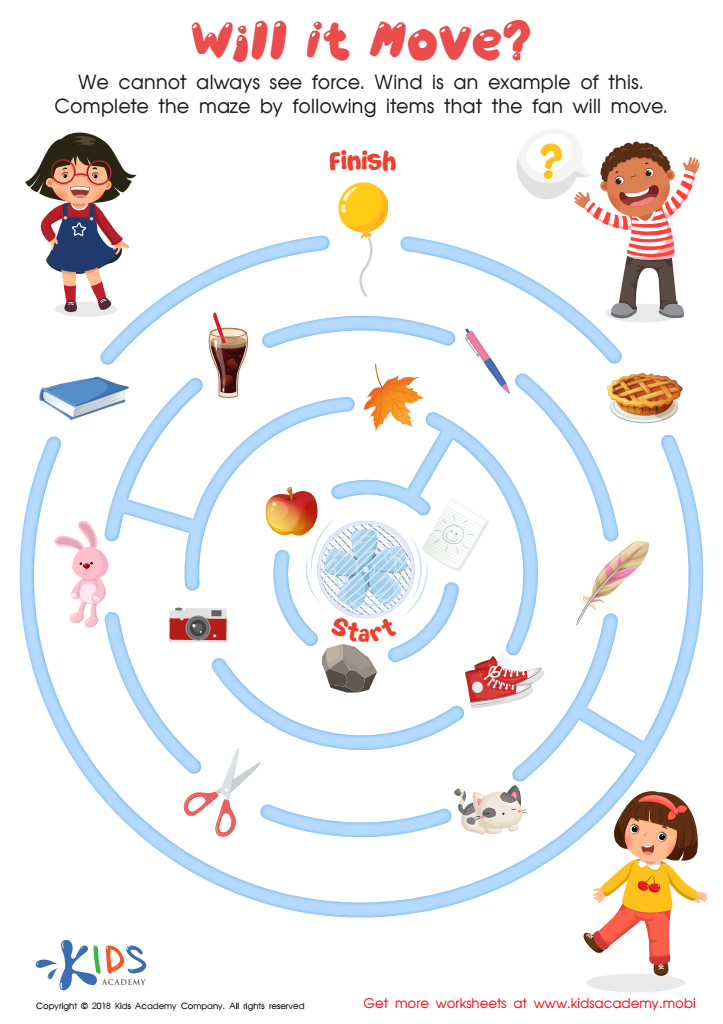
Will it Move? Worksheet

Race Car Ramp Worksheet






Predicting outcomes is a crucial skill for children, especially between the ages of 5-9, as it lays the foundation for critical thinking and decision-making. Parents and teachers should care about fostering this ability as it enables children to anticipate consequences, understand cause-and-effect relationships, and develop problem-solving skills. When children practice predicting outcomes, they learn to evaluate different scenarios and weigh potential actions, which is essential for academic success and everyday life.
Moreover, enhancing this skill can significantly boost a child's reading comprehension and narrative understanding. When children predict what will happen next in a story or a situation, they engage more deeply with the material, improving their concentration and retention. This skill also has social benefits; it helps children in understanding social cues and anticipating the reactions of peers, thereby fostering better interpersonal relationships.
Finally, predicting outcomes aids in developing a growth mindset. When children consider possible outcomes, they become more resilient and adaptive to changes. They learn that if one outcome does not go as planned, there are other solutions and strategies to try. Overall, instilling the ability to predict outcomes in young children equips them with essential life skills that will serve them well in the classroom and beyond.








