
Story sequencing skills Worksheets for Ages 5-9
3 filtered results
Difficulty Level
Grade
Age
-
From - To
Subject
Activity
Standards
Enhance your child's storytelling abilities with our Story Sequencing Skills Worksheets for ages 5-9. Perfectly tailored to ignite young imaginations, these engaging worksheets help children develop critical thinking and comprehension skills. Through fun exercises, kids practice ordering events, boosting their understanding of narrative structure, and improving their ability to recall and retell stories. Designed by early education experts, each worksheet uses charming illustrations and relatable themes to make learning enjoyable. Ideal for both classroom and at-home use, these worksheets are a valuable resource for teachers and parents seeking to support their children’s literacy journey. Start building essential story sequencing skills today!
Favorites
With answer key
Interactive
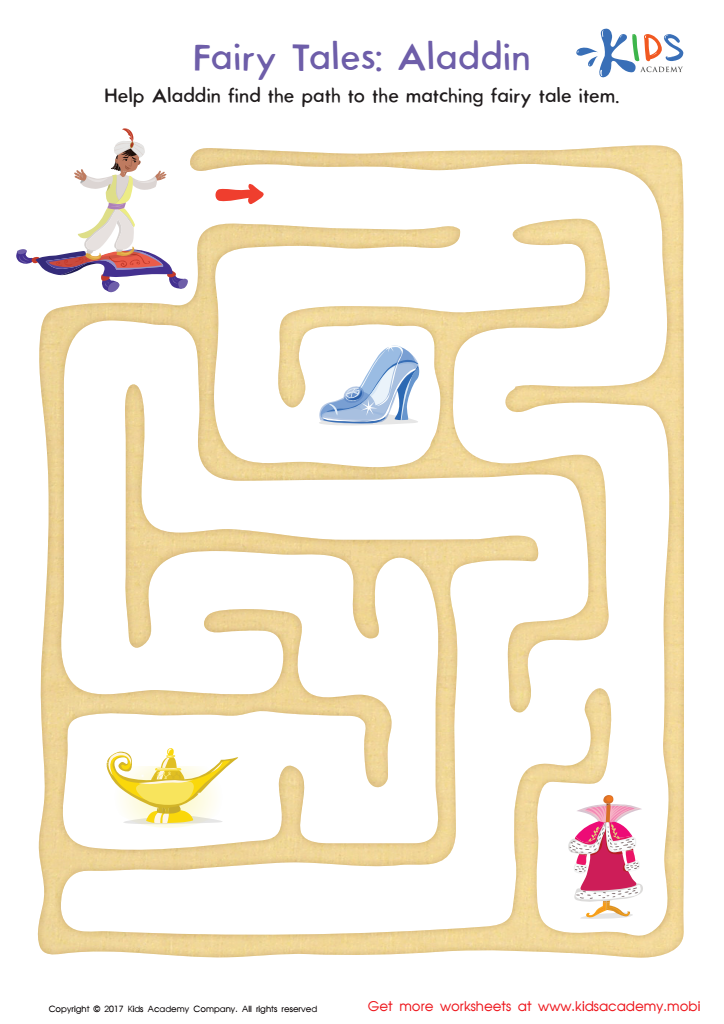
Fairy Tales Aladdin Printable
Test your child's reading recall with this challenge: the Aladdin maze worksheet! Guide your learner to identify objects linked to the story, then ask them to retell it afterwards. Hone those memory skills while having fun!
 Assign to My Students
Fairy Tales Aladdin Printable
Worksheet
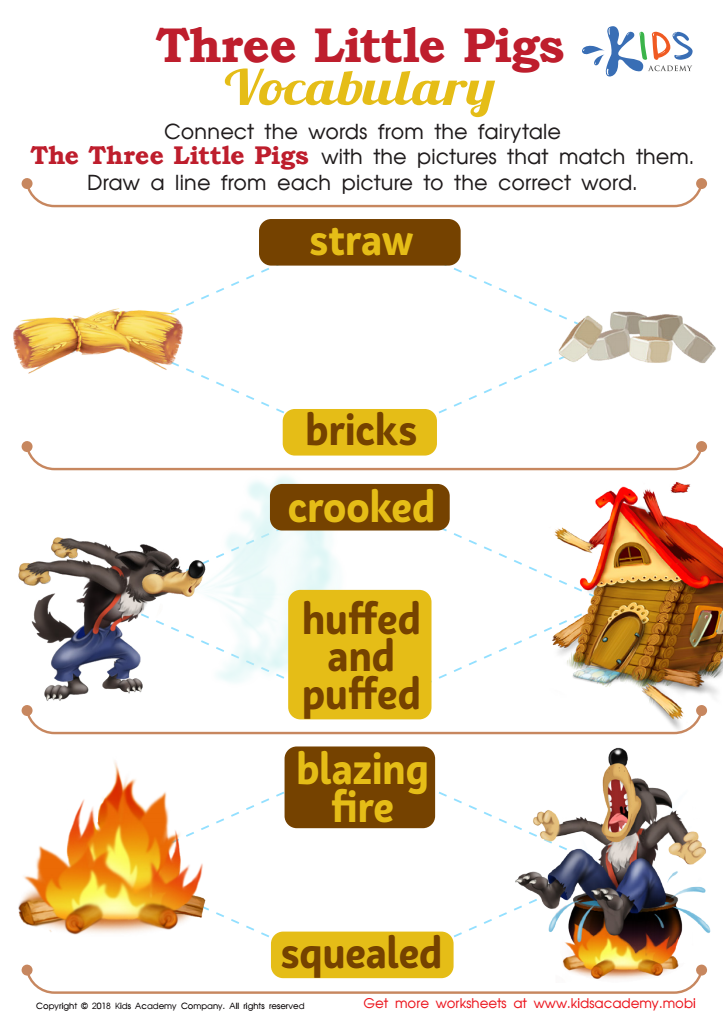
Three Little Pigs Vocabulary Worksheet
Read the Three Little Pigs to your children. Have them use the tracing sheet to connect the story words with the pictures. This is a fun and educational way to help them build their vocabulary.
Three Little Pigs Vocabulary Worksheet
Worksheet
Join Kids Academy for Free
Who is primarily going to use this learning content?








Story sequencing skills are a foundational element in cognitive and language development for children aged 5-9. These skills enable children to understand and narrate events in a logical order, which is crucial for both their academic success and daily life activities. When children can sequence stories correctly, they enhance their comprehension abilities. This makes it easier for them to follow instructions, grasp the progression of stories read in books, and engage in meaningful conversations.
Sequencing helps in developing critical thinking skills. For example, recognizing what happens first, next, and last in a story fosters a child's ability to predict outcomes and understand cause-and-effect relationships. It translates into better problem-solving skills as children can foresee the consequences of actions in various scenarios.
Furthermore, sequencing is instrumental in improving a child's writing skills. When children internalize the structure of stories, they can better organize their thoughts and ideas, making their writing more coherent and understandable. This skill also aids in boosting their confidence, as they can recount their experiences and tell stories effectively, fostering better social interactions.
By prioritizing story sequencing skills, parents and teachers give children the tools they need to thrive in multiple areas of development, setting a strong foundation for future academic achievements and personal growth.








