Understanding division Worksheets for Ages 5-9
9 filtered results
-
From - To
Unlock the world of division for young learners with our tailored "Understanding Division Worksheets," designed specifically for ages 5-9. These engaging worksheets help kids grasp essential division concepts through visually appealing illustrations and interactive exercises. By breaking down the principles of sharing and grouping, students develop a solid foundation in this crucial math skill. Our thoughtfully crafted activities ensure an enjoyable learning experience, allowing children to practice at their own pace. Whether used in the classroom or at home, these worksheets make mastering division fun and effective! Start your child's journey toward mathematical confidence today!
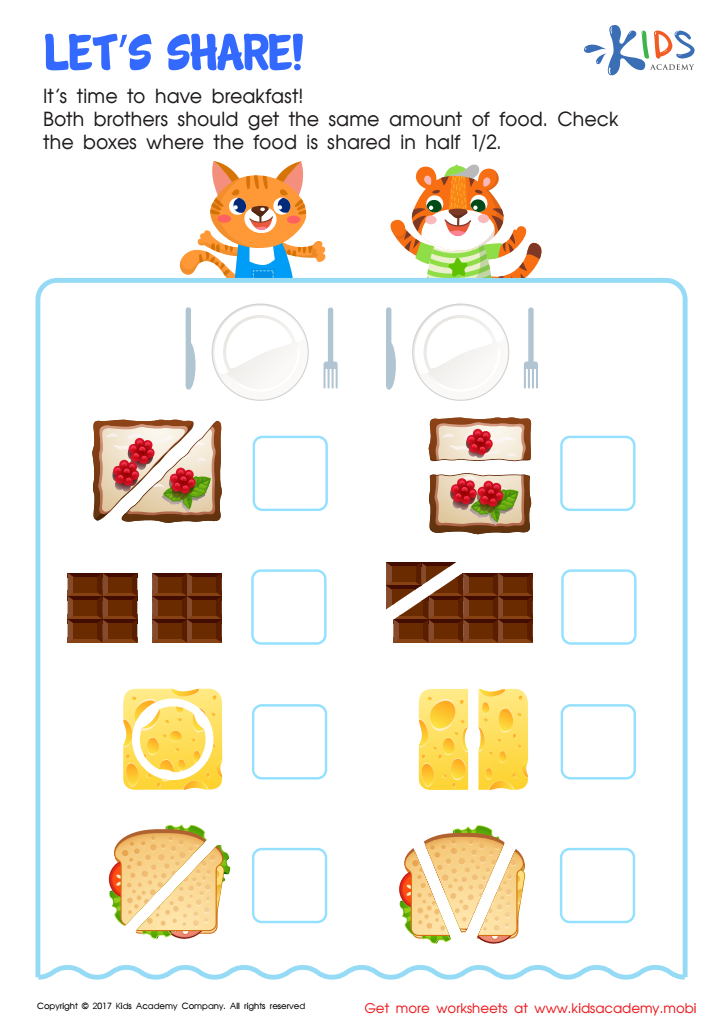
Let's Share Worksheet
 Assign to My Students
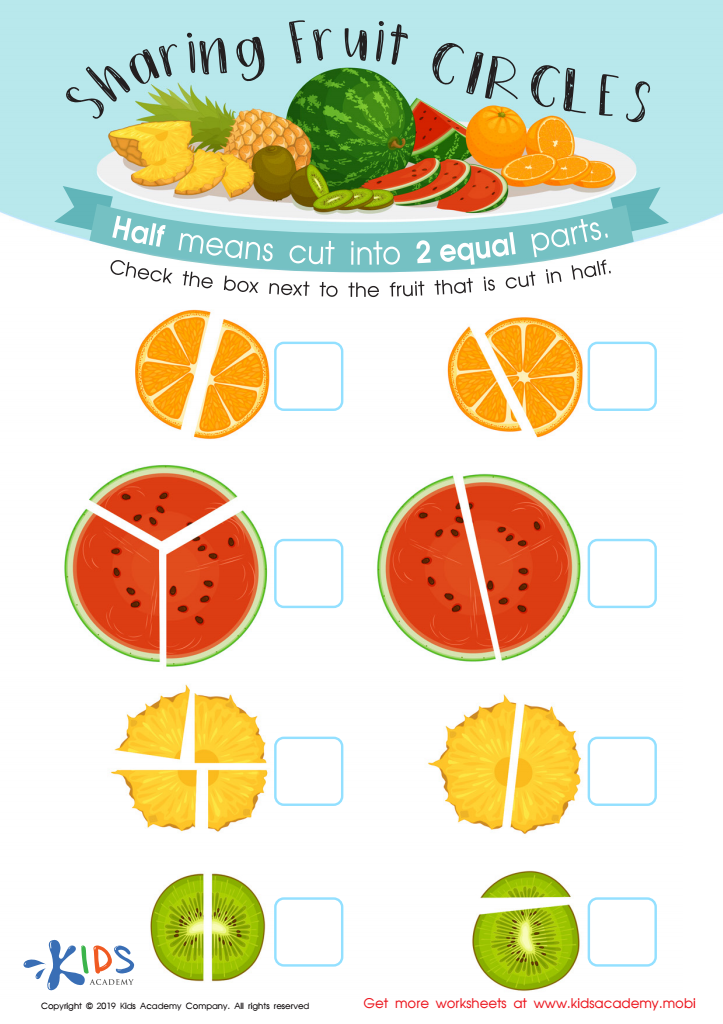
Sharing Fruit Circles Worksheet
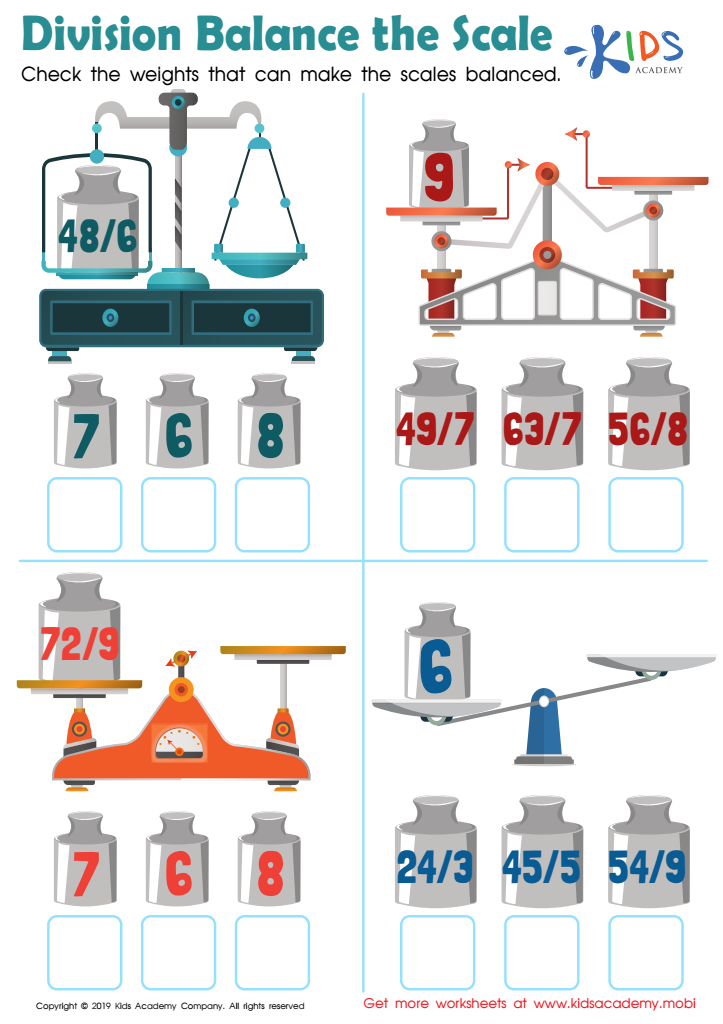
Division Balance the Scale Worksheet







Understanding division is essential for children aged 5-9 as it lays the foundation for future mathematical proficiency and problem-solving skills. During these formative years, children are developing their cognitive abilities and learning critical thinking techniques. By grasping division, they start to comprehend concepts of sharing, grouping, and the relationship between numbers, helping them navigate real-world situations.
Division also enhances a child's ability to understand and apply other mathematical concepts, such as multiplication and fractions, which are crucial as they progress in their education. Moreover, when parents and teachers emphasize division, they help develop a child's resilience in facing challenges. Learning to divide encourages perseverance, as children often encounter difficulties before mastering the concept.
Furthermore, promoting a solid understanding of division fosters confidence in a child's overall mathematics skills. This confidence leads to a positive attitude toward learning, allowing children to approach future topics with curiosity rather than fear. Ultimately, investing time and energy into teaching division not only equips young learners with essential mathematical tools but also nurtures a lifelong love for learning, setting the stage for academic success in all subjects.








