Understanding number patterns Worksheets for Ages 5-9
6 filtered results
-
From - To
Explore our "Understanding Number Patterns Worksheets" designed specifically for children aged 5-9! These engaging, activity-packed worksheets help young learners develop essential math skills through fun, interactive exercises. Students will uncover the basics of number sequences, identify patterns, and enhance their problem-solving capabilities. Our worksheets encourage creativity and critical thinking by incorporating colorful visuals and relatable themes, making learning enjoyable. Ideal for classrooms or at-home practice, these resources foster a solid mathematical foundation while boosting confidence. Whether your child is just starting or looking to strengthen their skills, our number patterns worksheets offer invaluable support on their learning journey!
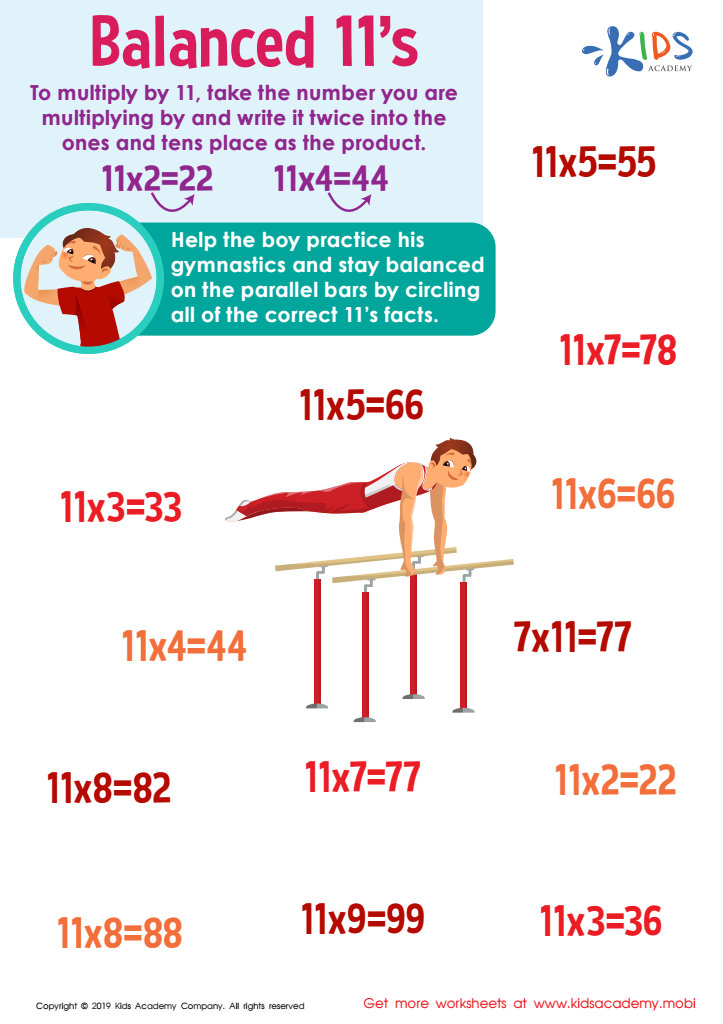
Balanced 11s Worksheet
 Assign to My Students
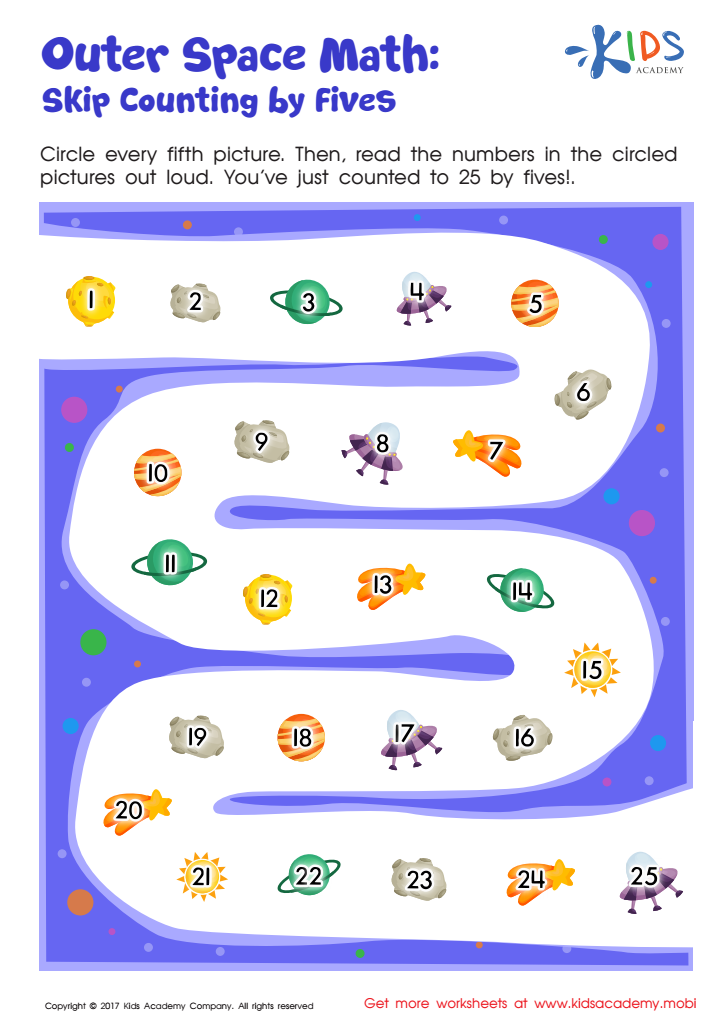
Skip Counting by 5s: Outer Space Math Printable
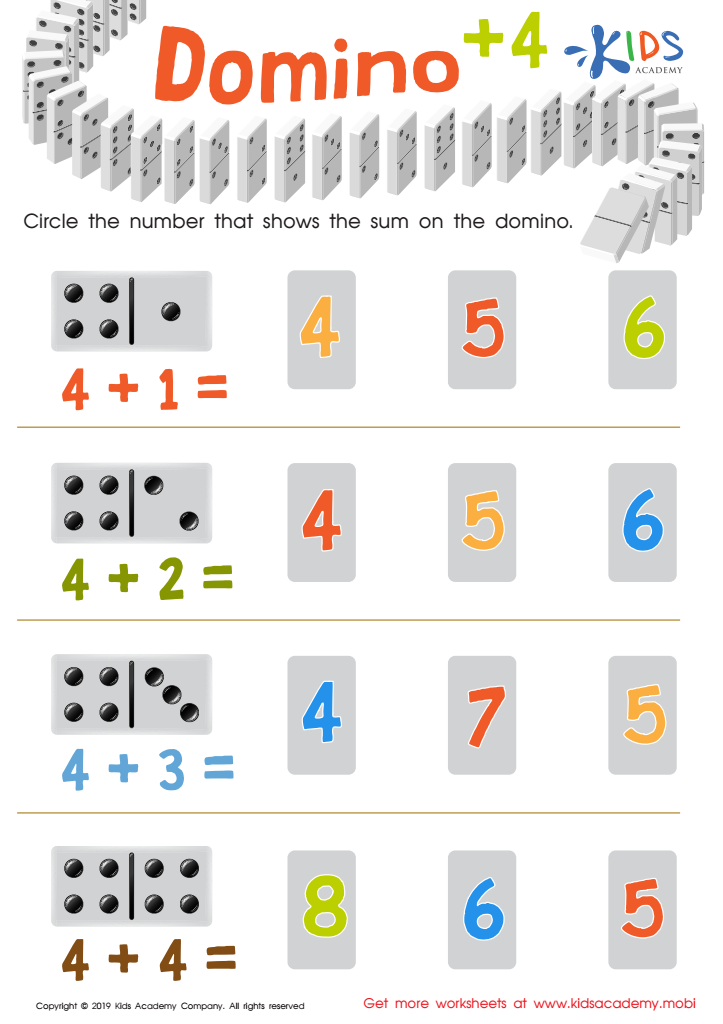
Domino +4 Worksheet
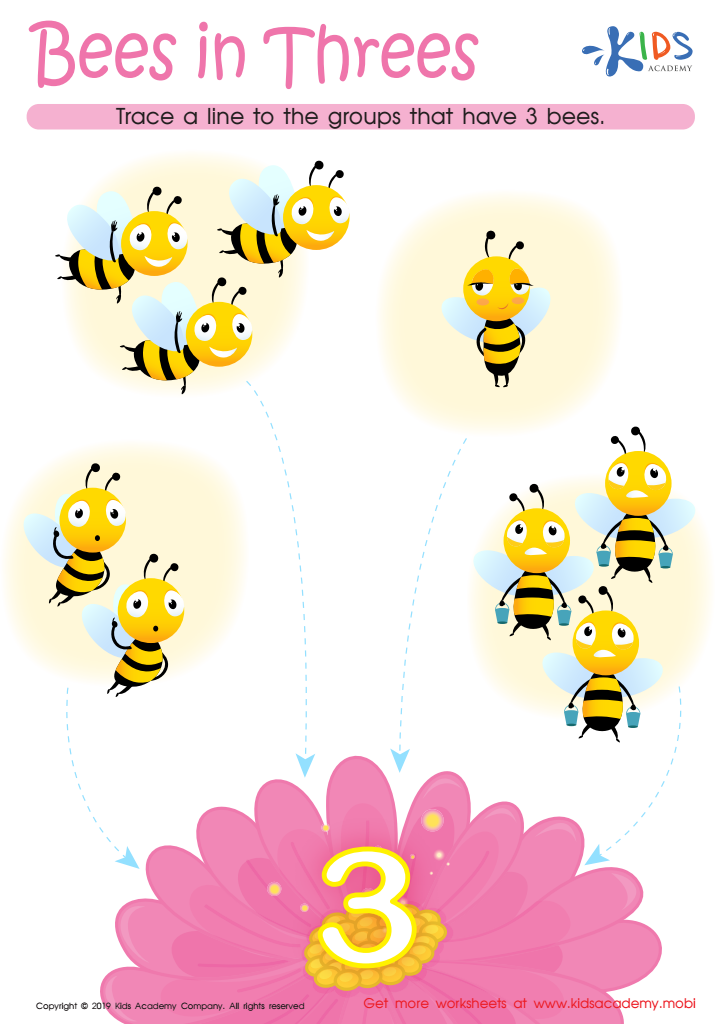
Bees in Threes Worksheet








Understanding number patterns is essential for children ages 5-9, as it lays the foundation for their overall mathematical development. Recognizing and working with patterns enhances critical thinking skills and boosts cognitive development, helping children make connections between concepts. At this age, students begin to encounter more complex math, so mastering patterns can simplify their understanding of addition, subtraction, multiplication, and even geometry.
Moreover, number patterns lead to logical reasoning, enabling children to predict sequences and outcomes, which is crucial for problem-solving abilities later in life. Engaging with patterns also fosters creativity; children often find joy in recognizing and creating their own patterns, whether through numbers, shapes, or sounds. This enjoyment can cultivate a lifelong interest in math.
Additionally, early exposure to number patterns has been linked to higher academic achievement. When parents and teachers prioritize this foundational skill, they empower children to approach mathematics with confidence. Ultimately, understanding number patterns equips students with critical tools that are not only beneficial in math classes but throughout their educational journey and everyday problem-solving experiences. Investing in this area is vital for nurturing a positive math mindset and promoting a strong foundation for future learning.








