Understanding Quantities Worksheets for Ages 5-9 - Page 3
53 filtered results
-
From - To
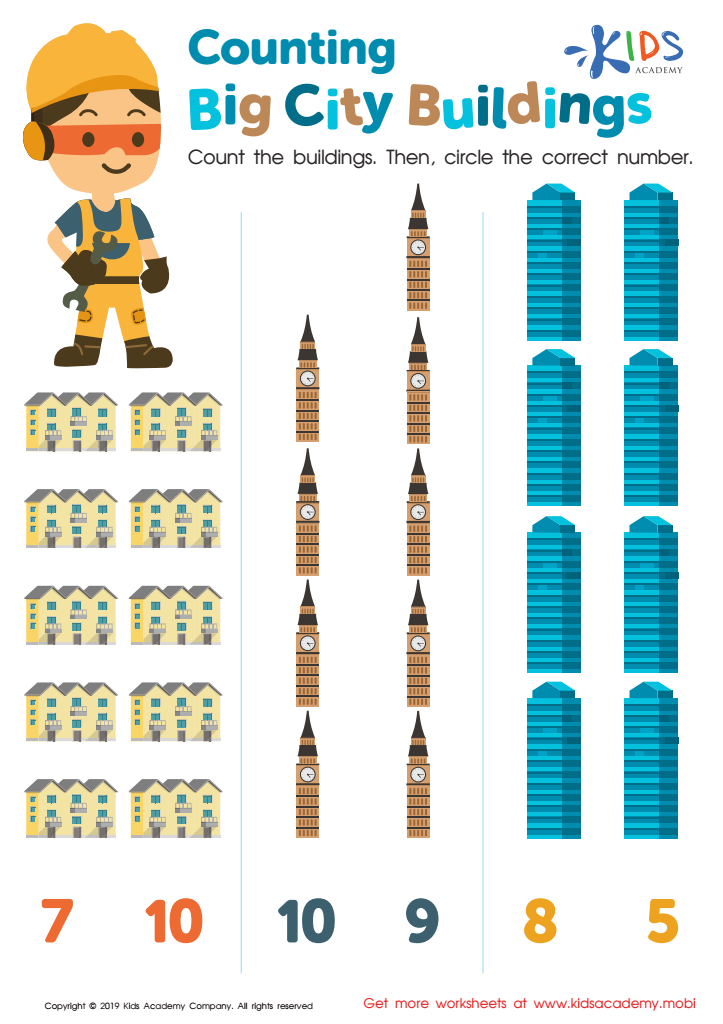
Counting Big City Buildings Worksheet
 Assign to My Students







Understanding quantities for children aged 5-9 is critical for a variety of reasons. During these early years, kids develop foundational math skills that are essential for their future learning. Grasping the concept of quantities helps kids make sense of the world around them. They begin to recognize and compare amounts, which is crucial not just for math-related tasks but also in everyday life situations, like understanding time, distributing snacks, or sharing toys evenly.
Moreover, a solid understanding of quantities supports numeracy, which includes counting, measuring, and basic arithmetic — skills necessary for more complicated math problems they'd encounter later in school. Students who master these basics have a firmer foundation, making it easier to tackle advanced concepts with confidence and curiosity.
For parents and teachers, fostering an understanding of quantities is not just about improving academic performance. It's also about promoting logical thinking and problem-solving skills. Activities like counting objects, measuring ingredients for a recipe, or even playing board games that use dice can build these skills in a fun, engaging way.
In conclusion, understanding quantities in early childhood primes kids for academic success and everyday competence. It nurtures cognitive development and problem-solving abilities, making it a vital focus for both parents and teachers.








